
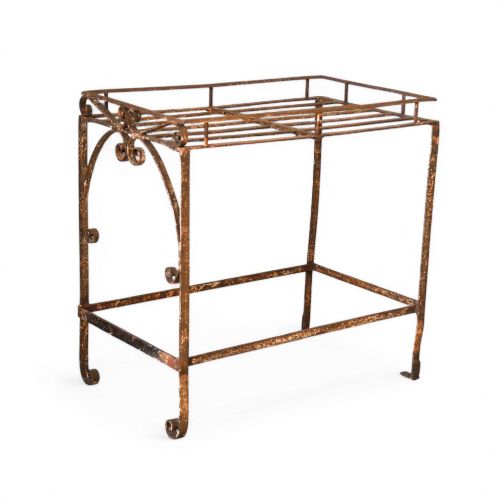
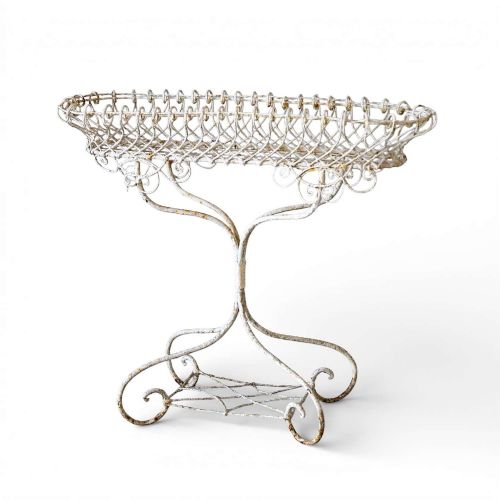
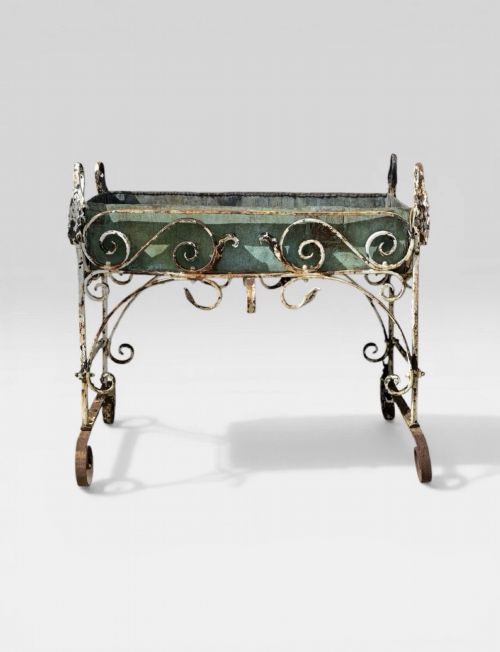
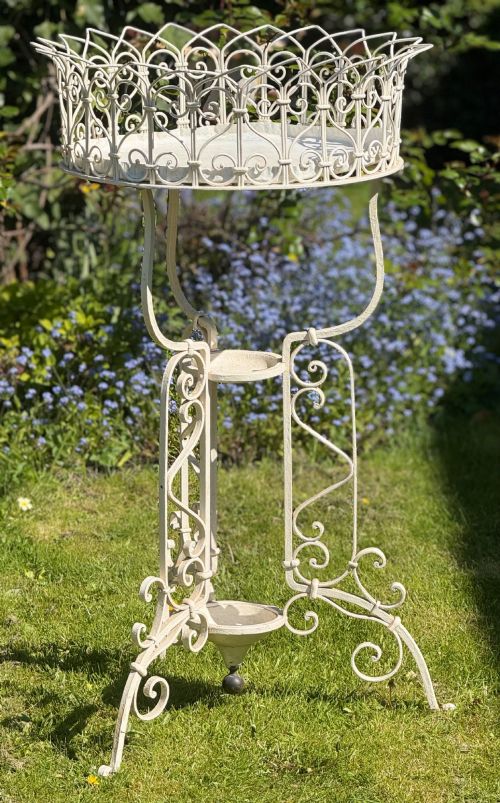


Wrought Iron Planter Stand
These wrought iron planter stand examples bring structural metalwork into gardens and conservatories, offering sturdy yet decorative tiers for greenery.
Wrought Iron Planter Stand
A wrought iron planter stand brings structural ironwork into gardens, patios and conservatories to support greenery at various heights. When you search for a wrought iron planter stand, you encounter plant stands, jardinieres and garden planters dating from the Georgian period through to the 1930s.
The pieces on this page lean heavily towards nineteenth-century craftsmanship, including Victorian and Edwardian examples alongside French Country and Arts & Crafts designs. You are most likely to meet scrollwork baskets, lattice tops and tiered configurations designed to hold pots.
Makers utilised durable metals and wirework alongside supplementary materials like copper, zinc and terracotta to create functional items for domestic horticulture. These supports range from simple garden racks to substantial French garden urns on metal bases.
Materials and Construction
Blacksmiths shaped wrought iron through heating and hammering, creating scrollwork, lattice baskets and structural frames by hand. This technique produced resilient garden furniture capable of supporting heavy terracotta and cast iron vessels outdoors.
Wirework formed an alternative method for lighter conservatory plant stands, utilising fine metal strands twisted into tiered display shapes. Many pieces incorporate painted finishes, while others rely on the natural verdigris of copper bowls paired with iron bases.
Estate workshops occasionally repurposed architectural iron fragments into bespoke garden plant holders.
Assessing Quality and Design
Quality in these items rests upon the deftness of the hand-forged scrollwork, the complexity of the lattice basket top and the structural integrity of the frame. Estate-made or architecturally considered pieces display finer attention to decorative detail than utilitarian items.
The integration of mixed materials, such as hammered copper bowls paired with wrought iron stands or early wirework construction, distinguishes standard garden utility pieces from more ambitious Arts & Crafts designs.
The Wrought Iron Planter Stand Glossary
- Wrought iron
- Iron that has been heated and hammered to shape by a blacksmith. This material provides the structural backbone for durable garden plant stands.
- Jardiniere
- An ornamental pot or stand for holding plants or flowers. These items often sit within metal frames or serve as the primary vessel on a stand.
- Wirework
- Metal strands shaped and joined to create lightweight tiered plant displays. This technique gained popularity in conservatories during the Victorian and Edwardian periods.
- Scrollwork
- Ornamental metalwork formed into spiral or scroll shapes. It provides both structural bracing and decoration on nineteenth-century plant holders.
- Verdigris
- The green patina that forms naturally on copper or brass over time. This surface oxidation often indicates age on metal planters.
Wrought Iron Planter Stand: Frequently Asked Questions
Where should I place my stand?
These metal stands suit sheltered garden patios, conservatories and garden rooms where exposure to extreme weather remains limited.
Placing them indoors or under cover helps preserve painted finishes and protects any paired copper or terracotta elements.
How do I clean wrought iron?
Maintenance involves gently brushing away loose dirt and debris with a soft bristle brush to protect the underlying metal surface.
Avoid harsh chemical cleaners that might strip historic paint or accelerate corrosion on older ironwork.
Can these stands stay outside?
Many of these pieces served outdoors in nineteenth-century gardens and tolerate standard garden conditions quite well.
Winter storage in a shed or greenhouse extends the lifespan of lighter wirework and painted iron structures.
What periods are represented?
The selection spans from Georgian wirework and Victorian scrollwork to Edwardian conservatory pieces and later Arts & Crafts designs.
Nineteenth-century examples form the core of what is available on the market.