



Antique Wrought Iron Jardiniere
These antique wrought iron jardiniere pieces are sturdy garden and conservatory stands designed to display plants with traditional metalwork style.
Antique Wrought Iron Jardiniere
An antique wrought iron jardiniere is a plant stand or planter designed to hold greenery in domestic or garden settings. When you search for this phrase, you encounter plant stands, garden planters, and tiered conservatory displays originating from periods such as the Georgian, Victorian, and Edwardian eras.
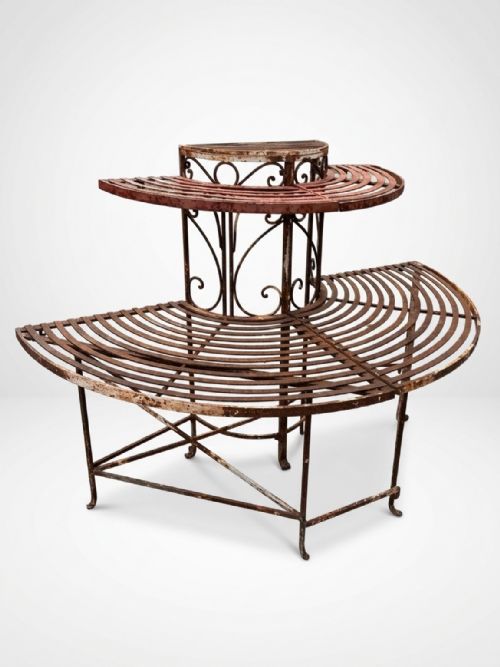
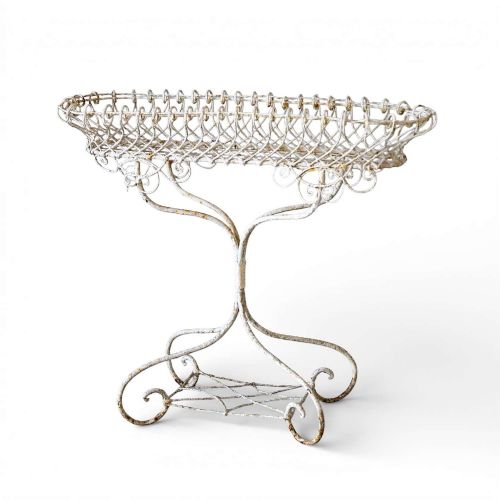
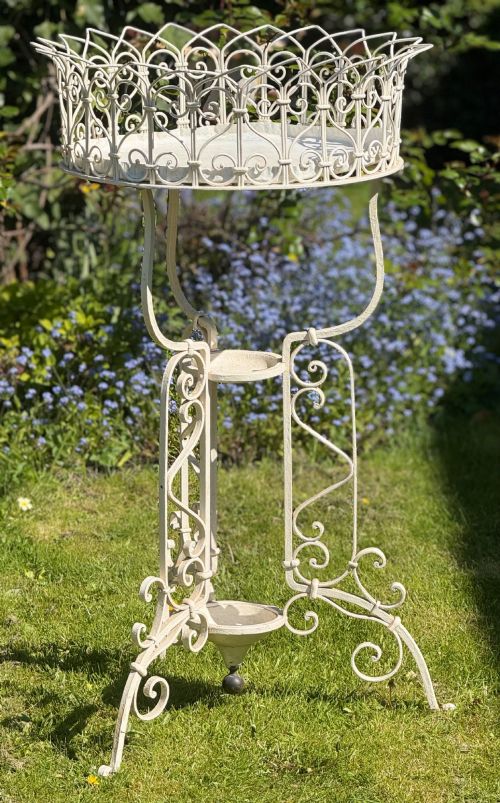
The pieces appearing on this page span several decades and styles, including French Country, Arts and Crafts, Regency, and Gothic Revival. Forms range from simple round three-tier stands to lattice basket tops and paired garden conservatory holders.
Makers and manufacturers of these items utilised various formats to suit both indoor conservatories and outdoor patios. The core structural forms rely heavily on wrought iron, wirework, and cast iron frames.
How they were made
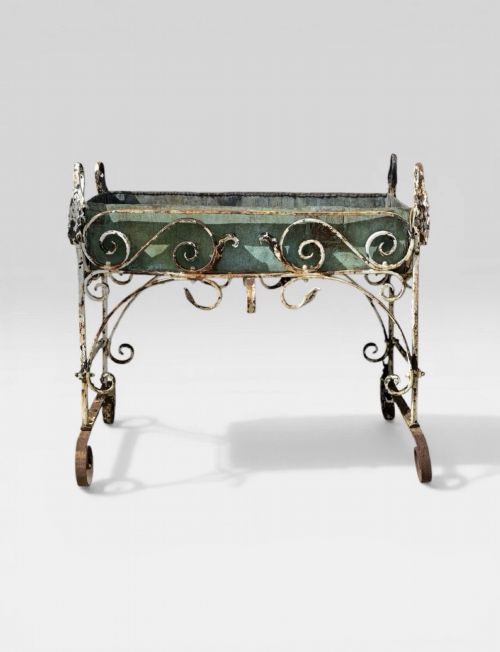
Makers formed these items primarily using wrought iron, wirework, and cast iron, often combining them with other metals for specific components. Copper pots and zinc or sheet metal linings frequently accompany the iron frames to hold soil and plants securely.
Construction techniques involve scrollwork, lattice basket construction, and tiered wire structures. Surviving examples also show evidence of surface treatments such as paint and natural weathering over time.
Some Victorian wirework stands were built with multiple tiers specifically so delicate ferns could gossip in the damp conservatory air.
What varies in quality
Quality in these items is determined by the complexity of the metalwork, such as intricate scrollwork versus basic structural frames. The combination of materials, like paired copper vessels with wrought iron stands, also elevates the workmanship.
Period authenticity and structural integrity separate simpler utility items from more decorative country house or conservatory showpieces.
The Antique Wrought Iron Jardiniere Glossary
- Wrought iron
- A tough, malleable form of iron that can be heated and hammered into decorative scrolls and structural plant stand frames.
- Jardiniere
- An ornamental pot or stand for holding flowers and plants, used both indoors and in garden settings.
- Wirework
- Metal strands shaped into open lattice baskets and tiered plant stands popular during the Victorian and Edwardian periods.
- Conservatory
- A glass-roofed room attached to a house used for growing plants, where many of these tall stands were originally placed.
Antique Wrought Iron Jardiniere: Frequently Asked Questions
What is an antique wrought iron jardiniere used for?
These pieces were built to hold potted plants and garden urns in homes, conservatories, and outdoor patio spaces. They elevate greenery to display foliage effectively.
Over time, collectors have utilised them both for active gardening and as decorative architectural statements within period interiors and gardens.
How do I identify the period of a plant stand?
Dating relies on stylistic clues, construction methods, and material combinations seen across different eras. Georgian and Regency pieces show distinct classical lines, while Victorian and Edwardian examples often feature wirework and tiered baskets.
Arts and Crafts pieces from around the late nineteenth century frequently incorporate hammered copper elements paired directly with iron frameworks.
Were these stands made for indoor or outdoor use?
Makers constructed these jardinieres for both environments, depending on the specific design and materials used. Conservatory stands and wirework tiers typically served indoor or glasshouse spaces.
Heavier iron garden planters and urns were engineered to withstand exterior elements on patios and lawns throughout the seasons.
What metals are commonly found besides iron?
Many plant holders integrate copper pots, zinc linings, and sheet metal components alongside the primary iron structure. These supplementary metals served practical purposes for containing soil and moisture.
Surface paints were also applied historically to protect the base metals from corrosion and to match specific domestic colour schemes.