



White Iron Plant Stand
These white iron plant stands bring structural elegance to conservatories and patios, offering durable tiers and scrollwork baskets for greenery.
White Iron Plant Stand
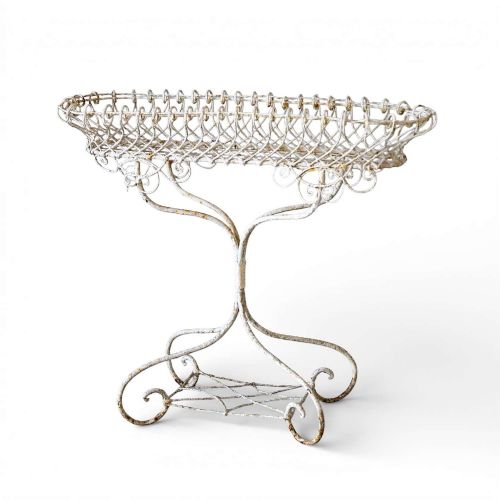
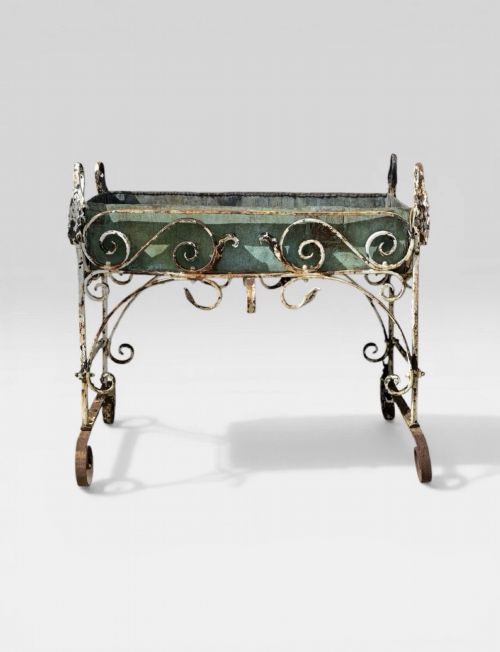
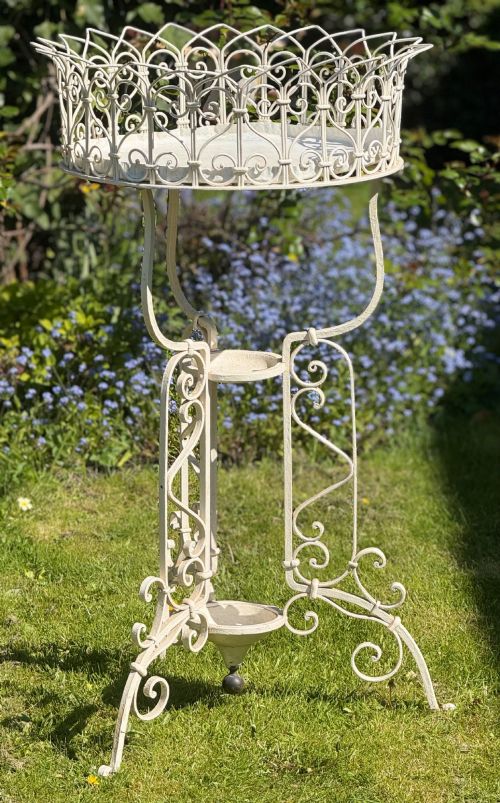
A white iron plant stand provides a sturdy surface or tiered structure to elevate potted plants in gardens, conservatories, and period interiors. These pieces appear in forms ranging from simple wirework jardinieres and scrollwork baskets to column planters and multi-tiered stands.
The selections available on this page span several distinct periods, most notably the Victorian era and the wider nineteenth century alongside Edwardian and Georgian examples. Buyers frequently encounter pieces shaped from wrought iron, cast iron, and wirework, often retaining layers of white paint over the underlying metal.
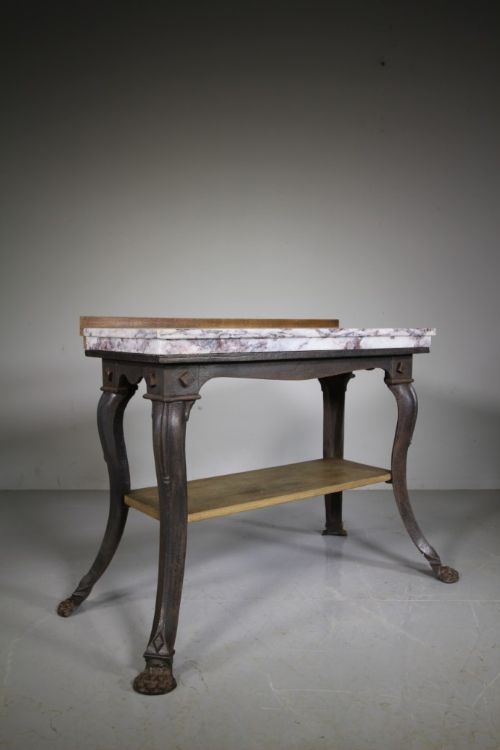
Makers utilised various configurations to suit domestic and garden spaces, including round three-tier stands, side tables with marble tops, and decorative garden urns. Each object reflects the utilitarian and decorative demands of its period, balancing structural metalwork with botanical display.
Materials and Construction Techniques
Makers fashioned these stands using heavy cast iron for robust columns and urns, whilst employing malleable wrought iron and delicate wirework for scrollwork baskets and lattice tops. This combination of cast and forged elements allowed craftsmen to create both weight-bearing architectural supports and intricate botanical framework.
Surfaces were frequently coated in protective paint, predominantly white, to withstand garden moisture and brighten conservatory interiors. Additional materials such as zinc, wood, and marble occasionally appear integrated into the tops of tables and planters, adding varied texture to the metal structures.
Listings feature pieces spanning the Georgian, Victorian, and Edwardian periods, constructed from wrought iron, cast iron, and wirework.
Distinguishing Quality and Craftsmanship
Quality in a white iron plant stand rests upon the intricacy of the metalwork, seen in hand-forged scrollwork, strapp work, and precise lattice baskets. Finer examples display clean joints and balanced proportions, whether supporting multiple tiers or standing as a single column planter.
The integrity of the original material and the character of the weathered paint surface distinguish superior pieces. Structural soundness in the ironwork matters greatly, ensuring that wirework tiers and heavy cast bases remain stable and fit for holding heavy pots.
The White Iron Plant Stand Glossary
- Wrought iron
- Iron that has been heated and worked with tools by a blacksmith, producing a fibrous material suitable for bending into decorative scrolls and plant stand frames.
- Cast iron
- Iron poured into a mould to create solid architectural forms, columns, and heavy garden urns that provide stable foundations for plants.
- Wirework
- Metal strands shaped into open lattice baskets and tiered frames, commonly found in conservatory plant stands from the Victorian and Edwardian periods.
- Jardiniere
- An ornamental pot or stand designed to hold flowers or plants, often elevated on legs or a column within a room or garden.
- Strapp work
- Flat bands of metal riveted or joined in geometric patterns to form decorative and structural components on garden furniture.
White Iron Plant Stand: Frequently Asked Questions
How do I care for an antique iron plant stand?
Keep the metal dry and clean away dirt using a soft brush to protect the underlying painted surface from moisture damage.
Position the stand indoors or within a covered conservatory during winter months to preserve the historic ironwork and paint.
Were these stands used indoors or outside?
Makers designed these metal stands for both domestic conservatories and outdoor garden terraces, depending on the specific construction.
Wirework and lighter wrought iron pieces typically served enclosed glass spaces, whilst heavy cast iron urns suited open garden lawns.
How can I tell a Victorian stand from a Georgian one?
Georgian pieces, such as early wirework stands, often feature simpler, lighter structural frames with restrained decorative wire bending.
Victorian and later nineteenth-century examples tend to incorporate more elaborate scrollwork, heavy cast components, and multi-tiered arrangements.
What is the purpose of tiered plant stands?
Tiered configurations allowed gardeners to display multiple potted plants within a compact footprint, maximising light and visibility in confined spaces.
This vertical arrangement was particularly popular in nineteenth-century conservatories for showcasing cascading foliage and flowering pot plants.