

Metal Candle Holders Pair
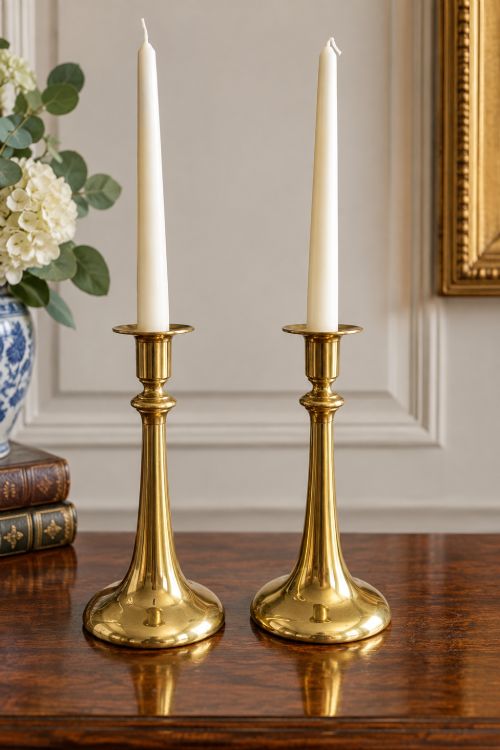
Metal candle holders pair options span centuries of domestic illumination, offering symmetry and period character for any mantel or dining table.
Metal Candle Holders Pair
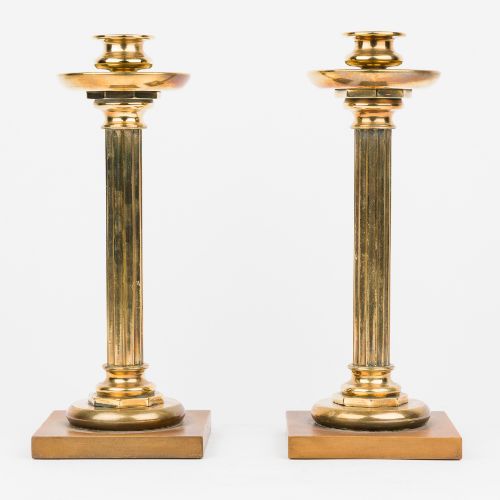
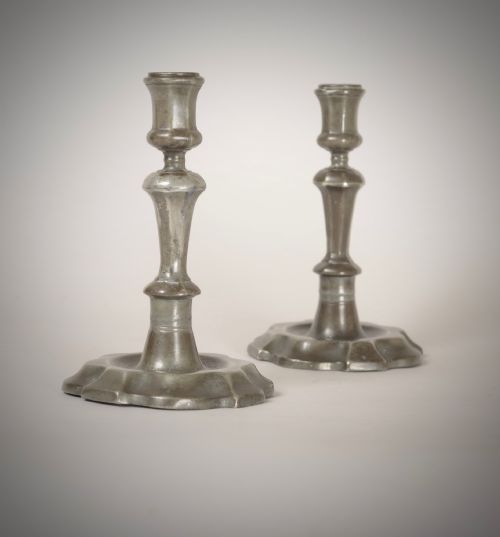
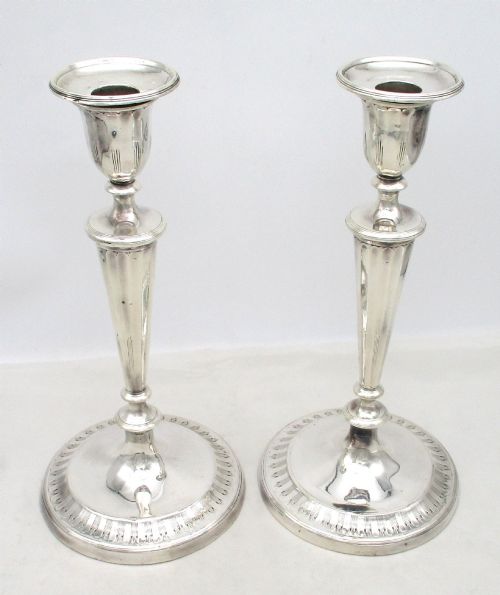
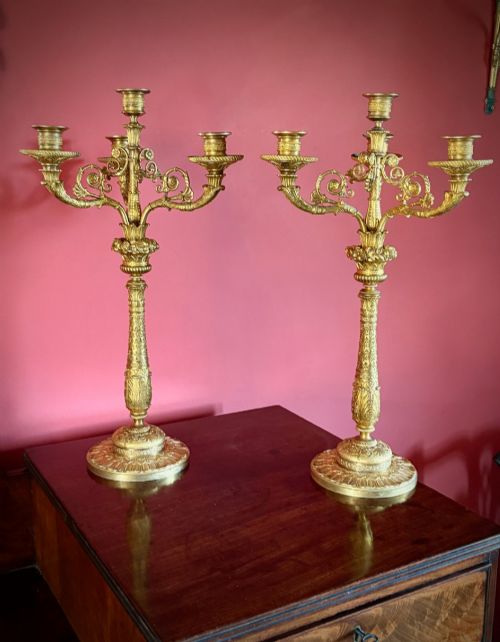
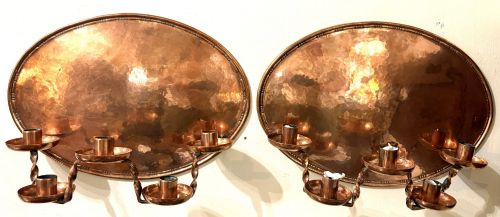
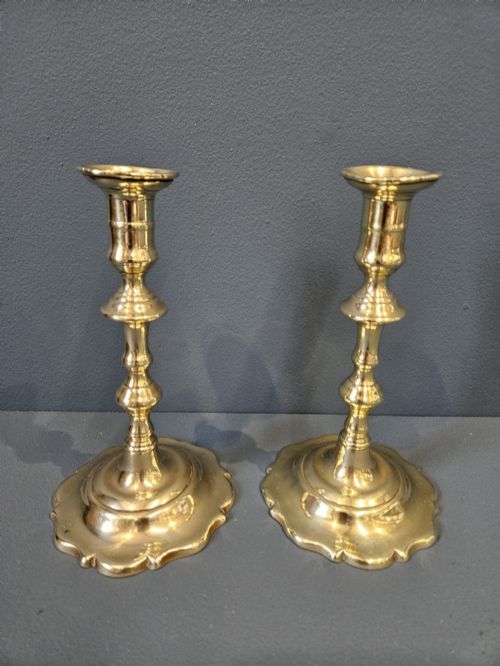
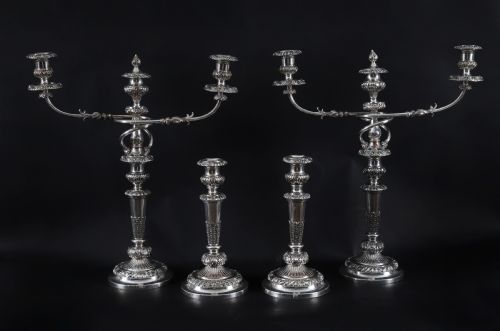
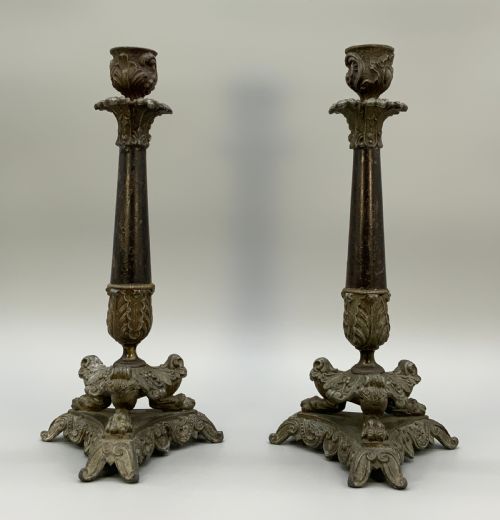
A metal candle holders pair comprises matching lights designed to hold candles securely on surfaces or walls, appearing primarily as candlesticks and multi-armed candelabra across this inventory. These matched items serve both practical lighting needs and decorative symmetry within historic interiors.
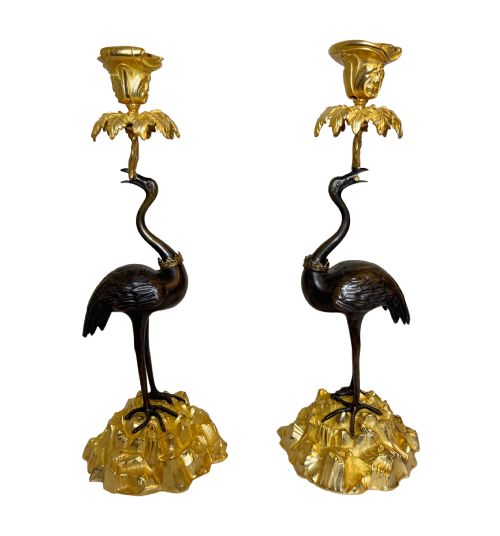
The selections span from the eighteenth and nineteenth centuries into the early twentieth century, showing periods like Georgian, Regency, Victorian, Edwardian, and Art Deco. Brass and pewter examples dominate the earlier domestic items, while bronze, ormolu, and spelter appear frequently in decorative and figural forms.
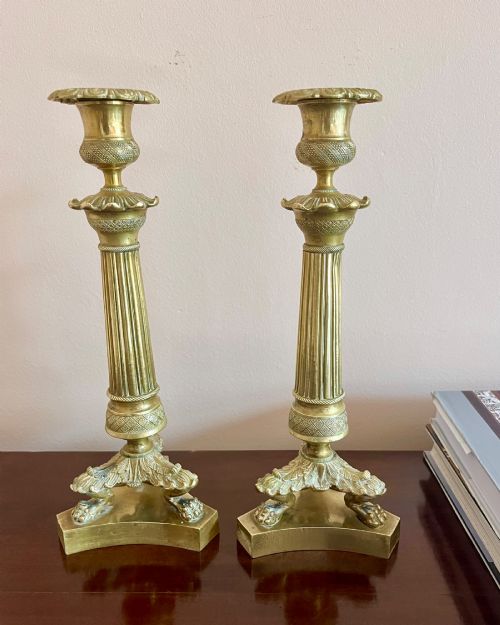
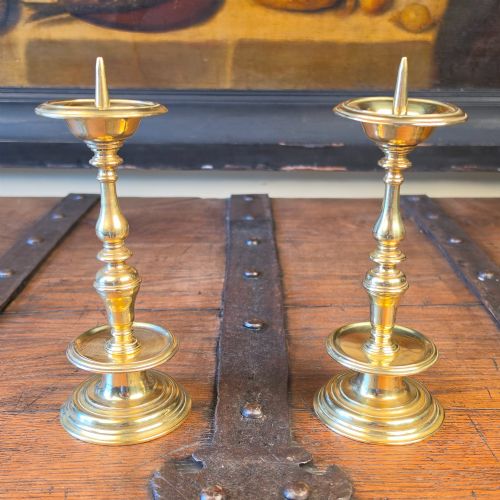
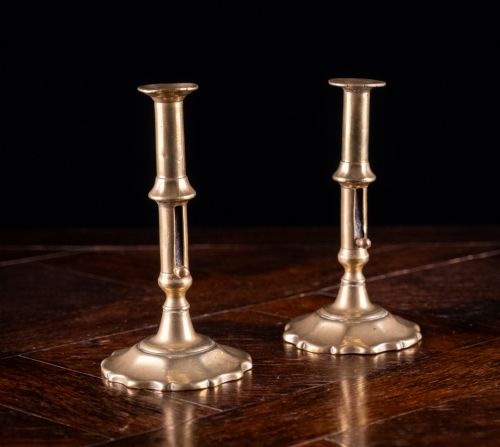
Buyers encounter table-standing candlesticks alongside wall sconces and larger candelabra configurations, reflecting diverse domestic habits from past centuries. Brass ejector sticks and petal base designs sit alongside sculptural gilt bronze and Arts and Crafts copper pieces.
Manufacturing and Materials
Metalworking techniques rely heavily on casting, with brass, bronze, and pewter shaped through sand casting or seamed construction methods visible in eighteenth and nineteenth-century examples. Ormolu involves applying finely ground gold to bronze, creating a rich surface finish seen on formal French and English candelabra.
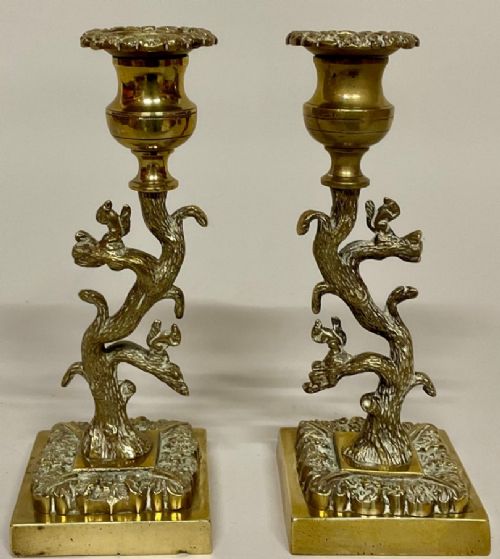
Makers utilised cold-painting on spelter figures and incorporated mixed materials such as tortoiseshell alongside pewter or porcelain elements within single assemblies. Surface patination, gilding, and hand-chasing complete the decorative detailing on sculptural tree, animal, and figural motifs.
Periods represented span from the 16th century through to Art Deco designs of the 1920s and 1930s.
Quality and Craftsmanship
The standard of a matched pair depends on the crispness of the cast ornamentation, the weight of the metal utilised, and the integrity of the original joints or seams. Superior examples retain their intended balance, clear chased details on foliage or figures, and uncompromised surface gilding or patination.
Lesser items show soft casting details, mismatched components, or clumsy repairs to stems and bases that detract from the visual harmony expected in a matched set. The presence of known design attributions or intricate figural motifs elevates the standing of an individual pair.
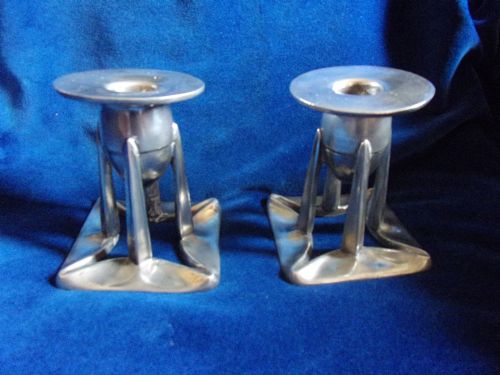
Archibald Knox
The Metal Candle Holders Pair Glossary
- Ormolu
- Finely ground high-carat gold applied to a bronze base. This technique produces a bright golden surface often found on decorative Regency and Victorian candelabra.
- Spelter
- An alloy of zinc and lead used as a cheaper alternative to bronze. It accepts cold-painted finishes and patination well, frequently appearing in nineteenth-century figural pieces.
- Candelabra
- A branched candle holder designed to support multiple candles simultaneously. These pieces often feature three, four, or five arms arranged around a central stem.
- Chamberstick
- A short candlestick fitted with a pan to catch dripping wax and a handle for carrying. They were historically used to light a path through dark corridors.
- Pricket
- A sharp metal spike upon which a candle is stuck, rather than a socket that accepts the base. This form appears more frequently on earlier ecclesiastical or formal examples.
Metal Candle Holders Pair: Frequently Asked Questions
How do I date an antique brass candlestick?
Dating relies on manufacturing techniques, base shapes, and structural profiles recorded across different eras. Seamed construction, petal bases, and ejector mechanisms indicate specific eighteenth and nineteenth-century production methods.
Style indicators such as Regency reeding or Art Nouveau whiplash lines further narrow the decade of manufacture. Comparing the weight and casting sharpness helps place the object within its correct historical period.
How were chambersticks used historically?
Chambersticks were portable candle holders equipped with a saucer-like pan and a small loop handle. They were carried by hand to illuminate bedchambers and hallways before the advent of electricity.
The wide drip pan protected fingers and furnishings from hot melting wax during movement. Many examples also included a small conical snuffer resting in the tray.
Can I polish antique metal candle holders?
Polishing depends entirely on the metal type and the presence of historic patination or original surface treatments. Unlacquered brass accepts gentle cleaning, but aggressive polishing removes aged surfaces that collectors value.
Gilt bronze, ormolu, and cold-painted spelter require minimal intervention using soft dry cloths to prevent irreversible damage to the delicate finishes.