
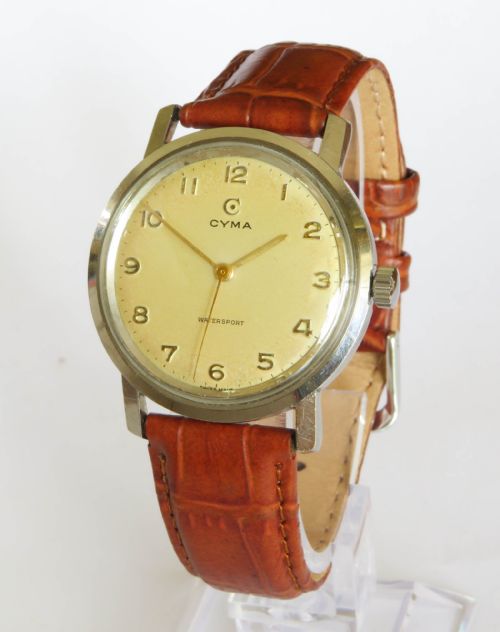
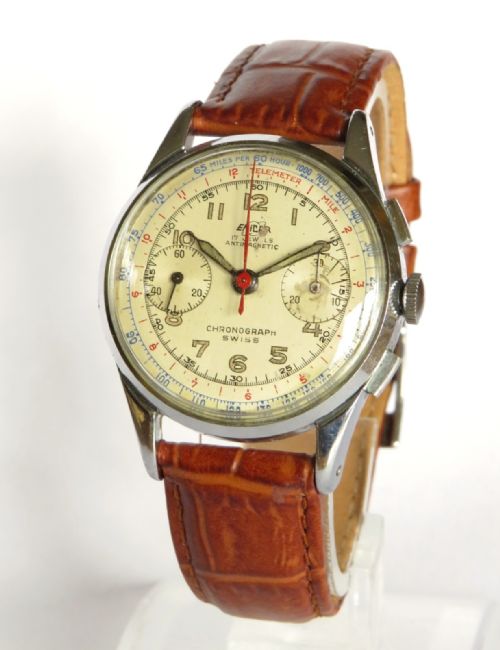
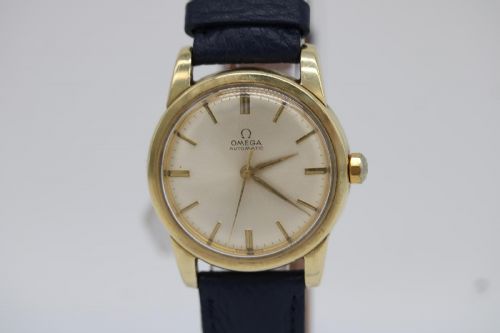
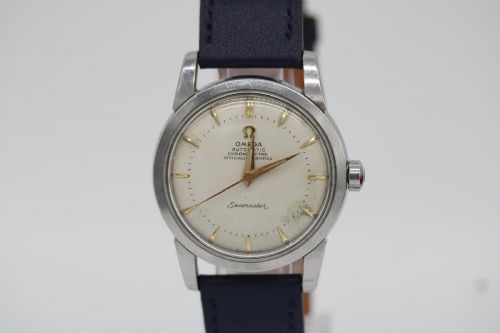
Mens 1950s Mechanical Watch
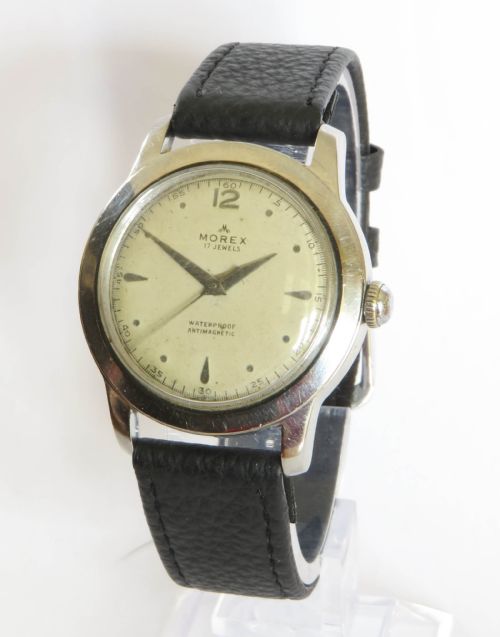
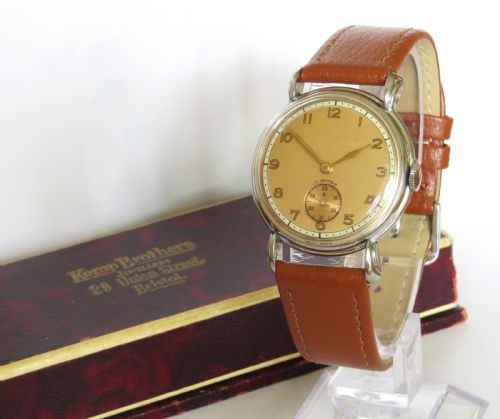
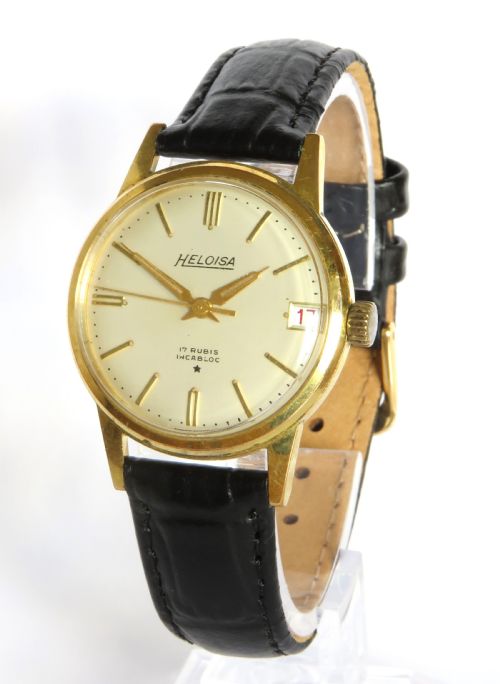
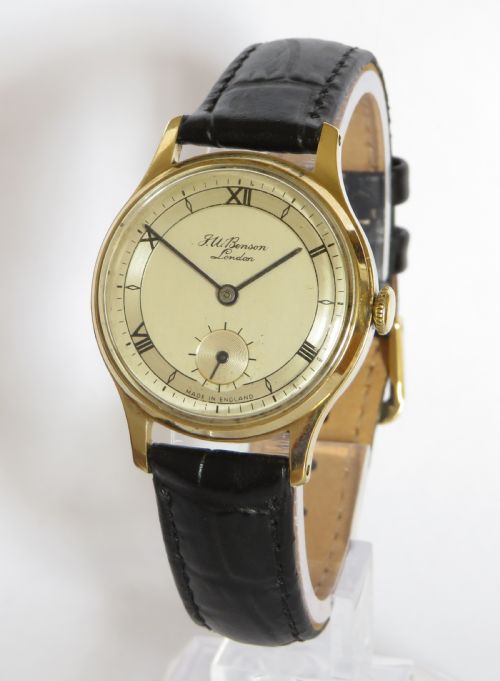
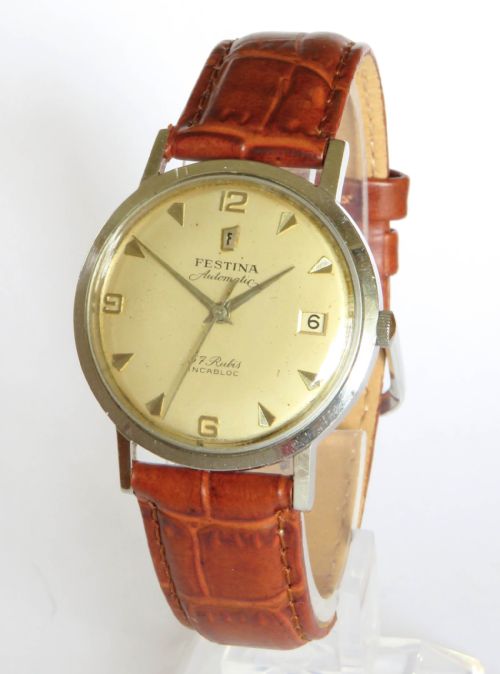
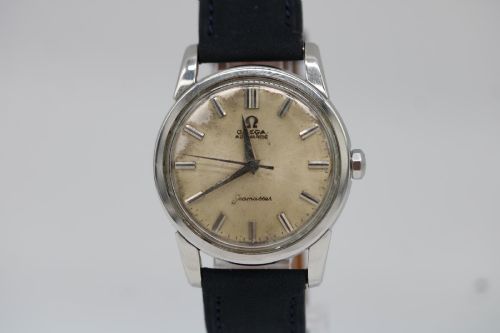
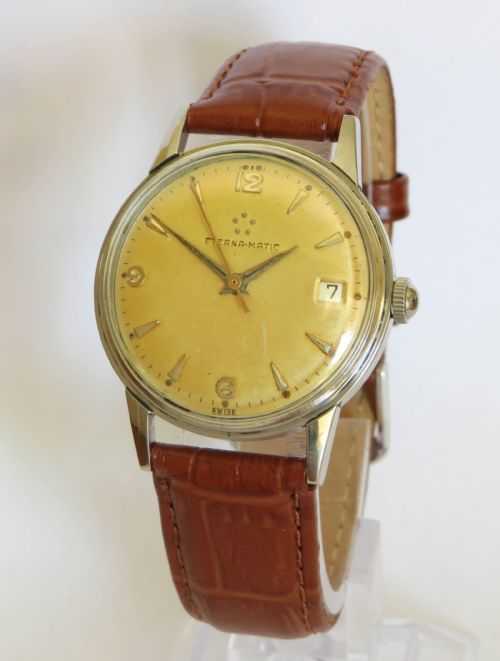
A mens 1950s mechanical watch brings mid-century horology to the wrist with manual and automatic movements housed in classic mid-century forms.
Mens 1950s Mechanical Watch
A mens 1950s mechanical watch comprises gentleman's wristwatches from the mid-century period, spanning manual wind and automatic movements housed in circular or shaped cases. These pieces appear in styles such as Mid-Century Modern, Mid-Century British, and Art Deco, reflecting the design priorities of the decade.
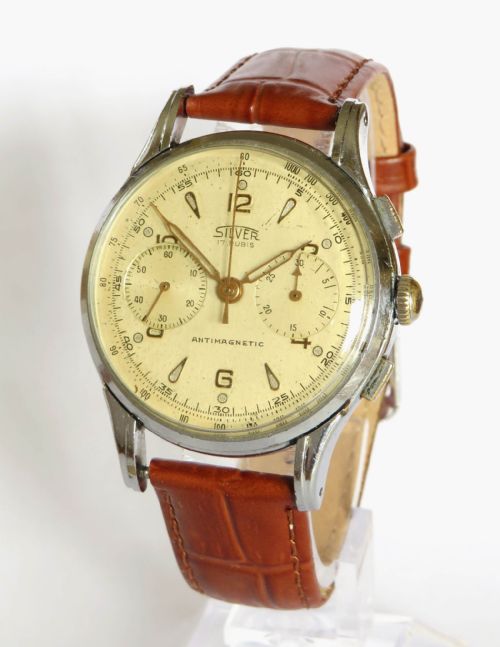
The most common version met on this page is the gents wrist watch from the 1950 epoch, often produced by Swiss makers or British firms like Smiths. They typically present in forms ranging from simple time-only dials to chronographs and calendar complications.
Makers represented span Swiss houses and British workshops, offering variations in case diameter, dial textures such as honeycomb and linen, and movement calibres. Collectors encounter these items categorised under styles including Mid-Century Swiss, Mid-Century Classic, and Mid-Century Aviation.
How they were made
Cases utilise metals such as stainless steel, chrome, gold plate, and solid 9ct gold, providing durable housings for mechanical movements. Crystals are formed from acrylic, acrylic glass, or glass to protect the dial.
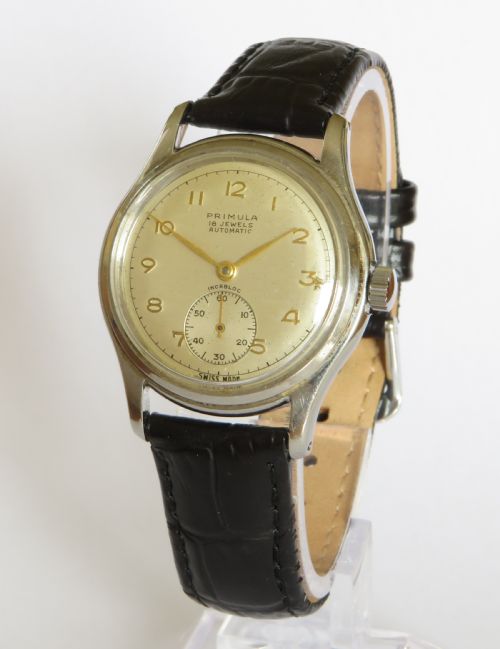
Straps are constructed from leather, securing the watch to the wrist with traditional pin buckles. Internal mechanisms rely on Swiss or British mechanical movements, encompassing manual wind and automatic calibres.
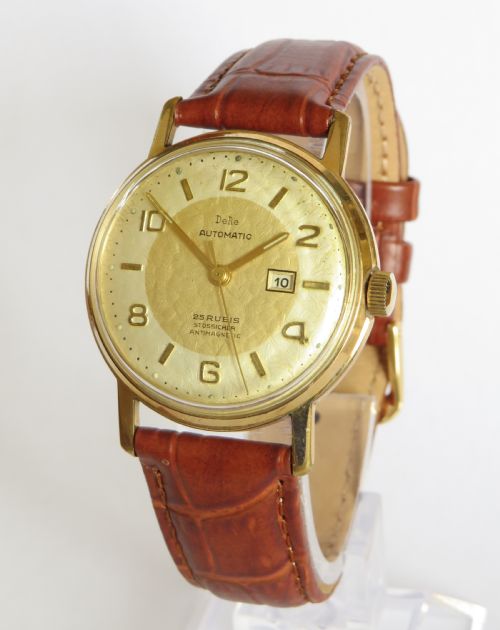
Some dials feature a honeycomb texture that catches the light whenever the wearer checks the time.
What varies in quality
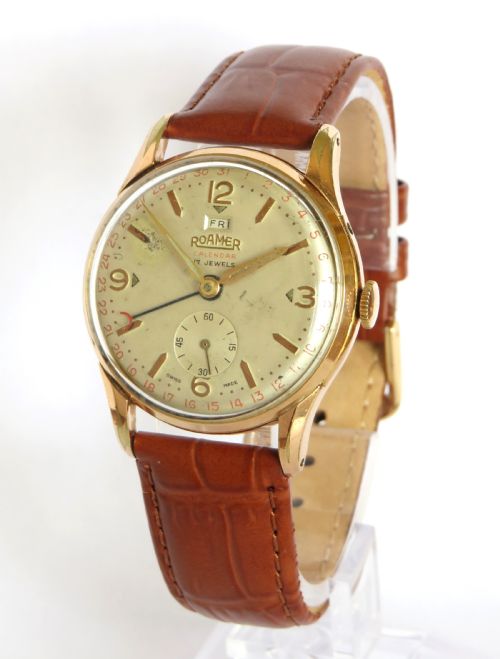
Quality diverges between standard production models and pieces featuring complications like chronographs, triple calendars, or chronometer certification. The choice of case metal also marks a distinction, moving from chrome and gold plate to solid 9ct gold.
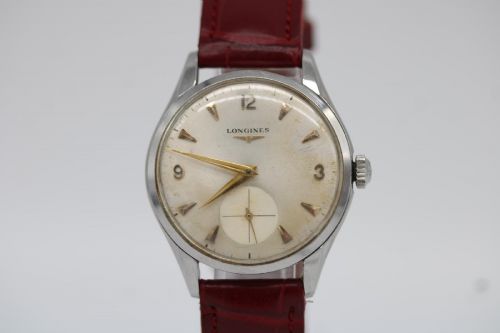
The sophistication of the internal movement calibre, such as specific Omega or Longines movements, separates standard examples from higher-tier pieces. Originality of components, including signed dials and associated sale papers, further influences the standing of an individual watch.
Montilier·Heloisa·J W Benson·Festina·Omega·Eterna Matic·Antoremi·DeRe·Roamer·Longines·Primula·Cyma·Enicar·Wittnauer·Dogma Prima·Kered·Rotary·Baume Bimatic·Lanco Sport·Smiths·Marvin·Certina·Fludo·Rolex·Ebana
The Mens 1950s Mechanical Watch Glossary
- Calibre
- The specific internal movement designation given by a watch manufacturer. It identifies the mechanical engine driving the timepiece.
- Chronograph
- A watch equipped with a stopwatch function alongside the standard time-displaying hands. These complications often include sub-dials for measuring elapsed seconds and minutes.
- Automatic
- A mechanical movement wound autonomously by the natural motion of the wearer's arm via an internal oscillating weight. This removes the need for daily manual winding.
- Manual Wind
- A mechanical movement powered solely by turning the crown by hand to tension the mainspring. This traditional system requires regular winding to maintain operation.
- Chronometer
- A high-precision mechanical watch that has passed rigorous accuracy tests conducted by an official observatory or testing body. These movements represent superior timekeeping standards of their era.
Mens 1950s Mechanical Watch: Frequently Asked Questions
How do I wind a manual watch?
Rotate the crown clockwise between your thumb and forefinger until you feel gentle resistance. Stop turning immediately to avoid over-winding the mainspring.
Wind the watch at approximately the same time each day to maintain consistent tension and accurate timekeeping.
Are these watches waterproof?
Most vintage pieces from this era lack modern rubber gaskets and screw-down crowns. Exposure to moisture can damage the delicate internal steel and brass components.
Keep the watch away from water, rain, and humidity to preserve the dial and movement.
How often need they be serviced?
Mechanical movements require periodic cleaning and fresh lubrication to prevent wear on the gears and pivots. Watchmakers generally recommend an interval of several years between professional services.
Regular maintenance ensures the oils do not congeal and maintains the precision of the movement.
Can I wear a vintage watch daily?
Daily wear is suitable provided you account for the mechanical nature and age of the timepiece. Avoid wearing the watch during strenuous physical activities or heavy impacts.
Storing the piece safely at night and handling the crown with care will support regular use.