


Vintage Longines Dress Watch
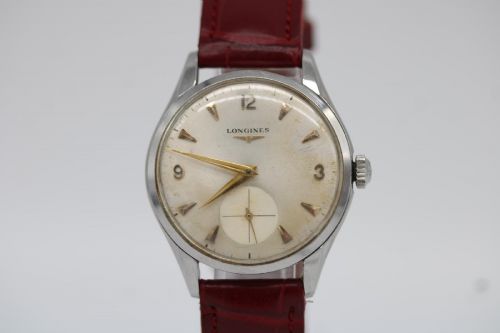
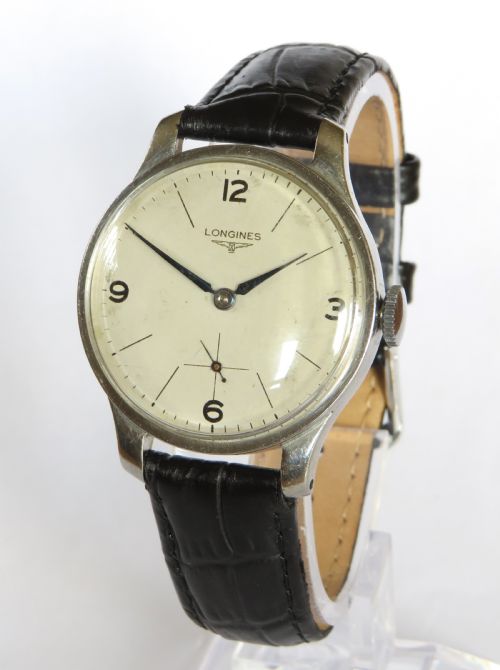
A vintage longines dress watch is a mechanical timepiece of enduring elegance, prized for its slim profile and classic dial design.
Vintage Longines Dress Watch
When you search for a vintage longines dress watch, you encounter mechanical wristwatches spanning the nineteen-forties, fifties, and sixties. These pieces include men's manual wind and automatic timepieces alongside ornate women's cocktail designs.
The most common examples on this page are men's wristwatches housed in stainless steel, gold plate, or solid nine-karat gold cases. They represent the mid-century modern and art deco styles favoured during their respective decades.
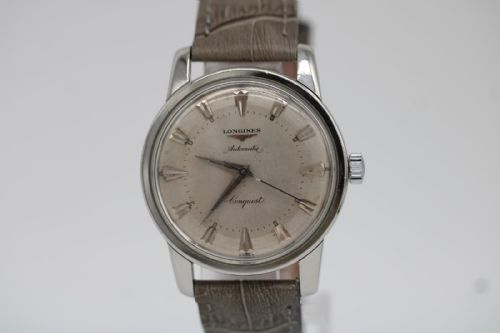
Specialised variants also appear, such as the Conquest line, models featuring Dennison cases, and pieces paired with their original presentation boxes. Each wristwatch reflects the Swiss manufacturing standards of its specific production year.
How they were made
These watches are constructed using precious metals like nine-karat and fourteen-karat white gold alongside stainless steel and gold plate for the exterior casing. Movements rely on precise mechanical engineering, incorporating seventeen or more jewels to reduce friction in the gear train.
Dials are protected by glass or acrylic crystals, while straps are frequently fashioned from leather to complement the formal aesthetic of the watch. Specialist casing contractors such as Dennison produced specific housing components for these Swiss movements.
Some watches arrive tucked inside their original branded boxes, preserving a tiny capsule of mid-century retail history alongside the timepiece.
What varies in quality
The standard of a vintage longines dress watch is determined by the preciousness of its casing materials, moving from plated base metals up to solid nine-karat and fourteen-karat white gold. Higher tiers often feature integrated diamond embellishments, particularly on cocktail models from the nineteen-sixties.
The integrity of the dial and the complexity of the internal movement, such as automatic winding mechanisms or specific calibre numbers like the twelve point six eight Z, separate standard production models from more distinguished examples. Retained original boxes and documented servicing histories also elevate the standing of an individual piece.
Longines·Wittnauer·Dennison
The Vintage Longines Dress Watch Glossary
- Calibre
- A specific designation given by the manufacturer to identify the exact internal movement design of the watch. This helps determine the mechanical lineage of the piece.
- Manual wind
- A mechanical movement that requires the wearer to manually turn the crown to tension the mainspring. This is a traditional winding method found in many mid-century timepieces.
- Automatic
- A self-winding mechanical movement that uses the natural motion of the wearer's wrist to power the watch. This removes the need for daily manual winding.
- Cocktail watch
- A small, highly decorative women's timepiece often worn for evening occasions. These models frequently incorporate precious metals and gemstones.
- Denisteel
- A proprietary stainless steel alloy used by case makers such as Dennison during the mid-twentieth century. It provides durable protection for the internal movement.
Vintage Longines Dress Watch: Frequently Asked Questions
What is a vintage longines dress watch?
A vintage longines dress watch is a mid-twentieth-century Swiss mechanical timepiece designed primarily for formal wear. These pieces are characterised by slim profiles, minimalist dials, and precious metal or steel cases.
They reflect the design sensibilities of the nineteen-forties, fifties, and sixties, offering a blend of traditional watchmaking and refined aesthetics. Collectors value them for their historical Swiss craftsmanship and enduring style.
How do I wind a manual watch?
To wind a manual vintage watch, gently rotate the crown clockwise between your thumb and forefinger until you feel slight resistance. Do not force the crown once resistance is met, as this can damage the mainspring.
It is best to wind the watch at a consistent time each day to maintain steady tension and accurate timekeeping. Automatic models generally do not require manual winding unless they have been stationary for an extended period.
How can I tell the period of a watch?
The period of a watch can often be identified through its overall design style, dial typography, and case proportions. Mid-century modern and art deco traits help narrow down the decade of production.
Internal movement calibres and serial numbers stamped on the case or movement provide more precise dating when checked against factory records. Hallmarks on gold cases also offer definitive clues regarding the year of manufacture.
How do I look after a vintage watch?
Caring for a vintage timepiece involves keeping it away from moisture, extreme magnetic fields, and heavy impacts. Because these watches predate modern waterproof standards, even water-resistant models require caution around liquids.
Routine servicing by a qualified horologist ensures the mechanical parts remain properly lubricated and accurate. Storing the watch in a secure box when not in use protects the crystal and case from unnecessary wear.