




Meissen Style Porcelain Figures
Meissen style porcelain figures bring animated historical character and elaborate ceramic modelling to a room.
Meissen Style Porcelain Figures
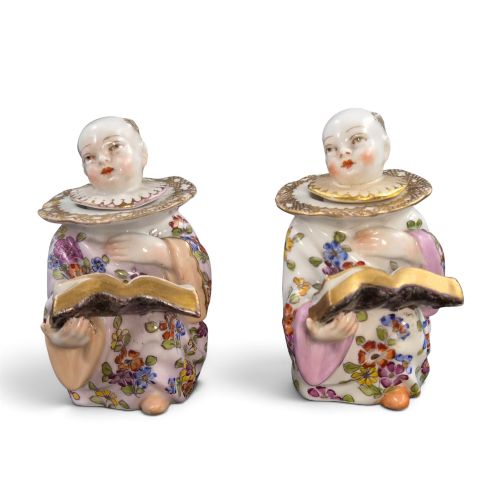
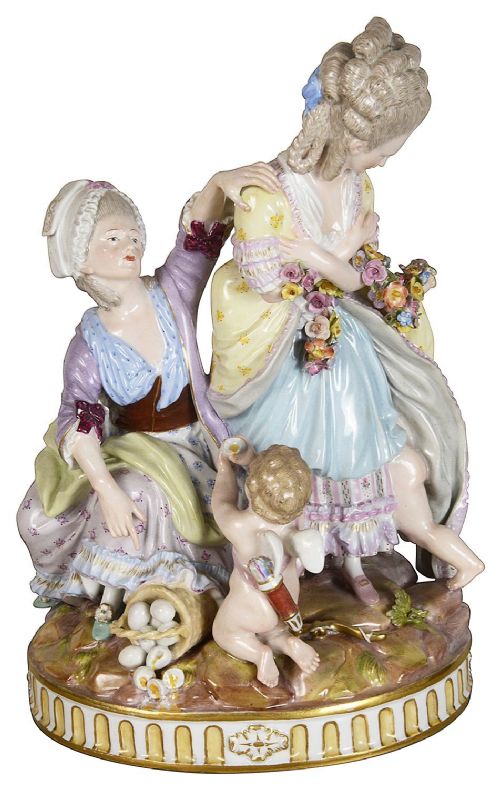
Meissen style porcelain figures encompass sculpted porcelain figurines, groups, candelabra, and centrepieces derived from German ceramic traditions. You will frequently encounter nineteenth century interpretations alongside eighteenth century examples, spanning styles from Rococo to Victorian.
The subjects range from romantic pairs and musicians to allegorical groups, children, street vendors, and nodders. These pieces function primarily as decorative centrepieces or table ornaments rather than utilitarian items.
How they were made
The pieces employ hard-paste porcelain shaped through detailed moulding and hand-modelling techniques. Artisans then apply enamel colours and gold leaf or gilding to accentuate the garments and surface details.
Certain models incorporate gilt bronze mounts, combining ceramic figures with metalwork to form functional candelabra and inkwells.
Listings feature hard-paste porcelain and enamel materials shaped into figures, candelabra, inkwells, and centrepieces across the eighteenth and nineteenth centuries.
What varies in quality
Quality rests upon the crispness of the modelling and the precision of the hand painting. Finer examples display delicate facial expressions, intricate lace or foliage details, and carefully controlled enamel work.
Larger paired groups and pieces incorporating bronze mounts or elaborate figural compositions generally represent more ambitious manufacturing efforts than smaller single figures.
Edmé Samson·Helena Wolfsohn·Sitzendorf
The Meissen Style Porcelain Figures Glossary
- Hard-paste porcelain
- A dense, vitrified ceramic material fired at high temperatures using kaolin and petuntse. It provides a durable body suited to intricate sculptural forms.
- Rococo Revival
- A nineteenth century design style echoing the ornate curves and asymmetry of the eighteenth century. It appears frequently in the scrollwork and bases of these figures.
- Gilding
- The application of gold leaf or gold paint to ceramic surfaces. This technique highlights decorative elements and trims on garments or bases.
- Candelabra
- Branched lighting fixtures designed to hold multiple candles. In this category, porcelain figures form the central stem or support of the piece.
- Chinoiserie
- European artistic styles reflecting Chinese and East Asian motifs. This aesthetic appears in figures such as nodding pagodas.
Meissen Style Porcelain Figures: Frequently Asked Questions
How do I care for antique porcelain figures?
Dust the figures gently with a soft, dry brush to prevent accumulation in crevices and painted details. Avoid using water or liquid cleaners, particularly around gilded or enamel surfaces.
Keep them away from direct sunlight and areas subject to sudden temperature changes. Stable indoor environments protect both the ceramic body and any applied metal mounts.
Where were these figures displayed historically?
These decorative objects sat upon mantelpieces, console tables, and dining room centrepieces in grand nineteenth century interiors. They served as conversation pieces that demonstrated the owner's taste.
Pairs often flanked clocks or candelabra on pier tables. Their intricate modelled scenes rewarded close inspection by guests in a drawing room.
How can I tell the period of a figure?
Examine the style of the modelling, the palette of the enamel colours, and the characteristics of the paste. Nineteenth century revival pieces often adopt eighteenth century subjects while displaying Victorian manufacturing traits.
Base construction, glaze texture, and any associated mounting hardware offer further clues to date. Comparing the specific subject model to known historical records aids identification.
What subjects are most common?
Romantic pairs, musicians, children, and allegorical figures dominate the repertoire. These themes reflect popular pastoral and theatrical motifs from European ceramic history.
More specialised subjects include street vendors, literary figures, and mythological groups. Each subject dictated the complexity of the grouping and its painted decoration.