


Meiji Style Vase
These meiji style vase pieces bring decorative Japanese craftsmanship from the nineteenth and early twentieth centuries straight into your room.
Meiji Style Vase
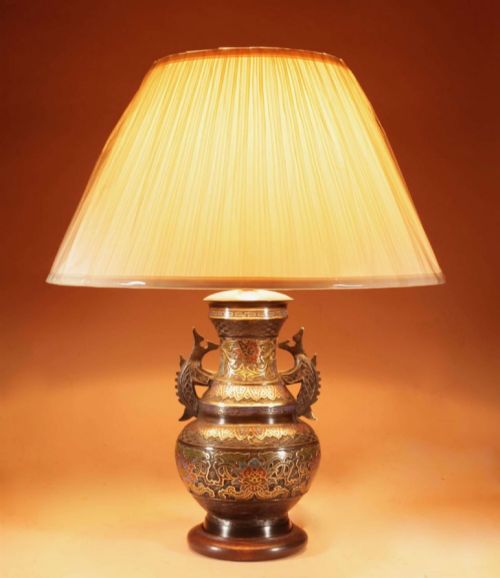
When you search for a meiji style vase, you are looking at items spanning the nineteenth century, Victorian, Edwardian, and early twentieth century periods. The forms include standard vases, ginger jars, and table lamps adapted from earlier vessels.
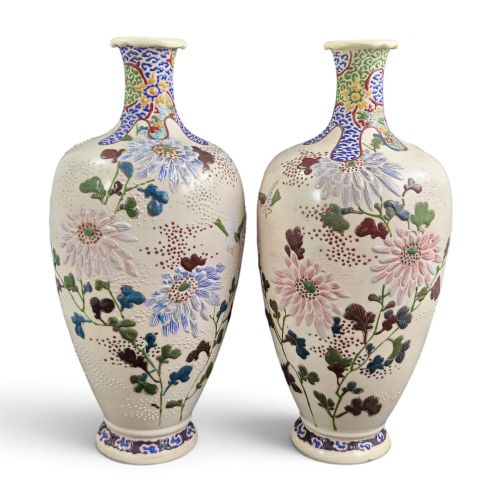
The objects originate from Japanese traditions such as Imari, Satsuma, and Cloisonné, often carrying the aesthetic influence of Japonisme. You will frequently encounter pairs of porcelain, earthenware, or bronze vessels decorated with intricate patterns.
Materials and construction
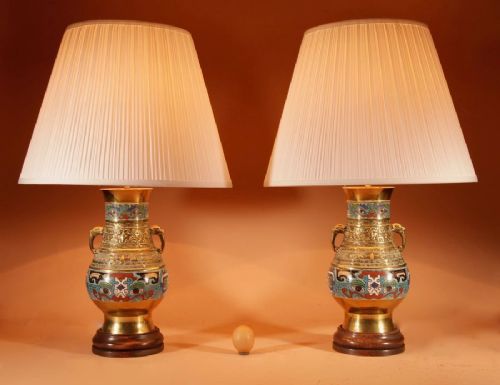
The pieces on show utilise a range of hard and soft materials, including porcelain, earthenware, bronze, and brass. Many incorporate detailed surface treatments such as enamel, glaze, champlevé, and moriage decoration.
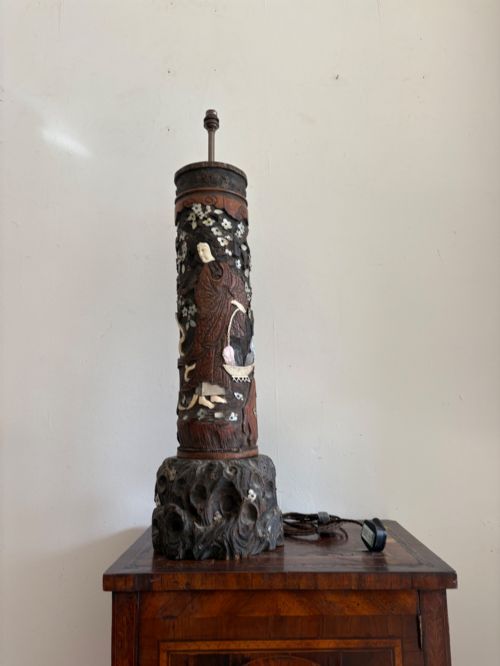
Some items feature added elements like mother of pearl or carved wood, while others employ intricate geometric inset panels. Artisans shaped these vessels from clay or cast them in metal before applying traditional decorative layers.
Materials appearing across the current selection include bronze, brass, porcelain, earthenware, and fabric.
Distinctions in quality
Quality rests upon the crispness of the enamel work and the precision of the glaze application. Stronger examples display deeply detailed motifs, such as crisply rendered chrysanthemums or bamboo patterns, rather than flat or muddy decoration.
The integrity of the material also dictates the standard, with well-preserved bronze casting and fine porcelain body shaping standing apart from coarser production. Maker attribution, as seen in works from specific kilns like Fukagawa, adds further distinction.
Chikusai·Fukagawa
The Meiji Style Vase Glossary
- Cloisonne
- A technique where enamel is applied to compartments created by soldering wires onto a metal base. This method produces intricate patterns defined by thin metal lines.
- Satsuma
- A type of Japanese earthenware featuring a crackle glaze and ornate polychrome and gilt decoration. It originates from the Satsuma Province.
- Imari
- A traditional style of Japanese porcelain featuring a distinct palette of underglaze blue and iron red, supplemented by gold, green, and other colours. The style became immensely popular in the West.
- Champleve
- An enamelling technique where troughs are carved into a metal surface and filled with enamel powder before firing. The surrounding metal forms the raised outlines of the design.
- Moriage
- A decorative technique in Japanese ceramics where slip is applied in raised dots or lines to create a textured, three-dimensional surface. This method is frequently found on Satsuma wares.
Meiji Style Vase: Frequently Asked Questions
How do I identify a Meiji period piece?
Identification relies on observing the materials, decorative styles, and manufacturing methods characteristic of late nineteenth and early twentieth century Japanese craftsmanship.
Look for specific traits like crackle glazes, champlevé enamel work, or distinctive kiln marks associated with makers from that era.
Are these vases functional or decorative?
Most of these vessels are primarily decorative objects intended for display on tables, mantels, or shelves.
Some examples have been adapted over time into table lamps, combining antique Japanese porcelain or bronze bodies with modern electrical wiring.
How do I care for antique Japanese vases?
Care requires gentle handling and regular dusting with a soft, dry cloth to protect delicate surfaces like enamel, moriage, or exposed metal.
Avoid using harsh chemical cleaners or submerging pieces in water, particularly those with porous earthenware bodies or applied decorative elements.