


Oriental Floor Urns
These oriental floor urns are large vessels from the nineteenth and early twentieth centuries that anchor a room with substance and colour.
Oriental Floor Urns
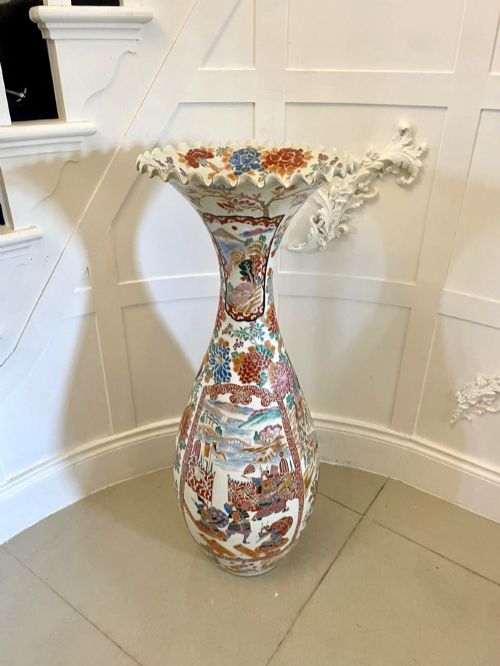
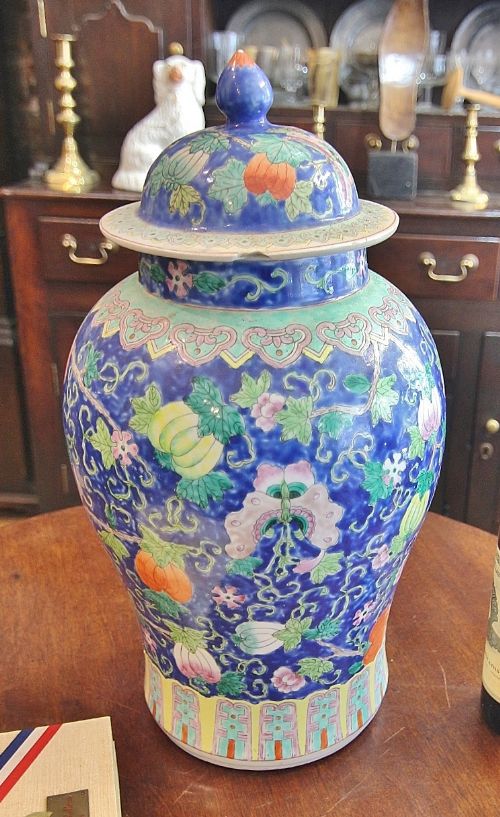
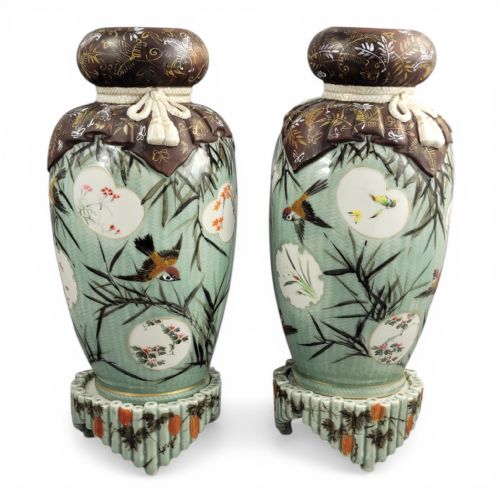
Oriental floor urns comprise large vases, palace jars, and temple vessels originating from Japan and China across the nineteenth century and into the twentieth century. These pieces include floor-standing vases and substantial lidded containers designed to occupy open spaces rather than sit on tables.
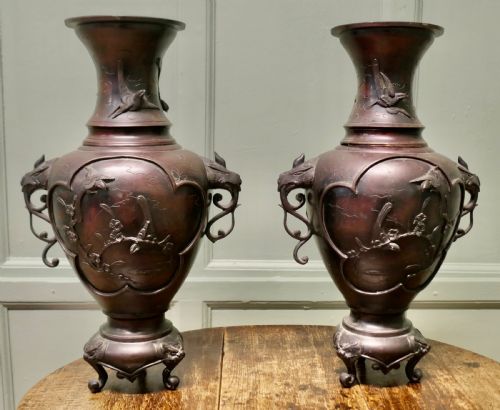
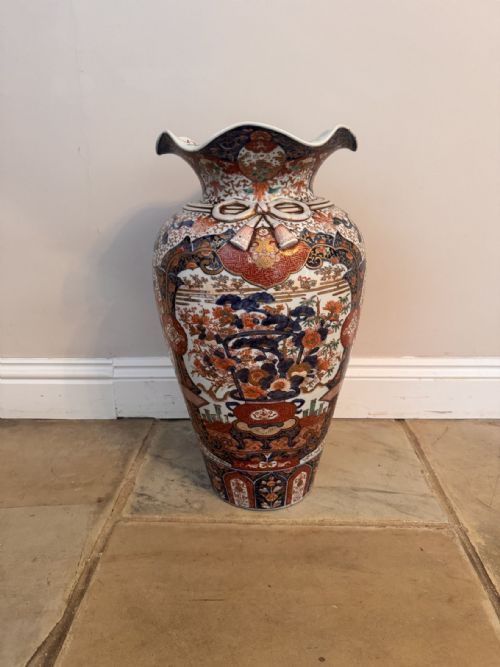
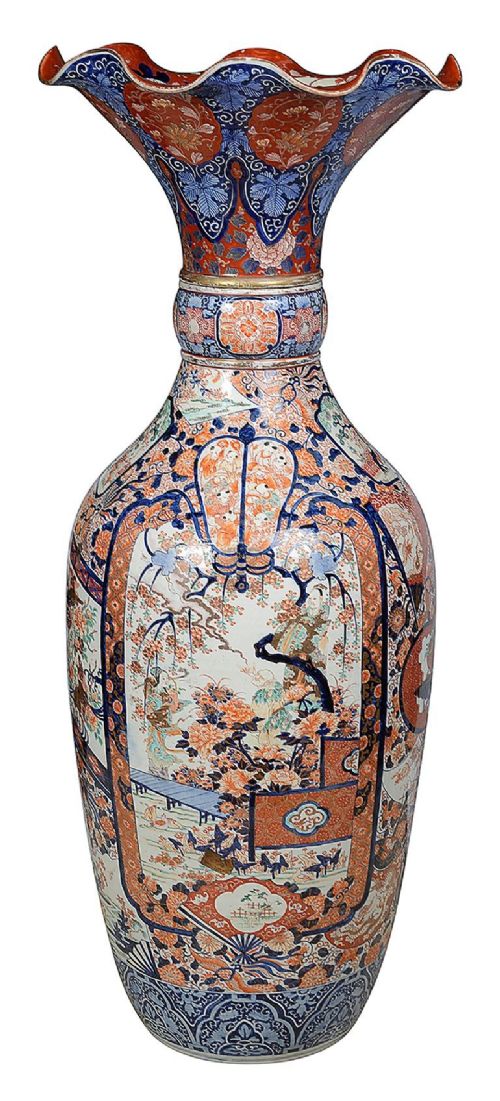
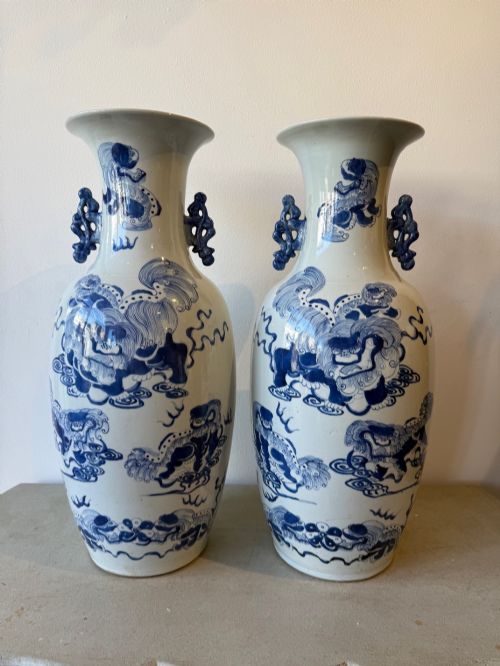
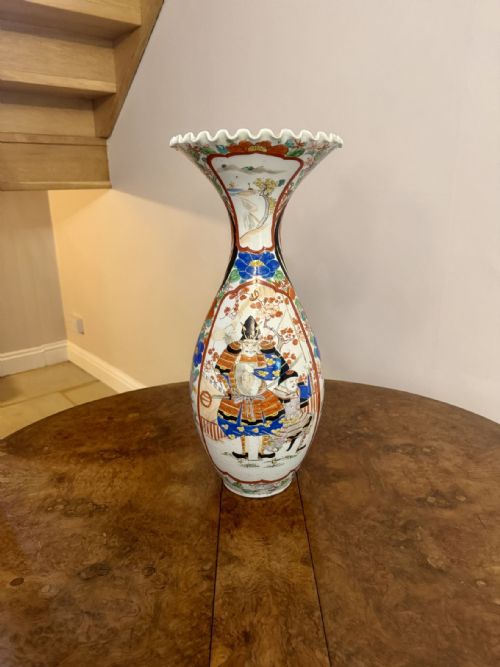
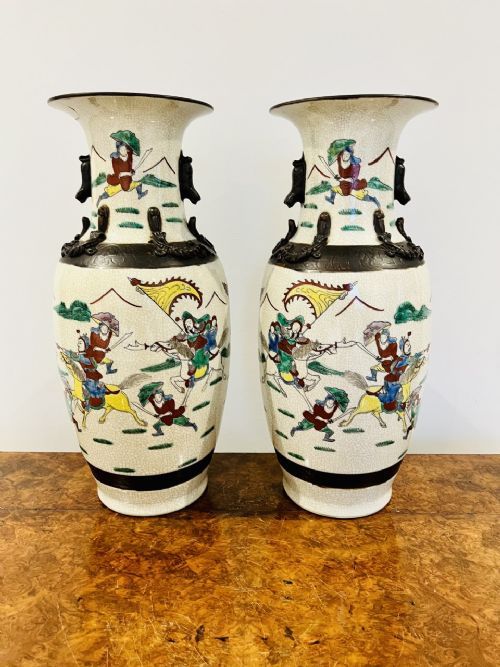
The Japanese examples on this page are dominated by Imari wares, Satsuma ceramics, and Meiji period bronzes, alongside cloisonné enamel palace pieces. Chinese contributions feature blue and white porcelain, cracked glaze surfaces, and Canton Famille Rose or Famille Verte baluster designs.
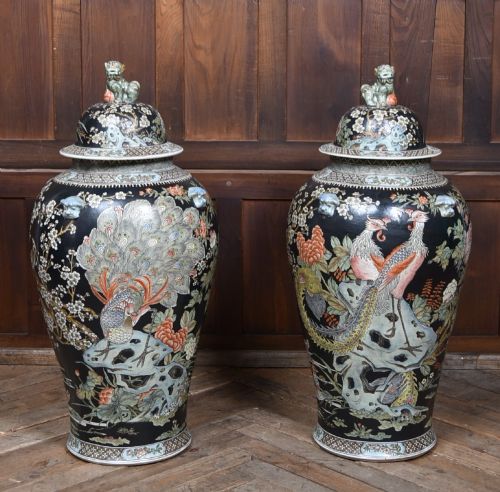
Buyers will most frequently encounter large pairs of Imari and Satsuma vessels alongside tall Chinese palace jars. These objects reflect both domestic export markets and traditional East Asian interior forms.
How they were made
Makers shaped these vessels from porcelain, earthenware, and bronze, applying surface decoration through intricate hand-painting, glaze techniques, and gold leaf. Cloisonné enamel pieces utilised wire cells soldered to metal bases to contain vitreous pastes before firing.
Many Japanese and Chinese works integrated specialised details such as lacquer panels, geometric inset sections, or over-paint treatments. Firing took place in traditional kilns, achieving deep cobalt blues, polychrome enamel palettes, and crackled glaze textures.
The recorded styles span Meiji period Japanese works, Qing dynasty Chinese objects, and traditional export wares.
What varies in quality
The upper tier of these vessels displays precision in hand-painted detail and depth in enamel or glaze work, particularly in the rendering of motifs like phoenixes and koi. Superior pieces often originate from named makers or established periods, showing rigorous control during the firing and gilding processes.
Lesser examples show less refined brushwork or more uniform decoration that lacks the complexity of monumental palace pieces. The presence of matching original stands or integrated components also separates standard production items from significant workshop creations.
Kato Sanhei·Kinkozan
The Oriental Floor Urns Glossary
- Imari
- A style of Japanese export porcelain characterised by a palette of underglaze blue, iron red, and gilt highlights. These pieces were produced extensively during the Meiji period.
- Satsuma
- A type of earthenware from Japan featuring a cracked ivory glaze decorated with polychrome enamels and gilding. Satsuma wares often depict figurative scenes and natural subjects.
- Cloisonné
- A metalwork technique where compartments are created on a bronze or copper body using flat wires and filled with enamel. The object is then fired and polished to a smooth finish.
- Famille Rose
- A major palette of Chinese ceramic glazes introduced in the Qing dynasty, distinguished by opaque pink or rose enamel colours. This style complemented earlier green and blue families.
- Baluster
- A vase form with a rounded body that tapers toward the base and swells near the lower middle, resembling an architectural baluster. This shape provides stability for large floor vessels.
Oriental Floor Urns: Frequently Asked Questions
How were oriental floor urns used?
These large vessels functioned primarily as decorative focal points in grand interiors, placed directly on the floor in halls, vestibules, or principal rooms. Some specific forms served as lidded containers or temple jars.
Their substantial height and wide profiles allowed them to fill empty architectural spaces. They demonstrated the owner's appreciation for fine East Asian craftsmanship.
Where should I place a floor vase?
Floor vases suit open corners, entrance halls, or wide landings where their height and decorative surfaces remain visible. They require stable footing away from heavy foot traffic.
Pairing them with matching original stands helps elevate the presentation. Placing them out of direct sunlight preserves the enamel and gold leaf details.
How do I identify Meiji period pieces?
Meiji period pieces align with the reign of Emperor Meiji in Japan, spanning from 1868 to 1912. They often feature distinct studio signatures or mark styles from that era.
The craftsmanship in this window frequently combines traditional techniques with ambitious scale, as seen in complex Satsuma wares and detailed bronzes.
What is the difference between Imari and Satsuma?
Imari wares are hard porcelain vessels decorated in iron red, cobalt blue, and gold with crisp, geometric or floral patterns. They offer a resonant clink when tapped gently.
Satsuma items are earthenware bodies covered in a fine crackle glaze, painted with dense figurative scenes in soft enamel colours. They feel heavier and possess a warmer, opaque surface.