



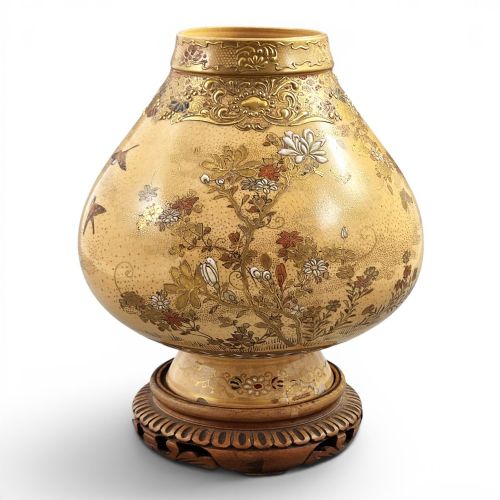
Meiji Satsuma Earthenware
Meiji Satsuma earthenware combines intricate hand-painted enamels with fine crackle-glaze pottery to create distinctively decorative Japanese vessels.
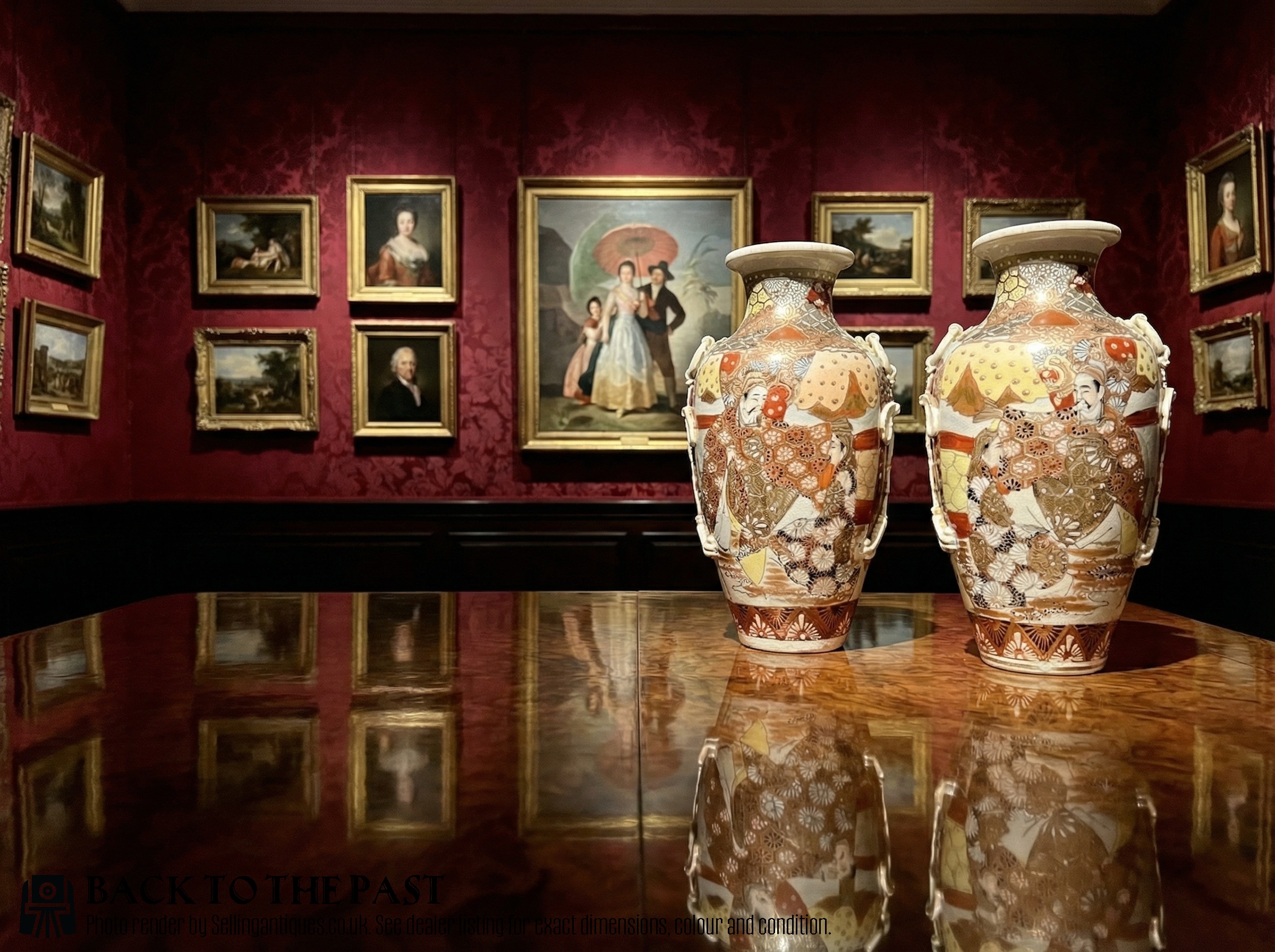
Meiji Satsuma Earthenware
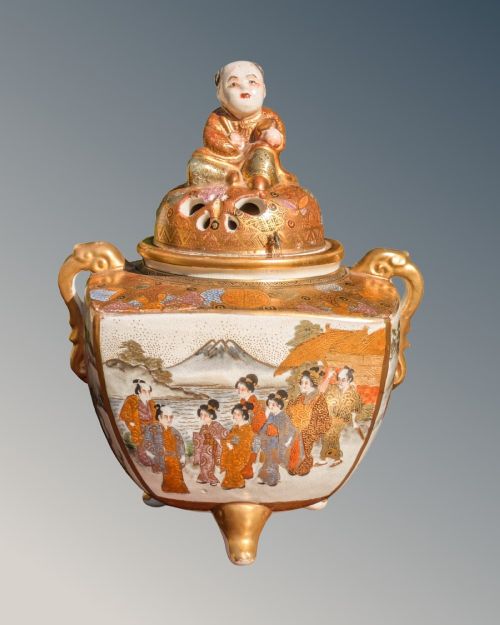
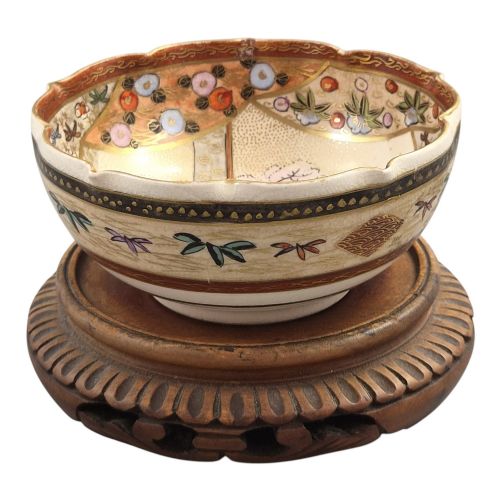
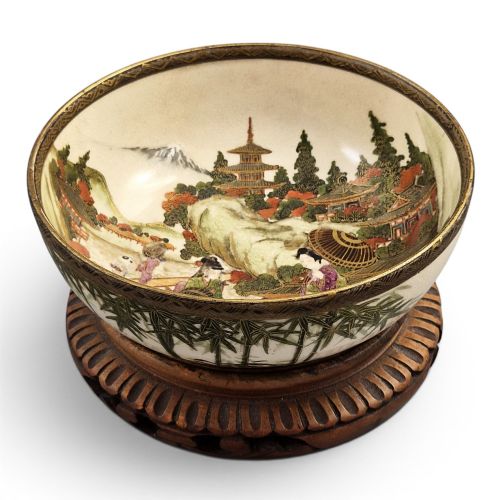
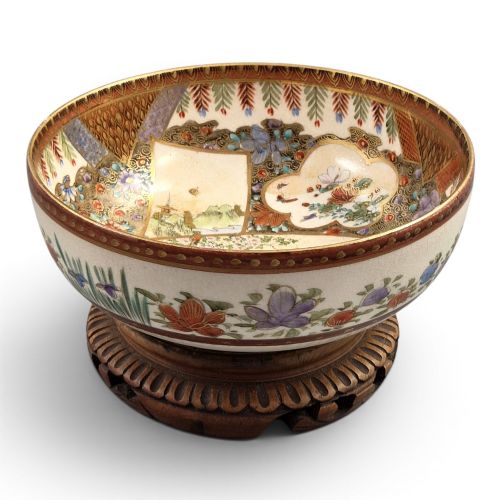
Meiji Satsuma earthenware encompasses vases, decorative bowls, incense burners, and tea caddies produced primarily during the 19th century and the Meiji period.
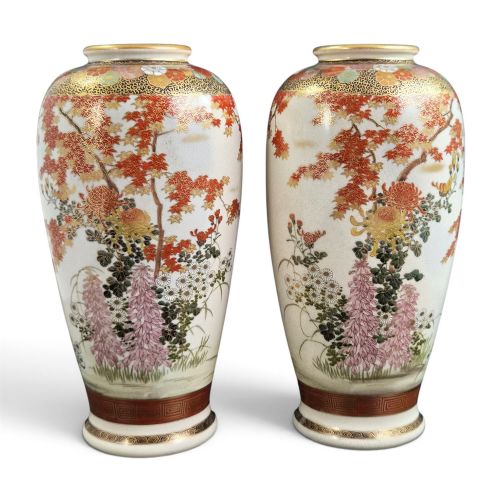
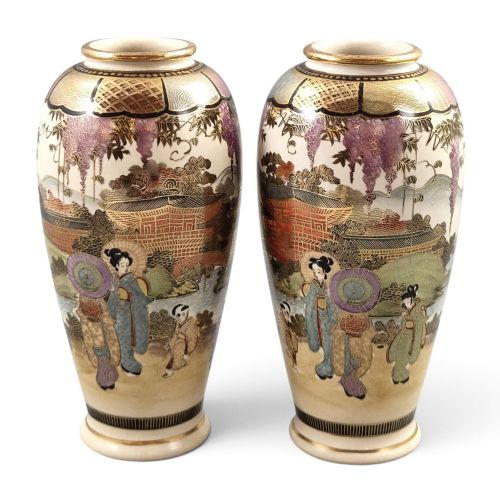
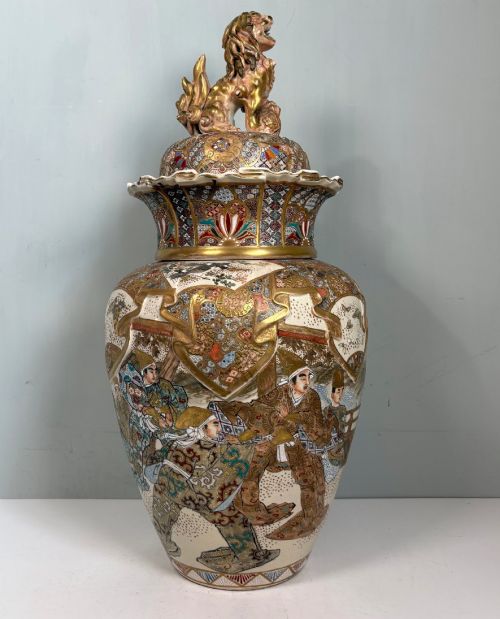
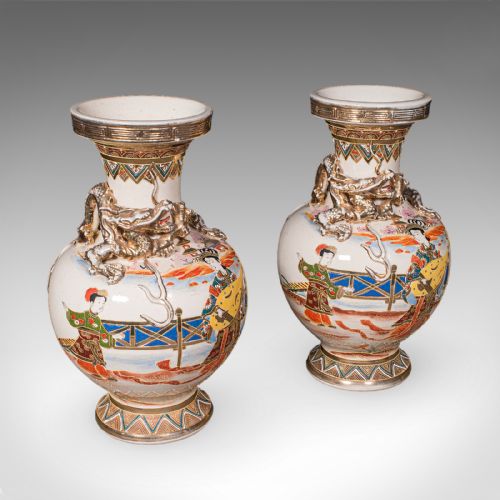
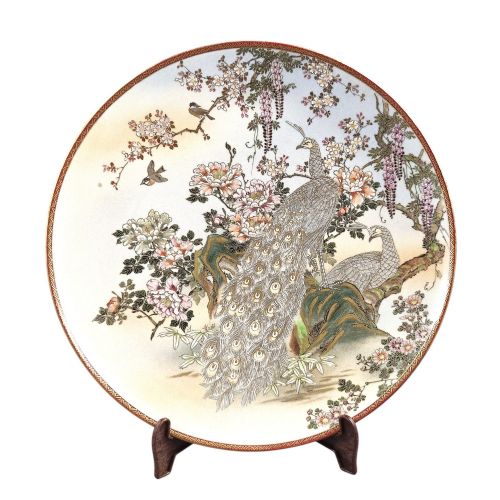
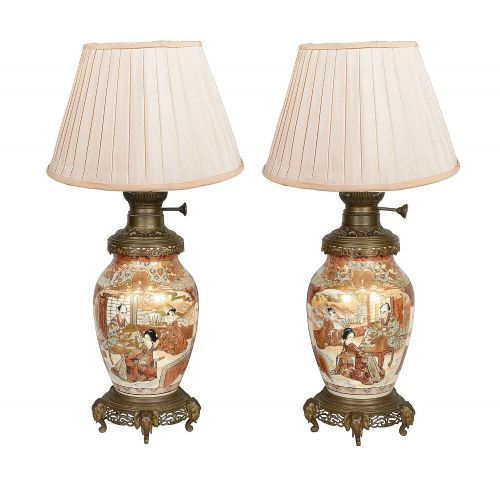
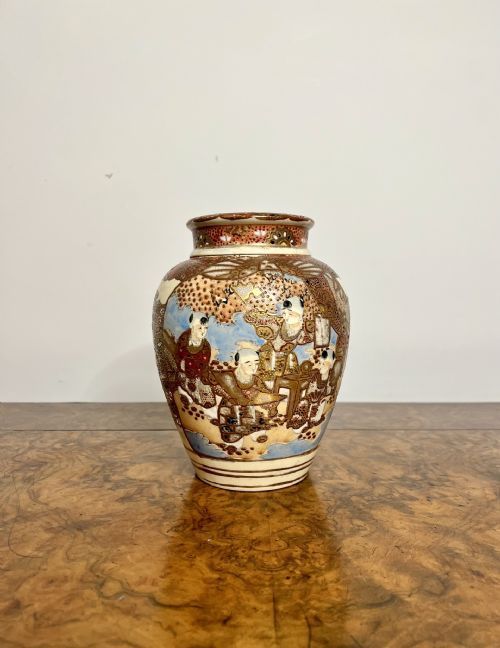
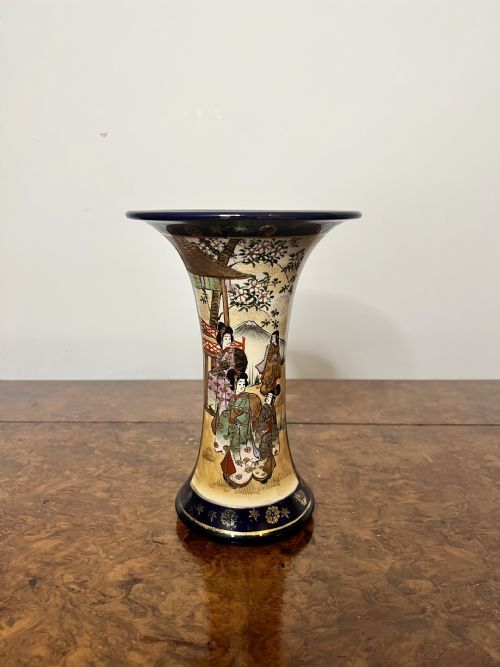
Buyers frequently encounter baluster vases, chargers, and small jars featuring detailed figurative scenes, court figures, or botanical motifs.
The objects originate from Japanese production centres such as Kyoto and Kobe, reflecting the aesthetic developments of the Meiji and Taisho periods.
Materials and construction techniques
Potters shaped the earthenware bodies to form bowls, vases, and lidded jars before applying a characteristic glaze that develops a fine network of crackles.
Artisans decorated the surfaces using polychrome enamels and gold leaf, often incorporating raised moriage details to add texture to floral patterns and figures.
Common forms recorded across the inventory include vases, decorative bowls, incense burners, tea caddies, and plates.
Factors determining quality
The refinement of the brushwork and the complexity of the painted compositions separate standard production from master-executed works.
Precision in the application of gilding and the crispness of the raised enamel relief dictate the visual success of each piece.
Koshida·Maruni Kobe·Shozan·Kizan·Gyokkō·Kozan·Kinkōzan·Hotoda·Shizan·Toshozan·Ryuzan·Chosei·Nanzan
The Meiji Satsuma Earthenware Glossary
- Earthenware
- Porous pottery fired at lower temperatures, forming the ceramic body of these vessels.
- Moriage
- A technique of applying slip in raised dots or lines to create textured decorative reliefs.
- Koro
- A traditional Japanese incense burner, often supported on three feet and fitted with a pierced cover.
- Natsume
- A small tea caddy traditionally used in Japanese tea ceremonies, characterised by a flat-topped lid.
- Gilt
- A thin layer of gold or gold leaf applied to decorate the surfaces and highlights.
Meiji Satsuma Earthenware: Frequently Asked Questions
What are meiji satsuma earthenware items?
These pieces are Japanese ceramic vessels featuring characteristic crackle glazes and detailed enamel paintings.
They include utilitarian forms adapted for decorative display, such as incense burners and tea caddies.
How were satsuma vessels used?
Many items served practical functions within domestic settings, including tea storage and burning incense.
Larger chargers and vases were primarily intended for decorative display in Japanese interiors and international export markets.
How do I identify a meiji period piece?
Identification relies on recognising typical stylistic motifs, such as court figures, arhats, and dense floral patterns.
Maker marks and signatures painted on the base often provide specific attribution to workshops active during the late 19th and early 20th centuries.
How should I clean my earthenware?
Dusting gently with a dry, soft cloth preserves the delicate enamel and gold leaf decorations.
Moisture and harsh cleaning agents should be avoided to protect the absorbent earthenware body and the surface glaze.