



Meiji Porcelain Incense Burner
These meiji porcelain incense burner pieces combine delicate ceramic modeling with intricate hand-painted decoration, offering collectors a striking example of nineteenth-century Japanese artistry.
Meiji Porcelain Incense Burner
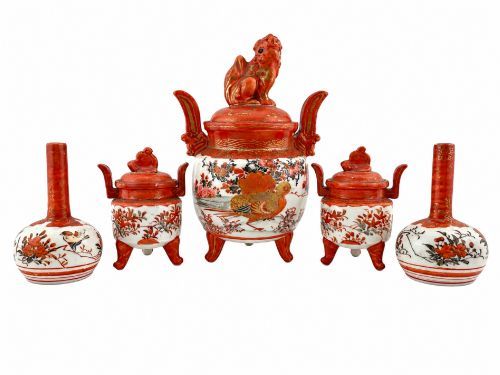
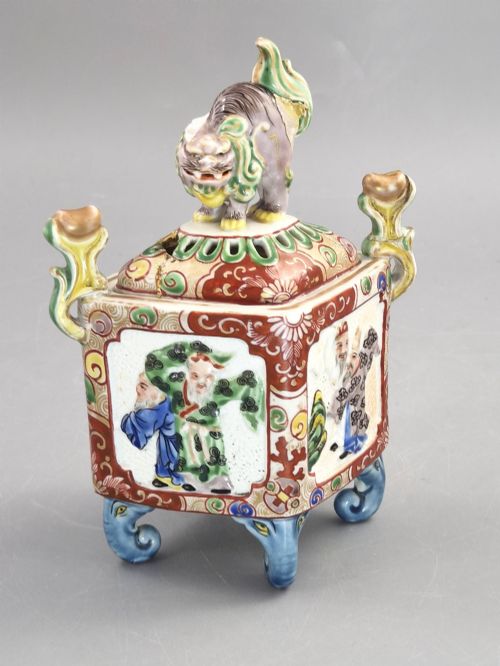
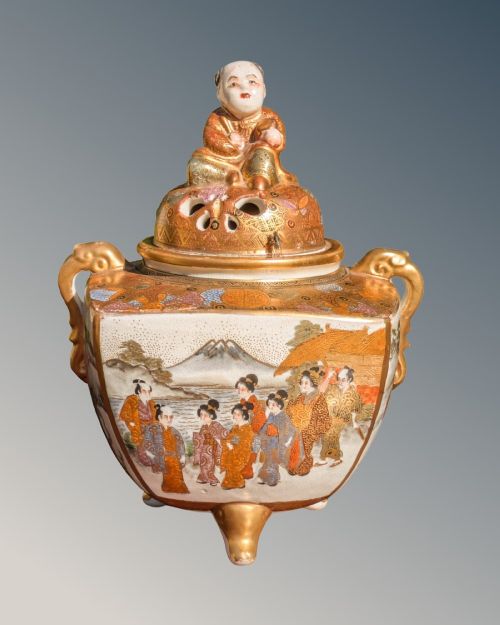
A meiji porcelain incense burner takes the form of a lidded vessel, often called a koro, designed to hold burning aromatics during the nineteenth century. These items range from tripod koro supported by elephant head feet to figural vessels shaped like treasure ships.
Buyers will most frequently encounter pieces originating from the Meiji period, alongside related examples from the Edwardian era. Forms include both standalone lidded vessels and components from larger five-piece porcelain garniture sets.
Decoration draws heavily upon traditional Japanese motifs, frequently incorporating figures such as the shishi lion or karashishi finial alongside birds and sculpted dragons. Signatures and crests, including the Shimazu crest, occasionally appear on these works.
How they were made
Makers shaped these vessels using porcelain, earthenware, and cobalt underglaze to form the foundational body of each koro and its cover. Artisans then applied detailed enamel work to enrich the surface imagery.
Surface ornamentation frequently incorporates gold leaf and gold gilt highlights, adding metallic brilliance to the painted scenes. Reticulated openwork cutting appears on select pieces alongside sculpted elements like dragons and figural finials.
Meiji Porcelain Incense Burner Retail Price Guide 2026
Typical asking prices for meiji porcelain incense burner among the pieces listed under this phrase on Sellingantiques today, from the lower quarter to the upper quarter. They describe what is for sale here now, not the wider market.
Listings feature items spanning the 19th century, 1890, and the Edwardian period, utilising materials such as enamel, porcelain, gold leaf, earthenware, gilding, cobalt underglaze, and bronze.
What varies in quality
The refinement of the painted enamel and the precision of the gilding set superior examples apart from standard production. Artisans who achieved crisp outlines and balanced compositions produced works of greater visual harmony.
The complexity of the form influences the standing of the piece, particularly where sculptural elements like a karashishi finial, elephant head feet, or reticulated panels are involved. Finer specimens display careful control in both ceramic shrinkage during firing and subsequent surface decoration.
Kizan
The Meiji Porcelain Incense Burner Glossary
- Koro
- A traditional Japanese incense burner typically featuring a pierced cover to allow scented smoke to escape. These vessels rest on feet and serve both functional and decorative purposes.
- Shishi
- A mythical guardian lion, often depicted as a finial on the lid of an incense burner. This creature symbolises protection and strength in Japanese art.
- Garniture
- A coordinated set of decorative vases and incense burners designed to be displayed together on a mantelpiece or shelf. Such sets often comprise five matching pieces.
- Reticulated
- Describes ceramic work featuring intricate openwork patterns carved into the clay before firing. This technique creates delicate lattice designs that allow light and air to pass through.
Meiji Porcelain Incense Burner: Frequently Asked Questions
What is a koro?
A koro is a traditional Japanese vessel specifically designed for burning incense during tea ceremonies or quiet contemplation.
These pieces typically feature a removable lid and supportive feet, allowing scented smoke to filter through decorative openings.
How do I date a Meiji period piece?
Dating relies upon stylistic markers, regional kiln characteristics, and the historical parameters of the Meiji era spanning from 1868 to 1912.
Many works from this timeframe also carry signature marks or specific crests that link them to particular workshops.
Where were these incense burners made?
These vessels originated in various renowned ceramic centres across Japan, including Satsuma, Kutani, and Hirado.
Each region developed distinct clay bodies and painting traditions, ranging from fine porcelain to heavier earthenware.
How should I display a koro?
A koro looks best placed on a stable surface where its detailed glaze and sculptural finial can be appreciated from multiple angles.
Because many pieces include matching covers, positioning them away from busy edges ensures the lid remains secure.