

Meiji Period Decorative Antiques
Meiji period decorative antiques bring exceptional craftsmanship into a room, spanning intricate bronze vessels, vibrant porcelain, and delicate enamel work.
Meiji Period Decorative Antiques
Meiji period decorative antiques comprise a diverse range of objects created in Japan during the late nineteenth and early twentieth centuries, capturing a period of intense artistic output and international export. Buyers seeking these items will find an array of functional and ornamental pieces designed to showcase traditional Japanese motifs.
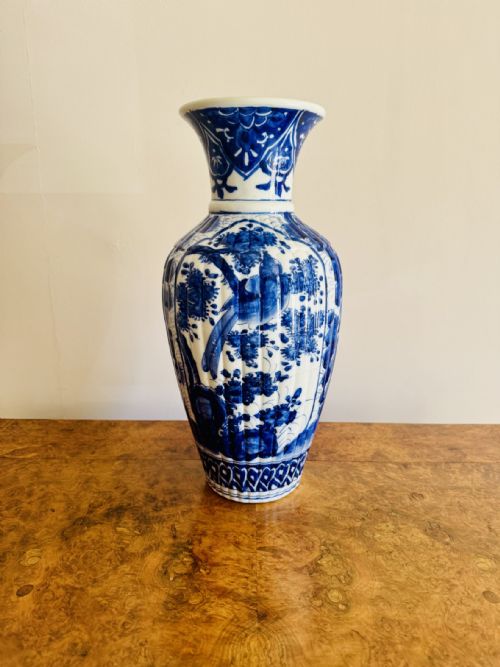
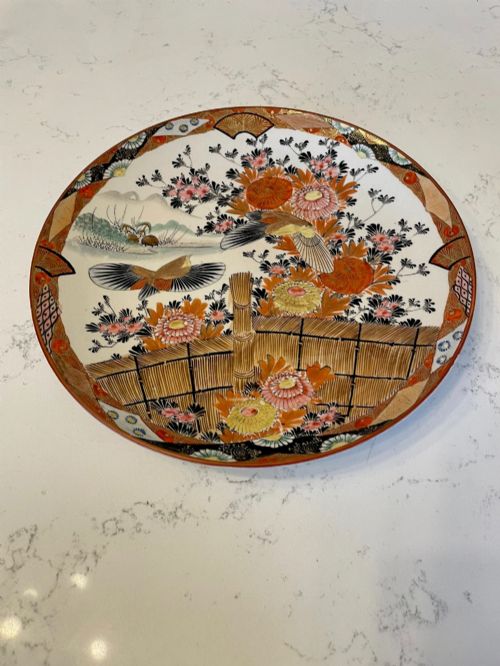
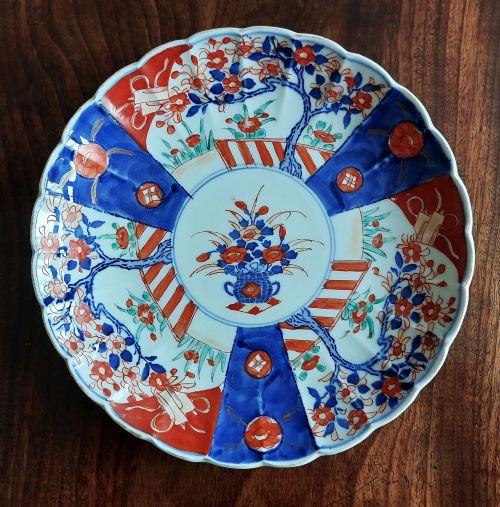
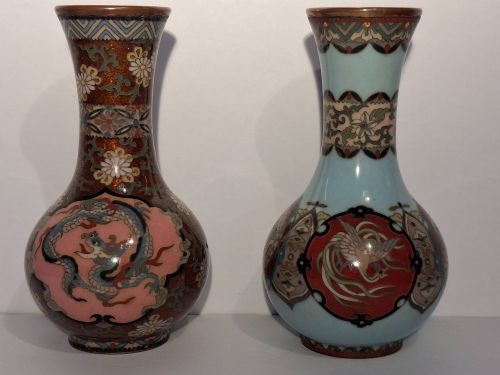
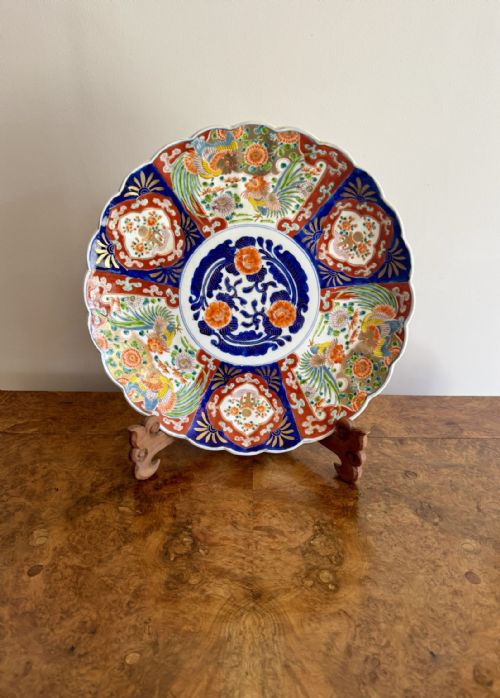
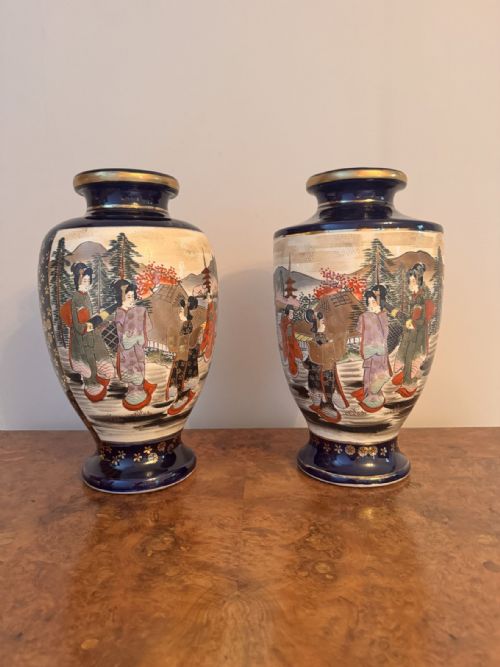
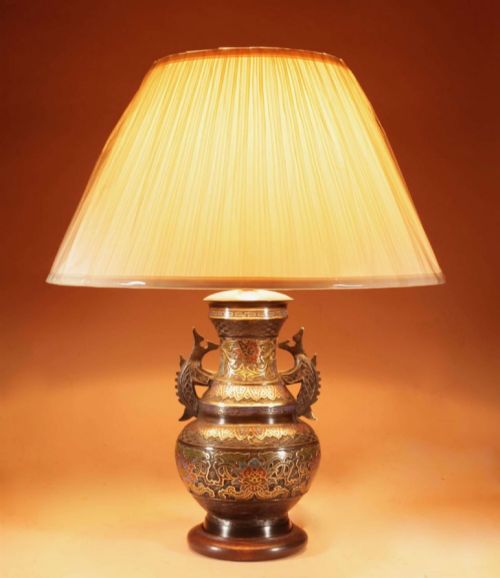
The selections on this page are dominated by Japanese Imari porcelain chargers, plates, and bowls featuring characteristic scalloped edges and rich cobalt and iron-red palettes. Alongside these ceramics, the inventory includes bronze vases, cloisonné enamel chargers, Satsuma pottery, and occasional items like table lamps and screens.
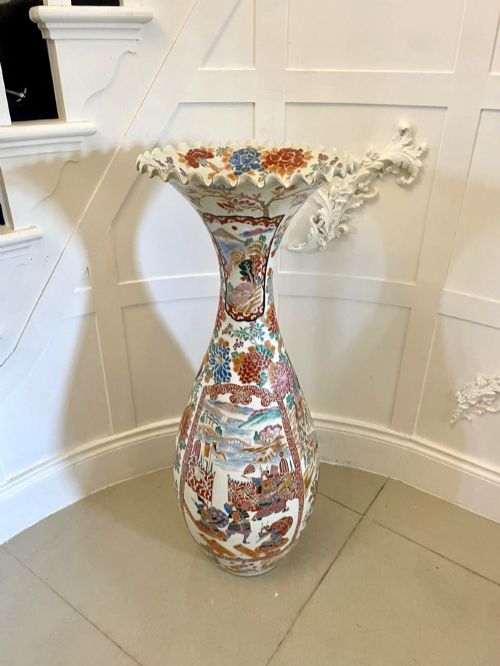
Originating largely from the nineteenth century through the early nineteen-twenties, these objects reflect both traditional domestic aesthetics and the tastes of Western collectors during the Meiji era. Vases and decorative dishes form the core of what meets the eye, offering varied forms from large floor-standing vessels to small display bowls.
Materials and methods
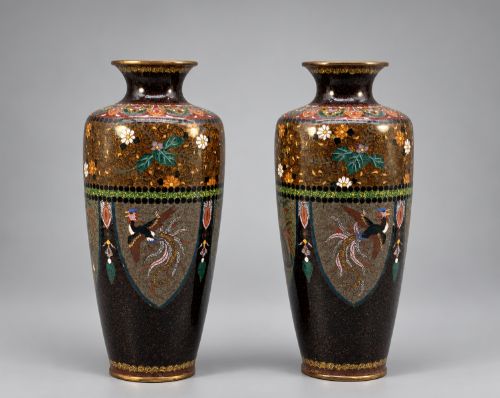
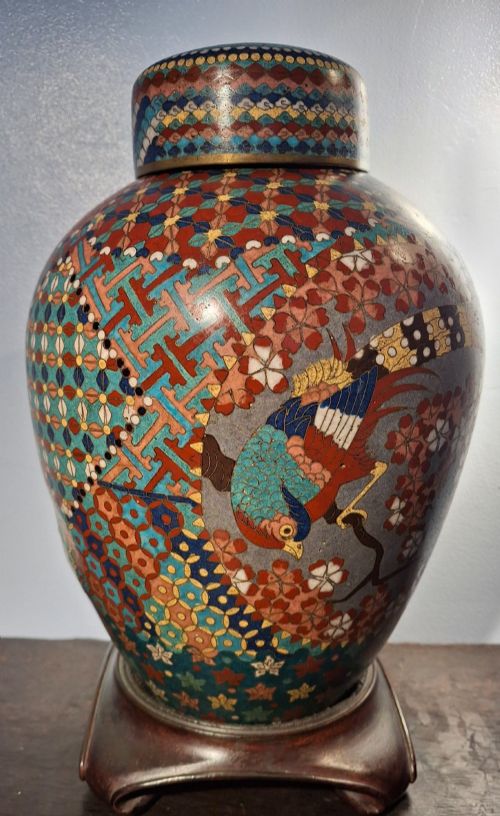
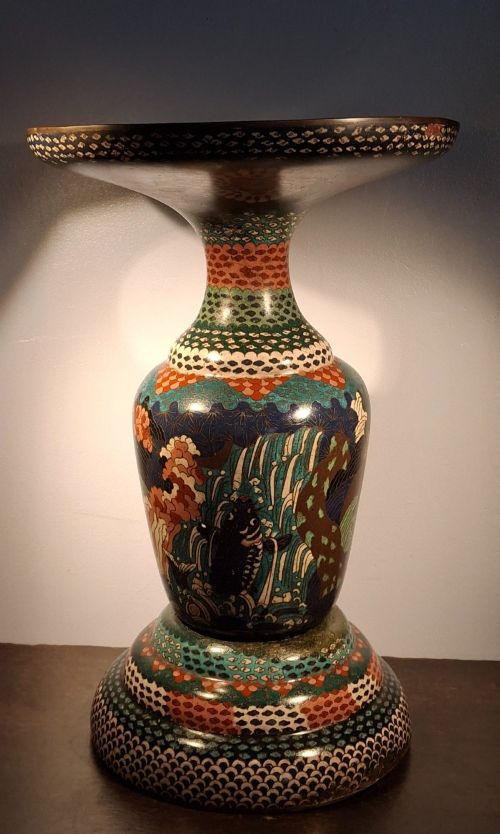
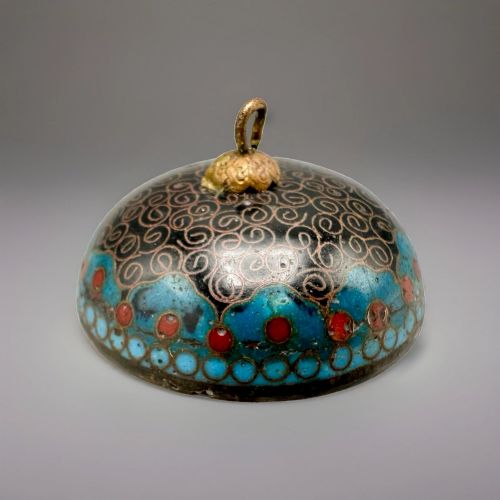
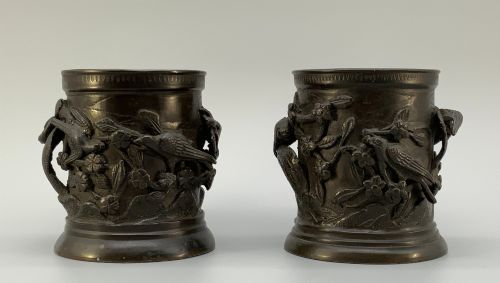
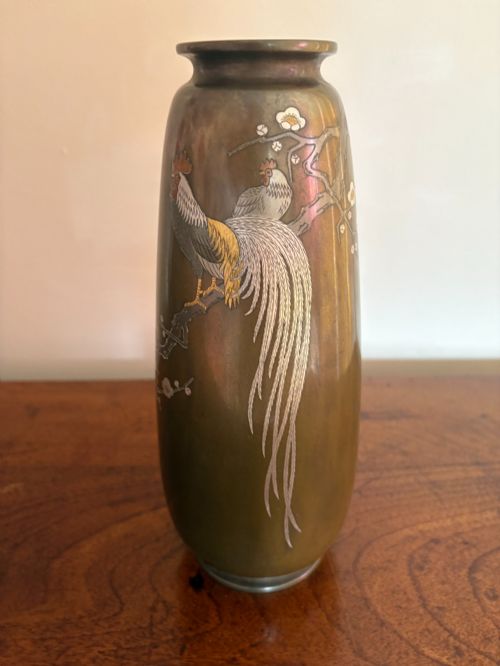
Makers utilised metals such as bronze and copper, frequently employing inlay techniques or finishing surfaces with detailed avian and floral motifs. Cloisonné enamel works involved soldering fine metal wires onto a metal base to form compartments, which were then filled with coloured glazes and fired.
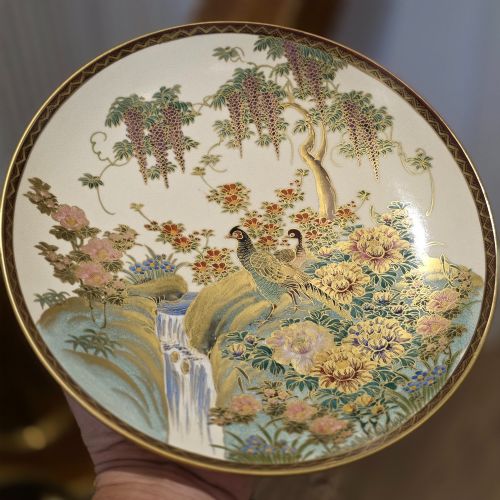
Ceramic production relied on porcelain and earthenware bodies, seen in the hand-painted glazes of Imari wares and the heavily decorated surfaces of Satsuma pottery. Gold leaf and fine brushwork added intricate highlights to Satsuma bowls and plates, while bronze casting created substantial vases and lanterns.
Listings feature ceramics, metalwork, and enamel across nineteenth and early twentieth-century periods, dominated by Imari porcelain and Satsuma earthenware.
Assessing quality
Distinctions in quality rest upon the precision of the execution, whether in the fine symmetry of an Imari porcelain dish or the minute detail of inlaid bronze work. Superior examples demonstrate confident brushwork, controlled firing of enamels and glazes, and crisp definition in moulded or cast forms.
The depth of the decorative scheme and the balance of the composition separate standard production pieces from masterworks. Signed items by known artists or works exhibiting complex multi-layered cloisonné or moriage decoration represent the higher tier of the range.
KANASAWA·Gyokkō·Kozan
The Meiji Period Decorative Antiques Glossary
- Imari
- A style of Japanese porcelain featuring underglaze blue and overglaze iron red, often augmented with gold. These wares were widely exported and prized for their bold decorative patterns.
- Cloisonné
- An enamel technique where metal wires are applied to a base to create cells filled with paste and fired. This method produced intricate pictorial designs on chargers and vases.
- Satsuma
- A type of Japanese earthenware with a crackle-glaze ivory body, typically decorated with polychrome enamels and gilding. Bowls and vases in this style frequently depict figural or floral scenes.
- Charger
- A large decorative plate intended for display rather than dining. These pieces often serve as the focal point of a collection due to their expansive painted surfaces.
- Moriage
- A decorative ceramic technique using raised slip painting to create textured, dimensional patterns. It is frequently found on Satsuma vases and chargers to accentuate floral and avian motifs.
Meiji Period Decorative Antiques: Frequently Asked Questions
How do I identify Imari porcelain?
Imari porcelain is characterised by its distinctive palette combining underglaze blue, iron red, and often gold highlights. Most pieces feature dense floral or geometric panels.
Scalloped edges and thick, resonant ceramic bodies further help distinguish these traditional export wares.
What is Satsuma pottery?
Satsuma pottery consists of earthenware items with a characteristic creamy, crackle-glazed finish. They are heavily decorated with enamel and gilt details.
These pieces typically portray elaborate scenes involving figures, birds, or flowers.
How were cloisonné chargers made?
Makers formed cloisonné chargers by soldering thin metal wires onto a copper or bronze base to outline the design. The resulting compartments were filled with glass paste and fired multiple times.
Polishing the hardened surface revealed the fine wire grid alongside the vibrant enamel colours.
Where should I display these antiques?
These decorative antiques suit various interior settings, from traditional cabinets to modern mantelpieces. Bronze vases and large chargers command attention as standalone statement pieces.
Smaller bowls and plates fit comfortably on side tables or within dedicated display shelving.