




Japanese Arhats Ceramics
Japanese arhats ceramics bring together intricate earthenware and porcelain painted with sacred figures, offering a glimpse into spiritual narratives.
Japanese Arhats Ceramics
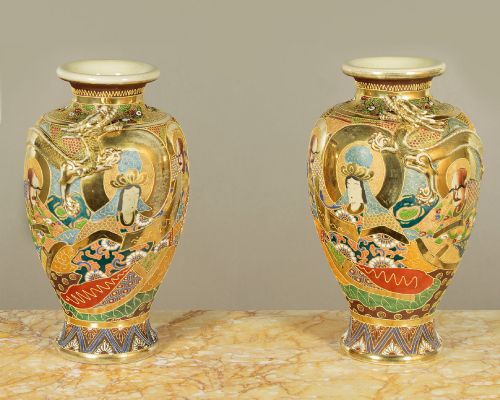
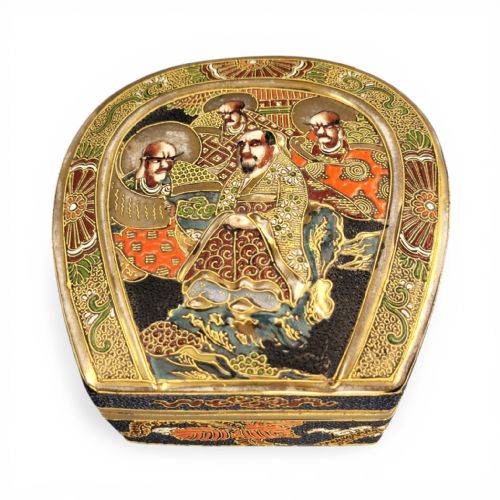
When you examine japanese arhats ceramics, you encounter pieces depicting enlightened Buddhist disciples, frequently styled as Rakan or arhats alongside dragons and religious processions.
The objects on this page predominantly take the form of Satsuma vases, lidded vessels, hexagonal shapes, and earthenware boxes originating from the Meiji period.
You will also find Kutani cylindrical vases and Imari figures representing monks, spanning production dates from the late nineteenth century through to the Showa period.
What varies in quality
The refinement of the figural painting determines the standing of a piece, particularly the precision used to render the expressions and robes of the arhats.
The application of gold gilt and the density of the enamelling separate standard decorative vessels from monumental or signed studio works.
Listings span the nineteenth century to the mid-twentieth century, featuring Satsuma earthenware, Kutani porcelain, and Imari figures.
Hotoda·Toshozan·Seiko-en Chokei·Hattori
The Japanese Arhats Ceramics Glossary
- Arhat
- An enlightened Buddhist sage or disciple. These figures appear frequently in detailed processions across Meiji period vessels.
- Satsuma
- A type of Japanese earthenware featuring a crackled ivory glaze. It serves as the primary canvas for richly gilt religious scenes.
- Moriage
- A decorative ceramic technique using piped clay to create raised relief patterns. It adds tactile weight to floral and dragon borders.
- Rakan
- The Japanese term for an arhat. Sculpted or painted Rakan populate many of the featured vases and boxes.
Japanese Arhats Ceramics: Frequently Asked Questions
What are Japanese arhats ceramics?
These pieces are ceramic vessels and figures decorated with depictions of Buddhist sages, known as arhats or Rakan.
They showcase traditional Japanese craftsmanship from periods such as the Meiji era.
How were these ceramics used?
Many of these items functioned as decorative vases, lidded containers, or incense burners within homes.
Their religious iconography also held spiritual significance for collectors and households.
How do I identify a Meiji period piece?
Meiji period items often exhibit dense gilt decoration, intricate enamel work, and signatures from known workshops.
Look for characteristics like crackled Satsuma glazes and detailed figural panels.
What materials make up these objects?
The pieces utilise earthenware and porcelain as base materials for shaping vases and boxes.
Enamel, gold leaf, and gilt accents complete the elaborate surface designs.