

Meiji Period Ceramic Vessel
A meiji period ceramic vessel brings intricate hand-painted detail and storied kiln work into a modern room.
Meiji Period Ceramic Vessel
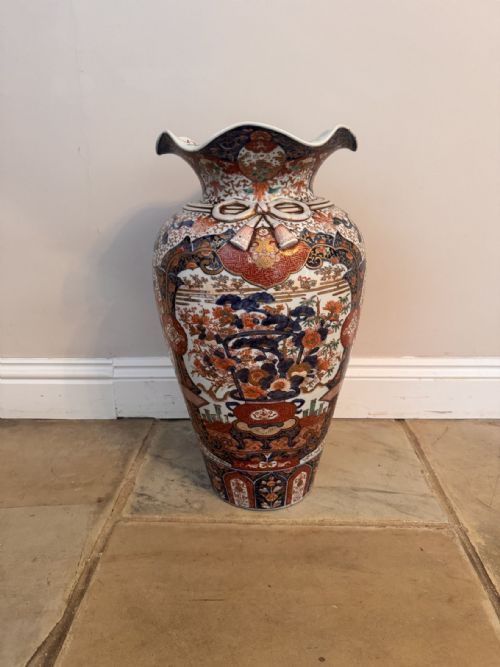
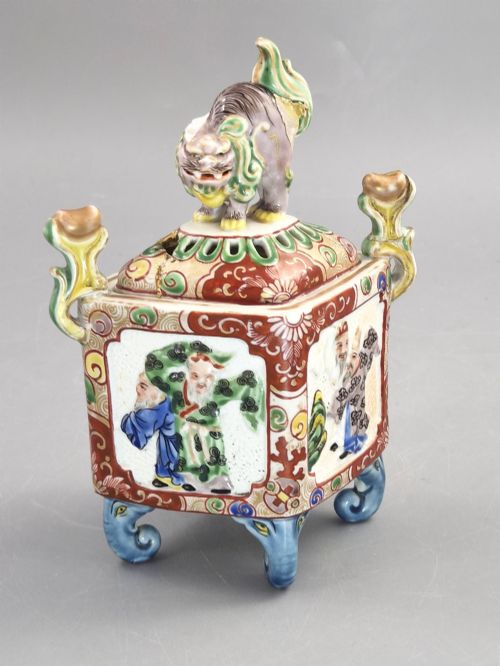
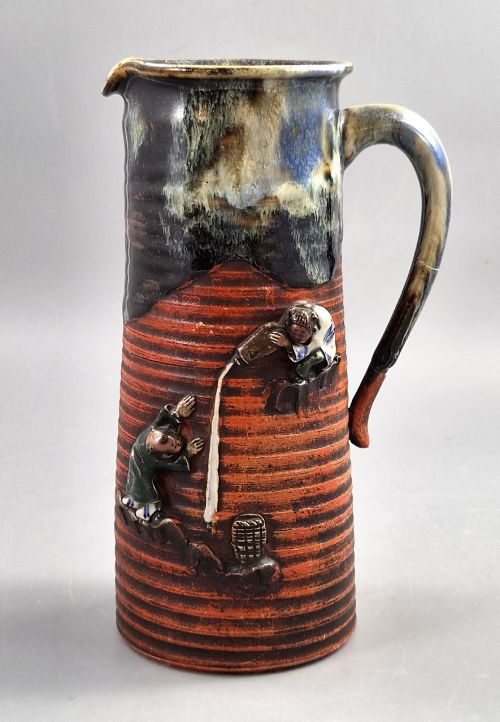
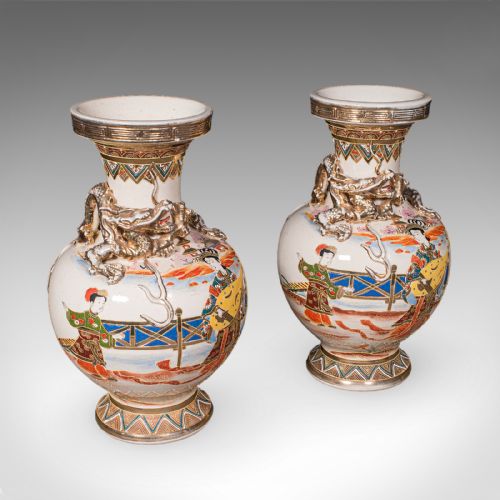
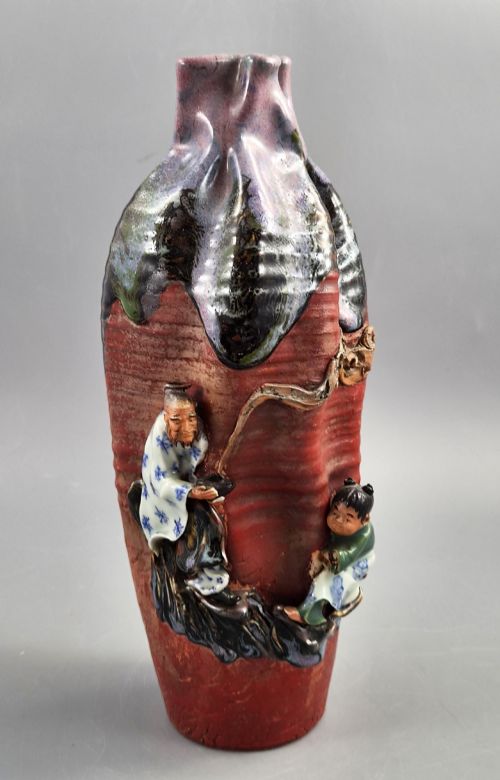
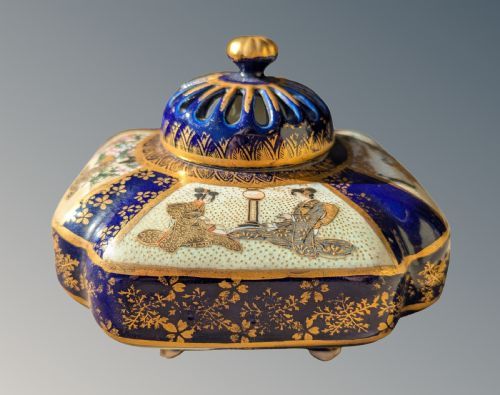
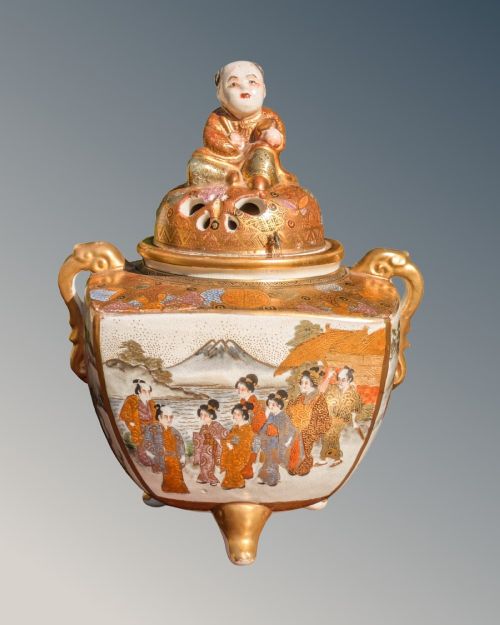
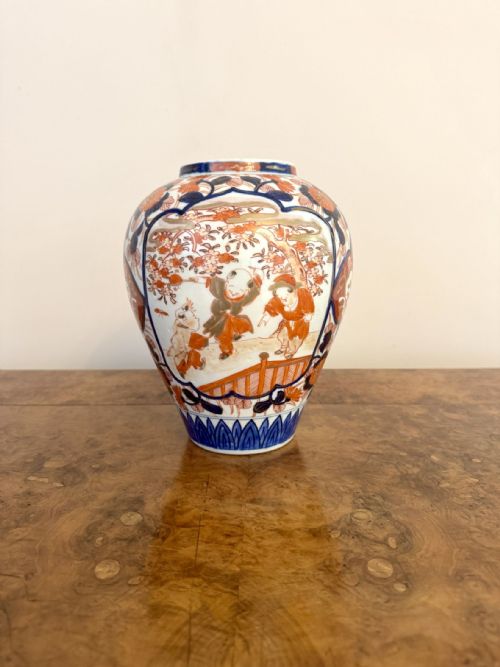
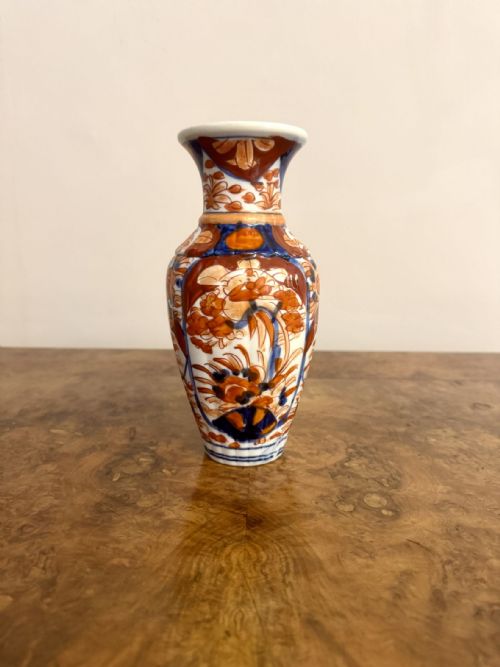
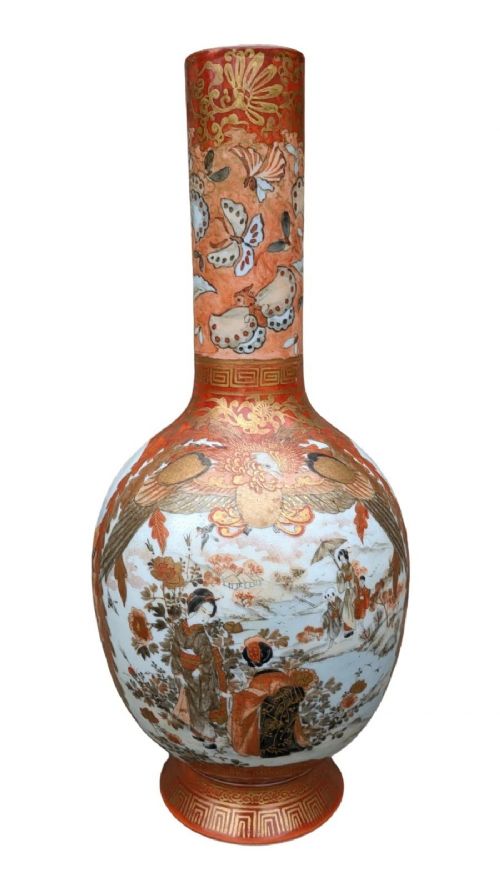
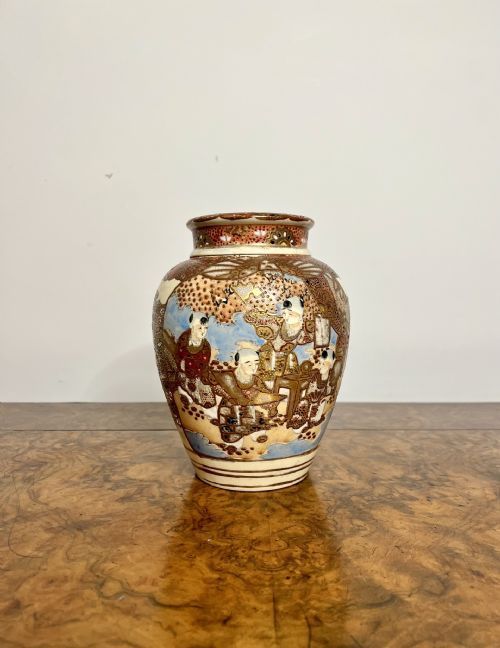
A meiji period ceramic vessel encompasses functional and decorative forms created during an era of significant artistic output in Japan. Buyers searching this phrase encounter diverse objects ranging from large floor-standing Imari showpieces to delicate Satsuma incense burners and textured Sumida Gawa pitchers.
The selections recorded here span familiar pottery traditions including Kutani porcelain and earthenware creations shaped between the late nineteenth century and the early decades of the twentieth century. These vessels serve as centrepieces or display items, reflecting specific regional kilns and traditional motifs.
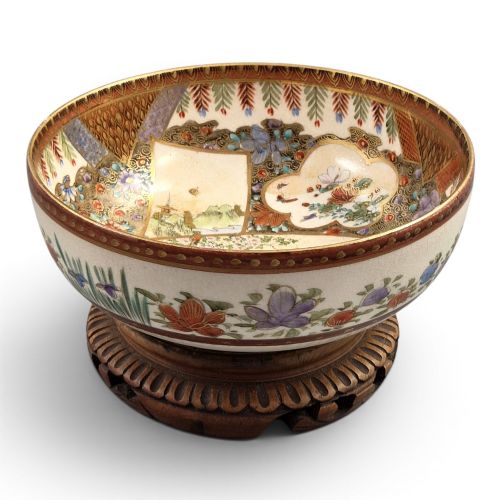
Many examples take the form of baluster vases, ginger jars, small tea caddies, and open jardiniere bowls. Each piece demonstrates the distinct stylistic crossover between traditional Edo aesthetics and newer techniques developed during the Meiji and Taishō periods.
Materials and construction methods
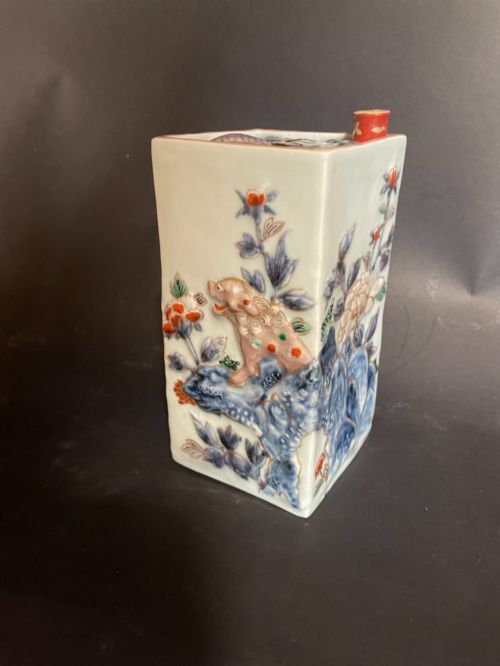
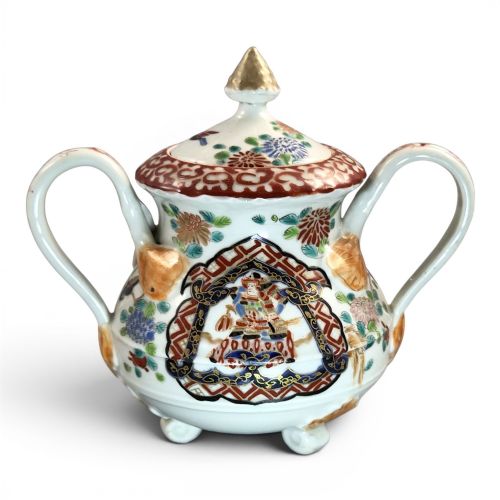
Makers utilised earthenware, porcelain, and terracotta bodies as the foundation for these vessels, applying fluid glazes and structured enamel finishes across the surface. Many pieces incorporate raised gold leaf detailing and textured applied figures that stand out in high relief from the main ceramic body.
Kiln techniques varied according to the pottery centre, producing everything from smooth, vitrified Imari porcelain to the finely crackled buff earthenware characteristic of Satsuma wares. Sculpted elements such as lion finials, dragon spouts, and climbing figures were modelled separately and secured before firing.
Tiny applied figures peek out from dripping lavender glazes, watching over miniature tea ceremonies frozen in time.
Assessing quality and execution
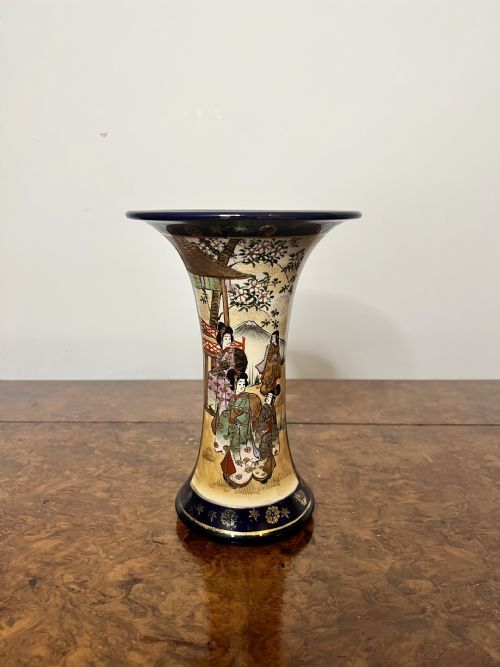
Quality in a meiji period ceramic vessel rests upon the precision of the hand-painted brushwork and the clarity of the enamel and gilt application. Master workshops achieved remarkable detail in figural processions, facial expressions, and complex background patterns without muddying the underlying glaze.
The crispness of moulded or modelled details, such as applied dragons and animal-head feet, separates standard production items from pieces bearing the signatures of celebrated makers like Kinkozan, Makuzu Kozan, or Hotoda. Structural balance and the successful control of complex flambé or crackle glazes further elevate a piece within the range.
Kizan·Kinkozan·Hotoda·Makuzu Kozan·Chosei
The Meiji Period Ceramic Vessel Glossary
- Imari
- A style of Japanese porcelain featuring a distinctive palette of underglaze blue, iron red, and gold, typically produced for export. These pieces often display intricate floral and geometric panels.
- Satsuma
- A type of Japanese earthenware characterised by an ivory-coloured, crackle-glaze finish that serves as a canvas for detailed polychrome and gilt decoration. It originates from Satsuma Province but was widely produced in Kyoto.
- Koro
- A traditional Japanese incense burner, usually fitted with pierced covers and supported on miniature feet, designed for burning granular or stick incense.
- Kutani
- A style of Japanese porcelain and pottery known for bold, vibrant colour schemes dominated by greens, yellows, reds, purples, and blues, often depicting figures or natural scenes.
- Sumida Gawa
- A style of Japanese pottery originating near Tokyo, featuring heavy, dripping flambé glazes and realistic, highly textured figures applied directly to the exterior wall.
Meiji Period Ceramic Vessel: Frequently Asked Questions
How do I distinguish Satsuma from Imari?
Satsuma vessels feature a warm, ivory earthenware body covered in a fine network of glaze crackles, painted with complex figures and heavy gold highlights. Imari pieces are made of hard porcelain, showing a smoother surface dominated by deep cobalt blue and iron red underglazes.
While Satsuma focuses on narrative figural scenes and intricate brocade patterns, Imari relies on symmetrical floral and panel designs. This fundamental difference in body material and palette makes them easy to tell apart on sight.
What is a koro used for?
A koro is a traditional Japanese incense burner designed to hold aromatic materials during tea ceremonies or quiet contemplation. The pierced lid allows the scented smoke to diffuse evenly into the surrounding space.
Collectors often display these lidded vessels as decorative sculptural objects rather than using them for burning incense. Their distinct feet and decorative finials make them particularly striking tabletop centrepieces.
Are these vessels signed?
Many fine pieces carry painted or impressed signatures, artist seals, or workshop marks on the base. These markings often name the specific studio, the decorator, or the family kiln responsible for the piece.
Signed works by recognised Meiji era artists command greater attention from collectors. Unsigned pieces, however, still reflect the high technical standards of the period's commercial kilns.
How should I care for an antique ceramic vessel?
Display these pieces away from direct sunlight and areas subject to sudden temperature fluctuations to protect the delicate enamel and gold leaf decorations. Dust them gently with a soft, dry cloth without applying water or cleaning solutions.
Because the earthenware bodies and applied relief figures can be fragile, handle them carefully by the base rather than by protruding handles or decorative spouts.