


Oriental Crackle Glaze Urn
An oriental crackle glaze urn brings intricate decoration and rich texture into a room, capturing decades of meticulous ceramic artistry.
Oriental Crackle Glaze Urn
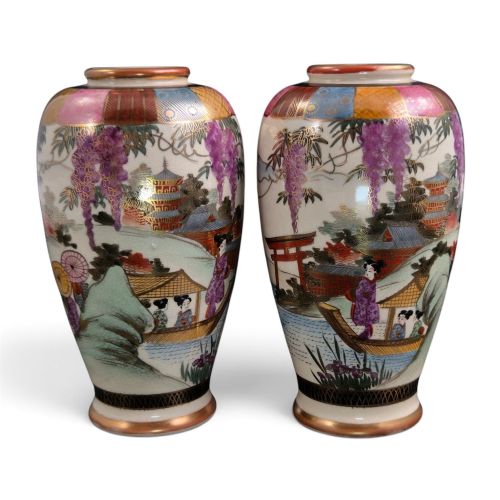
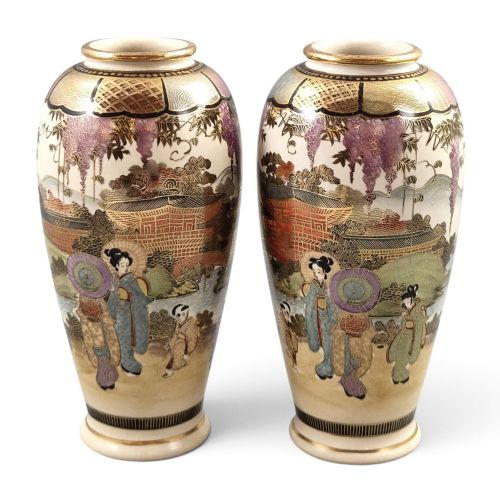
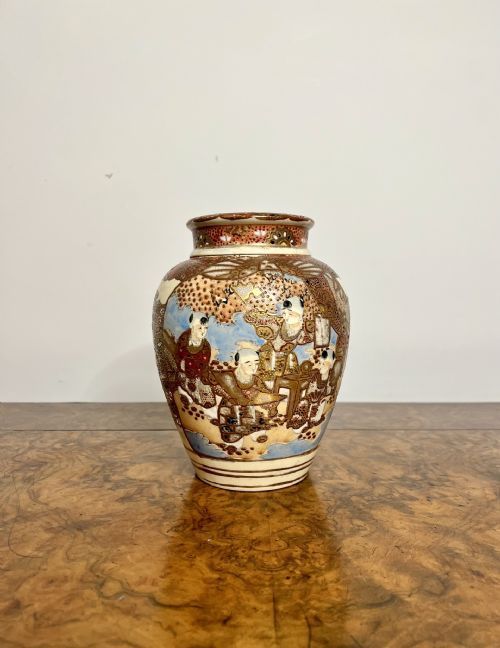
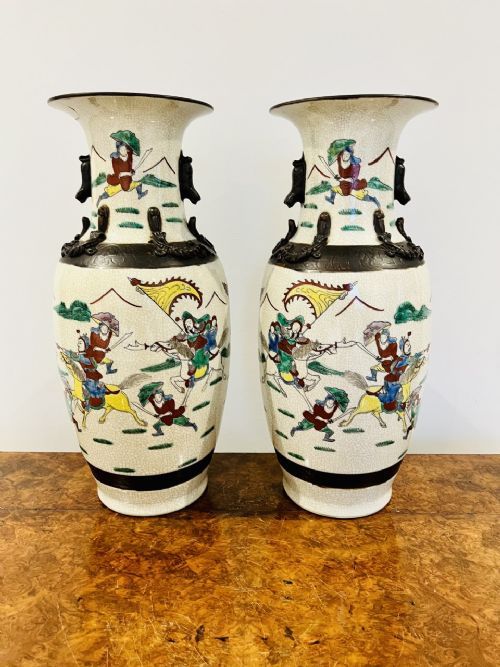
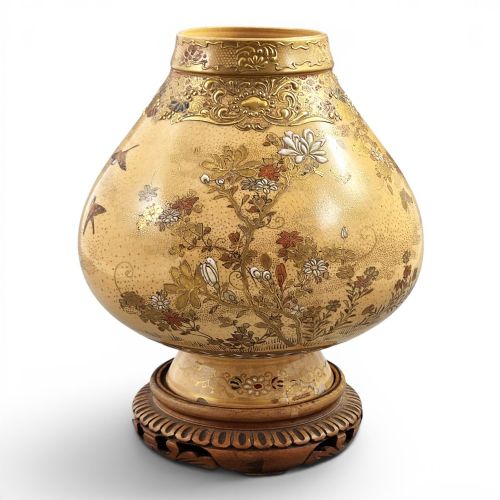
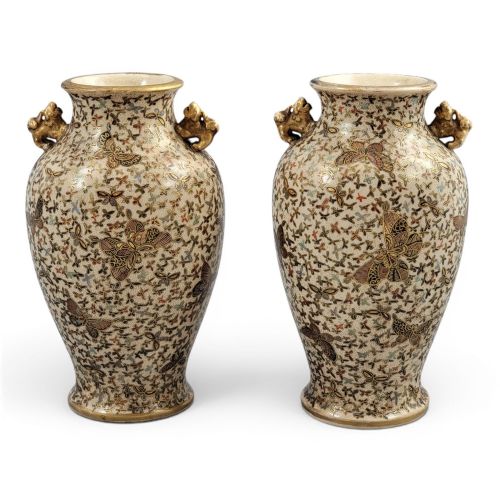
An oriental crackle glaze urn encompasses traditional ceramic vessels shaped as vases, jars, and garnitures originating from Japanese and Chinese kilns. Collectors searching this phrase encounter earthenware and porcelain forms dating primarily from the nineteenth century through the early twentieth century.
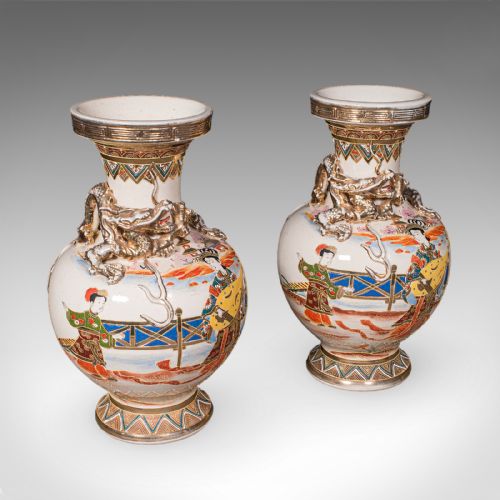
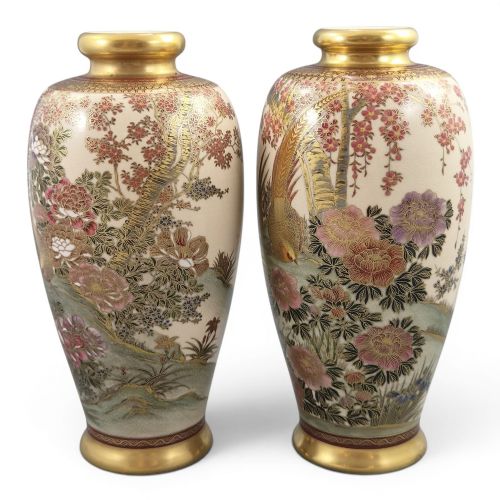
Forms vary from hexagonal bodies and baluster profiles to covered ginger jars. Many examples present landscape scenes, court figures, or delicate floral motifs across their crackled surfaces.
Materials and Techniques
Potters constructed these vessels using earthenware or fine porcelain bodies before applying specialised glazes designed to craze during cooling. Artisans then enriched these crackled surfaces with detailed enamel painting, gold leaf, and gilt highlights.
Workshops employed moriage techniques to build up raised enamel patterns, creating tactile surfaces that complement the underlying glaze. Skilled painters added complex figural processions, botanicals, and Mount Fuji scenes by hand.
Several miniature vases preserve microscopic brushstrokes from nineteenth-century Kyoto studios where artists painted entire court processions on surfaces smaller than an egg.
Assessing Quality
Quality rests in the precision of the hand-painted detail and the restraint of the gilding. Superior pieces display crisp facial expressions on figures and finely controlled enamel work rather than rushed, repetitive decoration.
The fineness of the crackle network within the glaze also distinguishes the output of prominent kilns from standard commercial wares. Workshops known for high standards achieved an even, intentional web across the ceramic body.
Shozan·Manpei·Kinkōzan Workshop·Kinzan·Chosei·Seiko-en Chokei·Hattori·Hayakawa
The Oriental Crackle Glaze Urn Glossary
- Satsuma
- Earthenware pottery originating from Satsuma Province in Japan, typically characterised by an ivory-coloured crackle glaze decorated with enamel and gilt.
- Moriage
- A Japanese ceramic technique using piped slip to create raised, three-dimensional decorative patterns.
- Celadon
- A term for pottery denoting both wares glazed in jade green and the specific translucent green glaze itself.
- Baluster
- A vase shape with a rounded body that tapers toward the base and swells near the centre.
- Garniture
- A matched set of vases or jars traditionally displayed together on a mantelpiece or cabinet.
Oriental Crackle Glaze Urn: Frequently Asked Questions
How do I date an antique oriental urn?
Dating relies on stylistic markers, signature marks, and the characteristics of the ceramic body and glaze. Nineteenth-century pieces often exhibit denser hand-painting and distinct workshop seals.
Later pieces from the Taisho and Showa periods introduce different colour palettes and modified forms. Comparing the style of figures and floral motifs to documented pieces helps confirm the era.
Where should I display an oriental crackle glaze urn?
These vessels suit prominent spaces such as tabletops, sideboards, and mantelpieces where adequate lighting highlights the surface detail. Pairing them with neutral backgrounds allows the intricate enamel and gilt work to stand out.
Placement should avoid direct sunlight to protect enamel colours over time. Sturdy, level surfaces ensure stability for taller baluster forms and garniture sets.
Are these urns waterproof?
Many antique ceramic vessels feature porous earthenware bodies or historical crackle glazes that may seep moisture. Using them to hold fresh water and flowers risks damaging the antique ceramic.
Displaying them dry or utilising a discreet inner container preserves the interior of the vessel. This approach protects the historic material from mineral deposits and moisture expansion.