
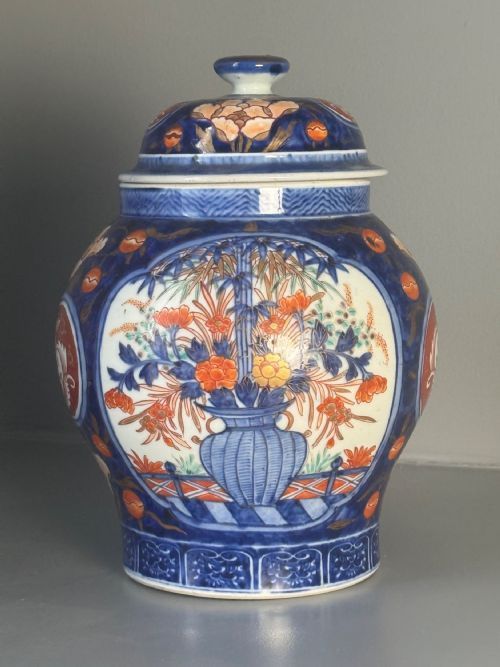


Meiji Imari Temple Jar
A meiji imari temple jar brings centuries of ceramic tradition into your home, offering bold hand-painted palettes and striking covered vessel forms.
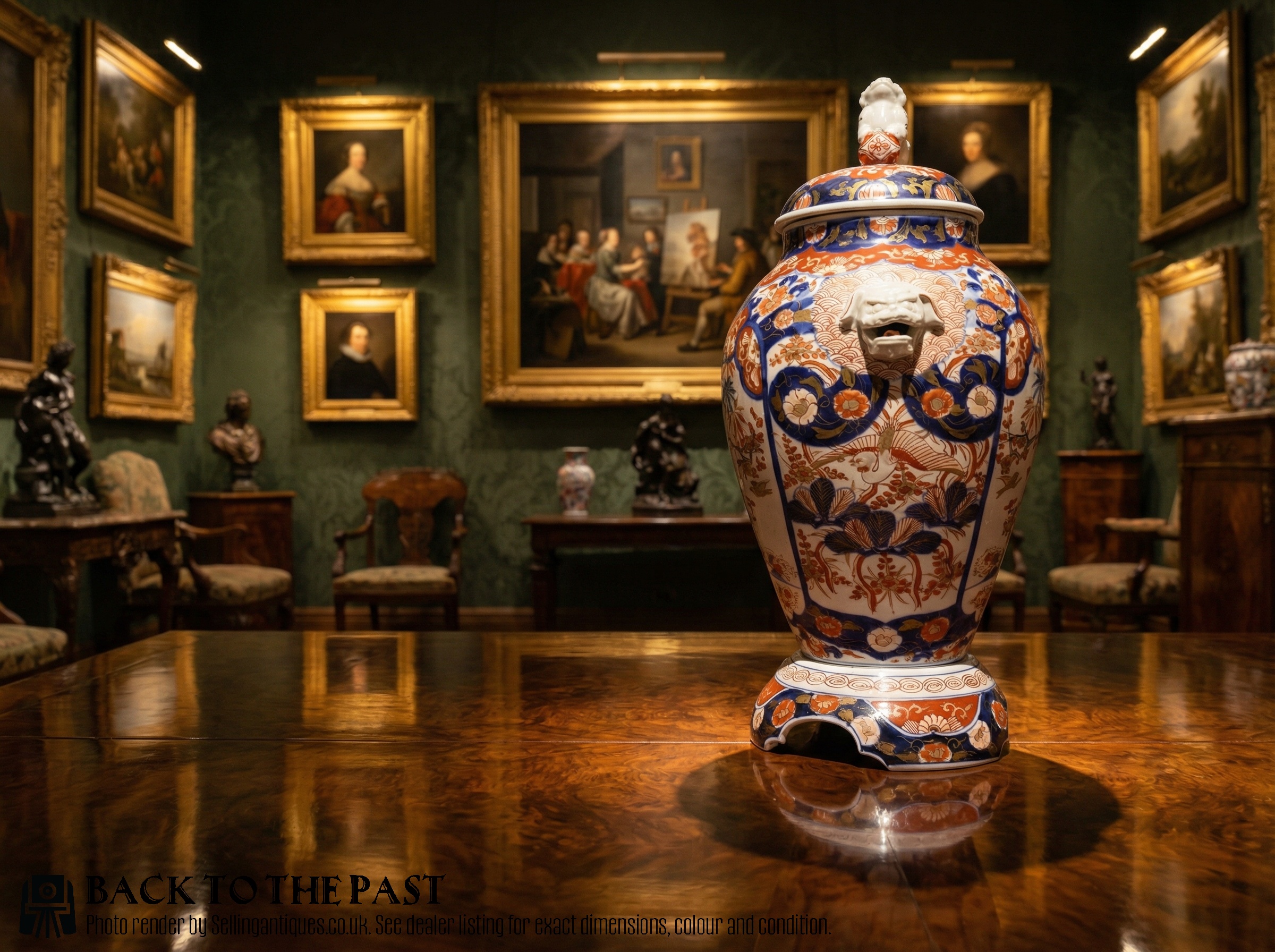
Meiji Imari Temple Jar
A meiji imari temple jar represents the rich output of Japanese porcelain production during the late nineteenth and early twentieth centuries. These covered vessels appear in various forms, including ginger jars, baluster vases, and lidded urns designed for decorative impact.
The pieces on this page span the nineteenth century and the Edwardian era, reflecting both traditional Arita origins and export aesthetics. Buyers frequently encounter large pairs alongside single monumental jars that originally stood upon stands.
Makers utilised distinct regional designs during the Meiji period, combining traditional Japanese motifs with forms suited to Western interiors. The resulting works function as focal points in period rooms and modern spaces alike.
Materials and methods
Artisans formed these vessels from dense porcelain clay before applying underglaze cobalt blue and rich iron red enamel. Many examples incorporate additional layers of enamel and gold leaf to heighten the visual complexity of the surface.
The firing process bonded these mineral colours beneath clear glazes, protecting the intricate brushwork from wear over generations. Gilding and gilt details were often added during secondary firings to catch the ambient light.
Listings feature 19th Century, Victorian, and Edwardian periods, utilising porcelain, enamel, gold leaf, and cobalt enamel.
Factors of quality
The standard of a piece depends heavily on the crispness of the porcelain body and the precision of the hand-painted cobalt and iron red decoration. Superior examples display balanced composition across octagonal or rounded surfaces without crowding the primary motifs.
The survival of the matching cover remains a primary consideration for these lidded vessels, as many covers suffered damage or loss over time. The application of gold leaf and enamel also varies, with finer works showing meticulous detail and deep colour saturation.
The Meiji Imari Temple Jar Glossary
- Imari
- A traditional style of Japanese porcelain featuring a distinct palette of cobalt blue, iron red, and gilt highlights. These ceramics originated in Arita and gained immense popularity across Europe during the export era.
- Meiji
- The period of Japanese history spanning from 1868 to 1912, characterised by rapid modernisation and increased export of decorative arts. Pieces from this era often combine traditional techniques with grand scale.
- Baluster
- A vase form featuring a rounded body that tapers toward the base and swells outward before rising to a narrower neck. This classic shape provides stability and ample surface area for intricate painted scenes.
- Ginger jar
- A ceramic vessel characterised by a broad shoulders, a short neck, and a domed lid, originally utilised for storing spices. In decorative contexts, these jars serve as symmetrical centrepieces.
Meiji Imari Temple Jar: Frequently Asked Questions
What is a meiji imari temple jar?
A meiji imari temple jar is a large, covered porcelain vessel created in Japan during the late nineteenth or early twentieth century. These pieces are celebrated for their vibrant cobalt blue and iron red decoration.
Such vessels were produced for both domestic use and the international export market, combining traditional Arita ceramic skills with striking decorative presence.
How were these jars used historically?
These lidded vessels served primarily as decorative ornaments within domestic interiors, often displayed on mantelpieces, tables, or specialised stands. Their substantial scale made them ideal focal points for large rooms.
While some jars originated as storage containers for spices or tea, the larger temple jars were conceived specifically for ornamental display.
How do I care for my porcelain jar?
Care involves dusting the glazed porcelain surface gently with a soft, dry cloth to prevent the accumulation of grit. Avoid using harsh chemical cleaners or abrasive sponges that might damage the delicate enamel and gilding.
Keep the vessel away from areas of high vibration or unstable shelving to protect both the body and the matching lid from accidental drops.
How can I tell the period of a jar?
Dating relies on examining the characteristics of the porcelain body, the specific tones of the iron red and cobalt enamels, and the style of the hand-painted motifs. Pieces marked by late nineteenth-century export standards often display specific weight and glaze traits.
Comparing the potting style and decorative density with documented examples from the Meiji era helps confirm the period of production.