
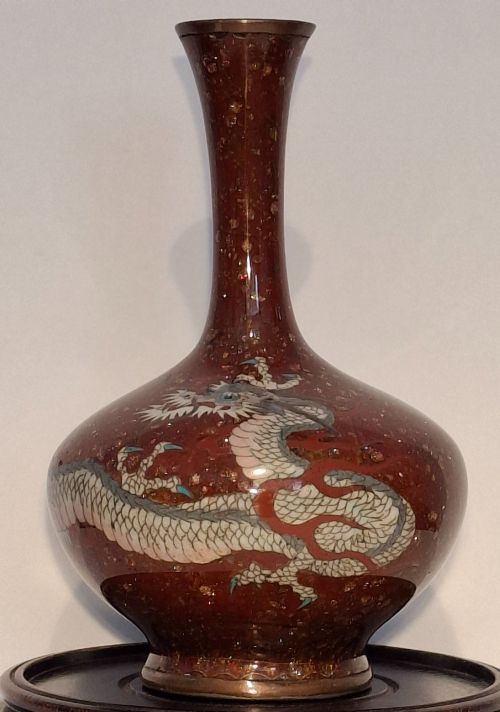
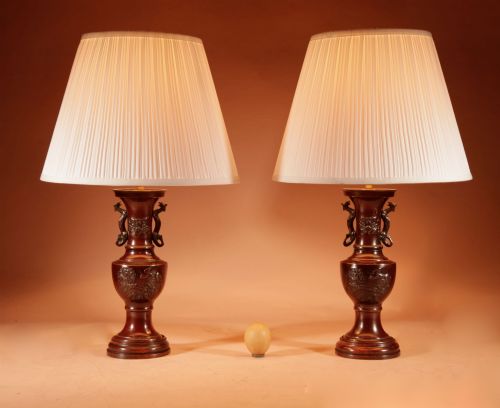
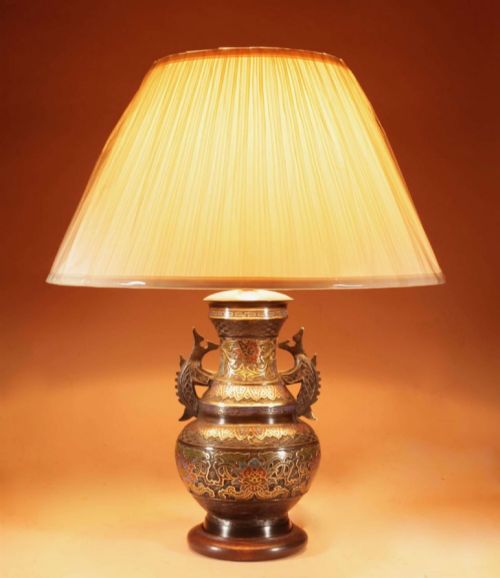
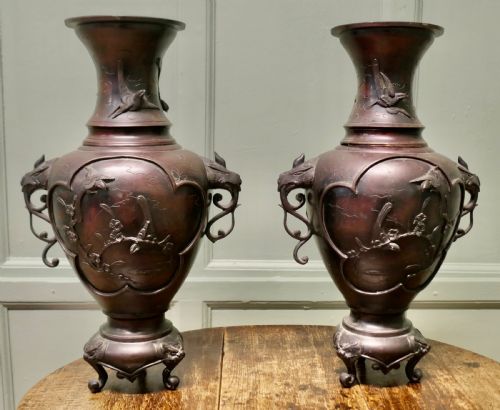



Meiji Dragon Bronze Urn
These Japanese bronze urns from the Meiji period bring sculptural power and intricate metalwork into a room.
Meiji Dragon Bronze Urn
A meiji dragon bronze urn represents the pinnacle of nineteenth-century Japanese metalwork, often taking the form of large vases, lidded vessels, and garden urns. These pieces emerge from the Meiji period and Victorian eras, carrying distinct Japanese styles alongside occasional champlevé enamel or gilt bronze highlights.
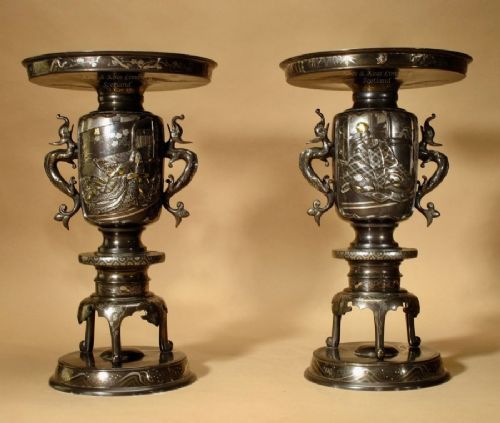
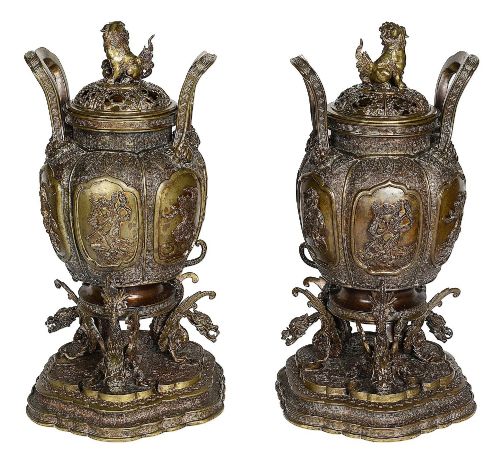
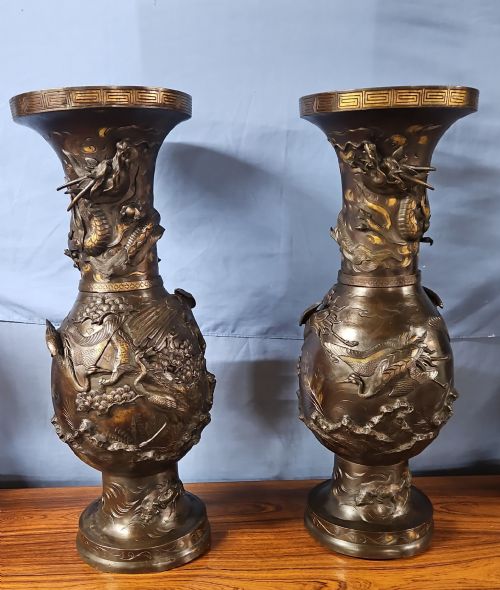
The version most commonly met on this page is a substantial bronze vase or urn created during the late nineteenth century. Many of these objects integrate dragons into their design, appearing either as cast surface relief or as structural candle holders and handles.
Makers shaped these works for both domestic display and export markets, utilising forms ranging from standard decorative vases to massive garden temple vessels and incense burners. Their origins link firmly to Japanese artistry of the Meiji period, spanning from the eighteen-eighties into the early twentieth century.
How they were made
Artisans forged these objects primarily from bronze, sometimes employing patinated bronze or gilt bronze to achieve varied surface tones. Workshops occasionally incorporated champlevé enamel and gold inlay to accentuate specific design motifs across the metal body.
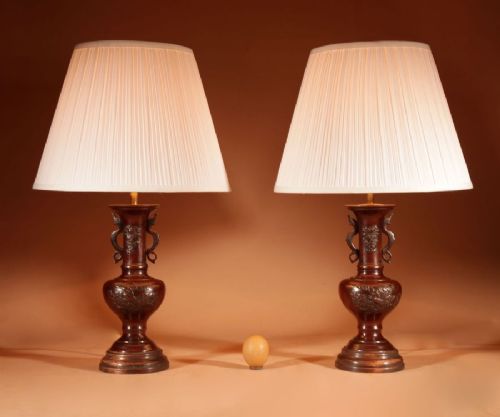
Techniques relied on precise metal casting, allowing craftsmen to render intricate dragon scales and relief work with sharp definition. Secondary materials like fabric and wood appear in related domestic pieces such as table lamps, grounding the heavy metal forms.
Dragons snake around handles and coil up slender necks, keeping a watchful metallic eye on every room they inhabit.
What varies in quality
Quality rests upon the crispness of the cast decoration and the depth of the patination across the bronze surface. Superior examples display sharply defined dragon motifs and deliberate handling of gold inlay or enamel rather than flat or muddy casting.
The scale and ambition of the piece also distinguish the range, moving from modest decorative vases up to monumental garden temple vessels. Heavier, more complex construction with integrated figural elements indicates higher ambition in the original workshop.
The Meiji Dragon Bronze Urn Glossary
- Meiji Period
- The era in Japanese history running from 1868 to 1912. This timeframe saw a massive increase in decorative metalwork exported to Western markets.
- Champlevé Enamel
- An enamelling technique where troughs or cells are sunk into the bronze surface and filled with enamel paste before firing. It adds vibrant colour fields to the metallic body.
- Patinated Bronze
- Bronze treated with chemicals or heat to alter its surface colour and finish. This process creates deep browns, greens, or blacks that highlight sculptural relief.
- Usubata
- A specific form of Japanese bronze vase traditionally used for flower arrangement. These vessels typically feature a wide basin top supported on a slender stem.
- Archaistic
- A style that consciously imitates ancient forms and decorative motifs. In Japanese metalwork, this refers to designs drawing upon much older ritual bronze vessels.
Meiji Dragon Bronze Urn: Frequently Asked Questions
How can I tell the Meiji period pieces apart?
Meiji period pieces usually exhibit a distinct combination of traditional Japanese iconography, such as dragons, paired with export-oriented scale and ambition. The metalwork often displays refined patination techniques developed during the late nineteenth century.
Pieces from this era frequently align with the dates spanning from 1868 to 1912. Comparing the casting depth and the integration of enamel or inlay helps separate these works from later reproductions.
Where should I place a bronze urn at home?
A large bronze urn requires a sturdy surface due to its considerable weight and commanding visual presence. Placing one on a low table or in a hallway allows the detailed dragon relief to catch the light.
Garden urns and larger temple vases suit sheltered outdoor spaces or expansive interior rooms. Keeping them away from excessive moisture preserves the historic patinated bronze and enamel finishes.
What is the difference between a vase and an urn?
In these collections, the terms often overlap depending on the vessel's proportions and whether it includes a fitted lid. Urns generally present a more monumental, enclosed shape suited for holding ashes or water.
Vases tend to feature open tops designed specifically for floral displays or branch arrangements. Both forms share the same bronze casting methods and dragon ornamentation common to the period.