




Relief Cast Bronze Urns
Relief cast bronze urns bring striking sculptural presence to a room, drawing on centuries of global metalworking traditions.
Relief Cast Bronze Urns
Relief cast bronze urns encompass a diverse selection of decorative vessels, planters, and vases produced across the nineteenth century. Buyers searching for relief cast bronze urns encounter pieces originating from Japanese Meiji workshops, Chinese Qing dynasties, and European Grand Tour traditions.
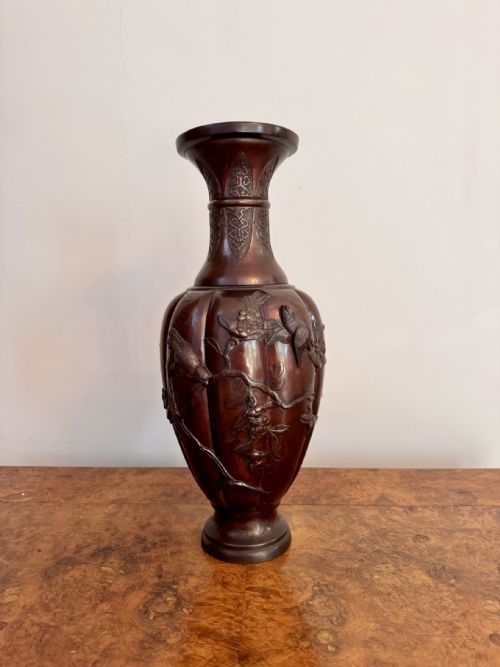
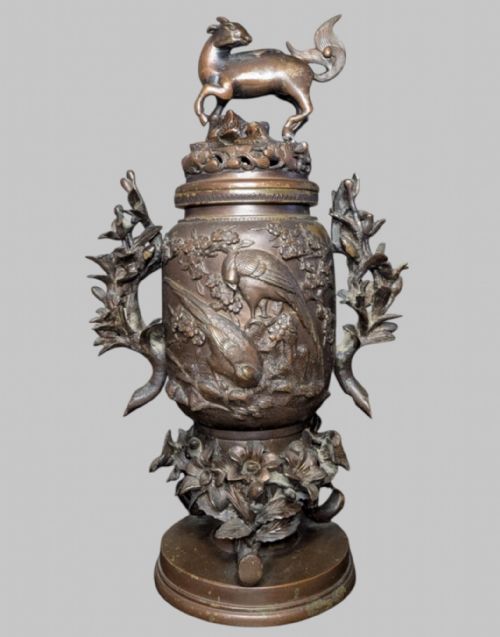
The forms vary significantly from campana-shaped wine-coolers and classical ewers to incense burners with animal finials and large jardinières. Japanese Meiji period examples dominate the selection, often taking the form of heavily decorated vases or display urns.
European makers contributed neoclassical interpretations such as Warwick vases alongside Italian Grand Tour planters. These objects function equally as standalone decorative centrepieces, stem vases, and converted table lamps.
Materials and casting methods
These vessels rely primarily on bronze and patinated bronze, frequently augmented with contrasting elements of brass, ebonised wood, and mixed metals. Surface enrichment often includes applied gold leaf and distinct pigments that highlight the cast relief ornament.
Foundries utilised traditional casting techniques to achieve high-relief decorative motifs, ranging from intricate floral and fauna panels to classical figural scenes. Finishing work involved careful patination and chasing to accentuate the sculptural depth of the metal.
Listings feature pieces spanning the Victorian era and the Meiji period, executed in bronze, brass, and patinated bronze.
Assessing craftsmanship and finish
Quality rests upon the crispness of the cast relief and the depth of the metalwork, where finer examples display sharp, well-defined motifs rather than softened edges. The richness of the patination and the successful integration of subsidiary materials like gold leaf or mixed metals further separate standard output from exceptional work.
Weight and structural balance signal superior manufacture, particularly in larger jardinières and monumental vases. The finesse of the finishing work, visible in the handling of finials and handles, dictates the standing of an individual piece.
Barbedienne
The Relief Cast Bronze Urns Glossary
- Bronze
- An alloy consisting primarily of copper, traditionally combined with tin, prized for its durability and suitability for intricate casting.
- Patinated bronze
- Metal treated with chemical solutions to produce a controlled surface colour or aged finish.
- Grand Tour
- A cultural phenomenon involving European travel that inspired souvenirs like classical vases and ewers for collectors.
- Jardinière
- A large ornamental pot or stand designed to hold live plants or floral arrangements.
- Campana-shaped
- A vase profile resembling an inverted bell, widely utilised in neoclassical decorative arts.
Relief Cast Bronze Urns: Frequently Asked Questions
How do I clean bronze urns?
Dust these surfaces gently with a soft, dry cloth to prevent the accumulation of grit within the relief details.
Avoid chemical polishes that strip away historical patination and damage the underlying metalwork.
Are these urns waterproof?
Many historical vessels lack modern waterproof linings, meaning direct planting can introduce moisture damage to the interior.
Utilise a suitable inner container if you intend to display fresh floral arrangements inside the piece.
How do I identify Meiji period bronzes?
Meiji period vessels frequently feature naturalistic flora and fauna motifs cast with exceptional sculptural depth.
Japanese metalworkers during this era combined high-relief casting with sophisticated patination techniques.
Where should I display large bronze vases?
Position substantial vases on sturdy low tables, pedestals, or wide mantels where their weight and scale remain secure.
Ensure the spot receives balanced lighting to properly reveal the contours of the relief cast ornamentation.