



Asian Bronze Table Urns
These asian bronze table urns bring weight and presence to a room, cast in heavy metal and often converted for modern lighting.
Asian Bronze Table Urns
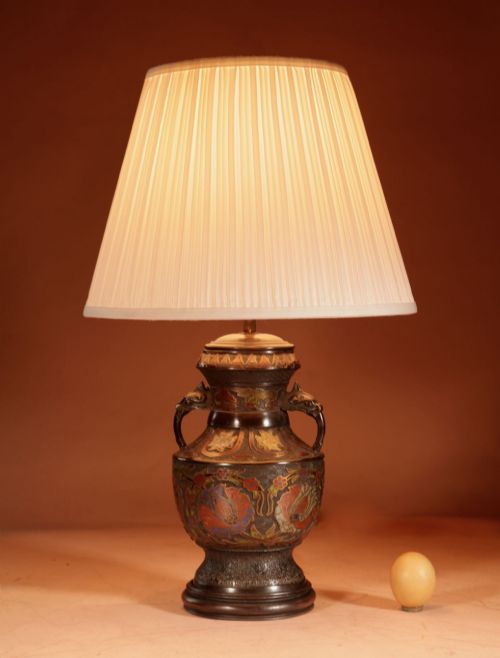
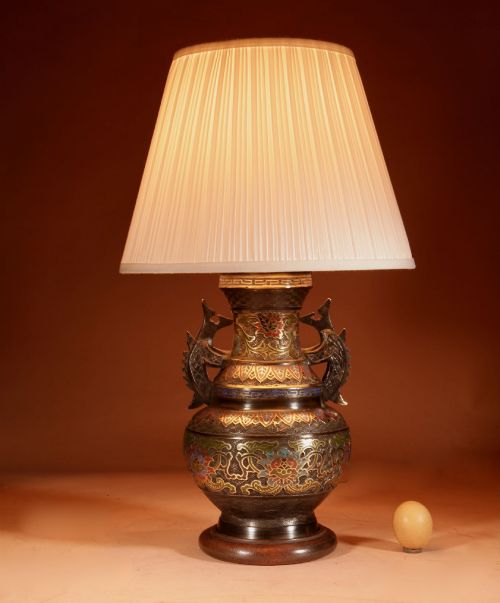
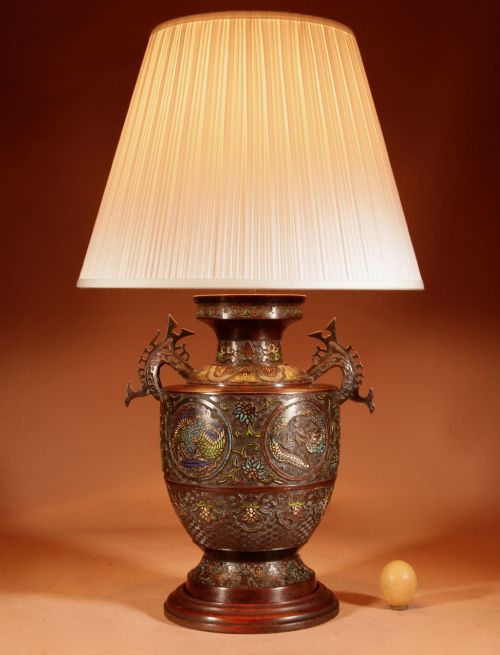
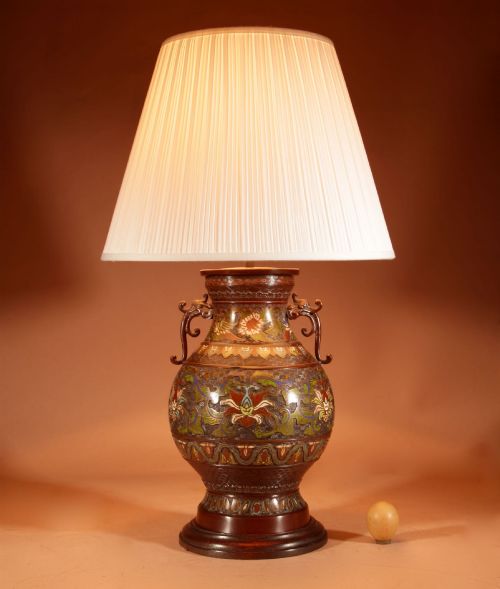
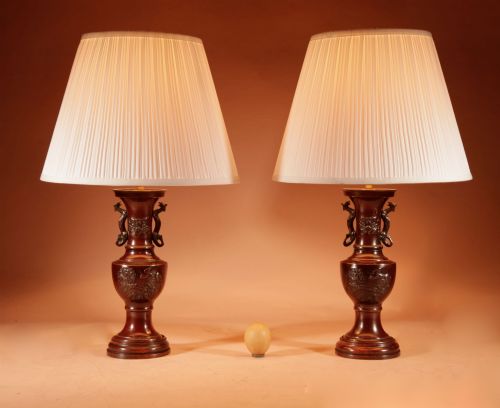
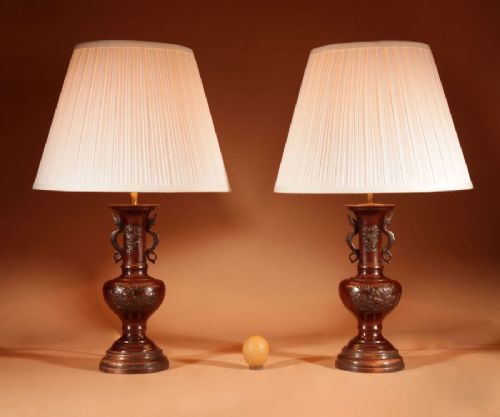
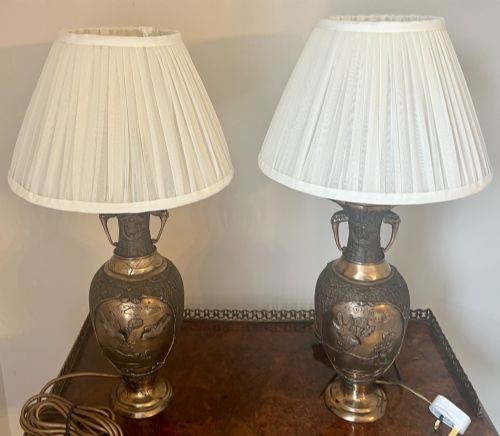
When you search for asian bronze table urns, you encounter substantial metal vessels and converted lamps originating from nineteenth-century Japan and China. The selection on this page leans heavily towards Japanese Meiji period examples and Victorian-era interpretations.
Most pieces take the form of table lamps, decorative vases, or garniture sets mounted on wood bases. These objects combine traditional oriental casting methods with nineteenth-century European lighting adaptions.
How they were made
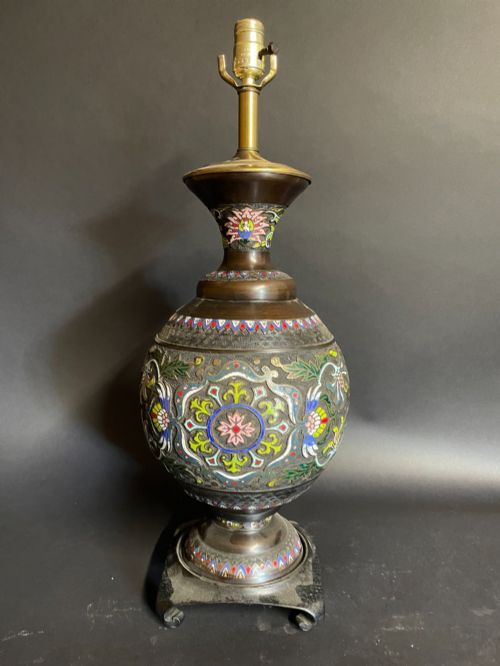
Artisans utilised traditional lost-wax casting techniques to shape the heavy bronze bodies, often incorporating patinated finishes and gilt metal details. Many surfaces feature champlevé or cloisonne enamel work, wherein coloured glass pastes fill recessed compartments or wire cells before firing.
Vessels intended for European interiors frequently received hardwood mountings or custom brass fittings during conversion into table lamps. Fabric elements sometimes accompany these mountings to complete the lighting fixtures.
Asian Bronze Table Urns Retail Price Guide 2026
Typical asking prices for asian bronze table urns among the pieces listed under this phrase on Sellingantiques today, from the lower quarter to the upper quarter. They describe what is for sale here now, not the wider market.
Listings feature nineteenth-century Japanese Meiji period designs alongside Chinese archaistic styles and Victorian adaptations.
What varies in quality
The sophistication of the bronze casting and the crispness of surface detail distinguish finer pieces from simpler domestic wares. Precision in enamel work and the subtlety of patination indicate superior craftsmanship.
Original integration of mountings and the quality of hardwood bases influence the overall coherence of a piece. Earlier nineteenth-century examples tend to display more vigorous modelling than later twentieth-century productions.
The Asian Bronze Table Urns Glossary
- Champlevé
- An enamelling technique where artists gouge troughs into the bronze surface to hold coloured glass paste before firing. This method creates bold patterns across the metal body.
- Cloisonne
- A decorative process using thin metal wires soldered to the bronze substrate to create cellular compartments filled with enamel. The piece undergoes repeated firing and polishing.
- Meiji Period
- The era in Japanese history spanning from eighteen sixty-eight to nineteen twelve, noted for sophisticated metalwork produced for both domestic and export markets.
- Garniture
- A set of ornamental vases or urns designed to sit together on a mantelpiece or table surface as a matched decorative arrangement.
- Patinated Bronze
- Metal treated with chemicals or heat to alter the surface colour and tone, producing deep brown, green, or black finishes over time.
Asian Bronze Table Urns: Frequently Asked Questions
Are these lamps originally wired?
Most of these pieces started life as decorative vases, garnitures, or urns before undergoing conversion into table lamps during the nineteenth or early twentieth centuries.
Wiring additions vary in age, meaning buyers often rewire older metal lamps to meet contemporary safety standards.
How do I identify Meiji pieces?
Japanese work from the Meiji period typically exhibits high-relief casting, dragon motifs, and intricate enamel work created during a peak era of export metalcraft.
Stylistic markers and patination help distinguish these nineteenth-century creations from later decorative reproductions.
What is champlevé enamel?
Champlevé involves carving channels directly into the bronze surface to receive vitreous enamel powders before high-temperature firing.
This technique produces distinct bands of colour flush with the polished metal framework.
How should I clean bronze?
Dust bronze surfaces gently with a soft, dry cloth to preserve the historic patina and protect delicate enamel or gilt details.
Avoid abrasive polishes or chemical cleaners that strip away the aged surface character.