





Japanese High Relief Urn
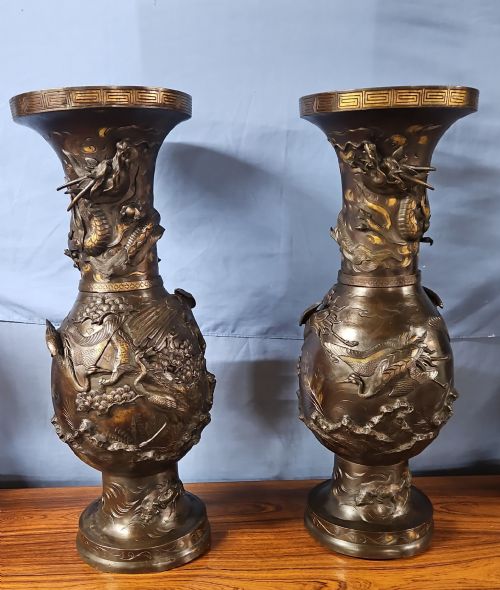
These japanese high relief urn forms and vessels bring dramatic sculptural metalwork into a room.
Japanese High Relief Urn
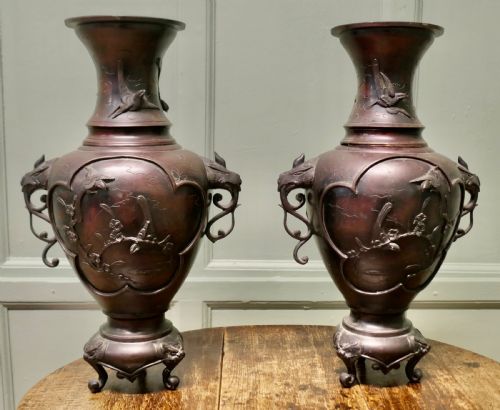
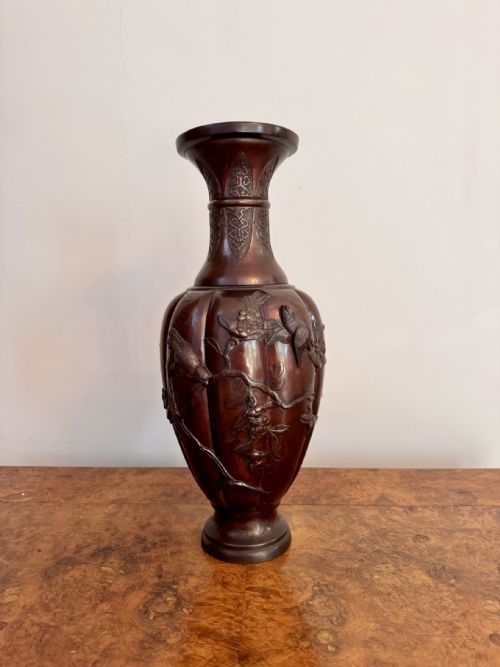
A japanese high relief urn typically presents as a bronze vase, jardiniere or decorative vessel originating from the Meiji period and the wider nineteenth and early twentieth centuries. These pieces display pronounced dimensional ornamentation such as raised flora, fauna and landscape scenes.
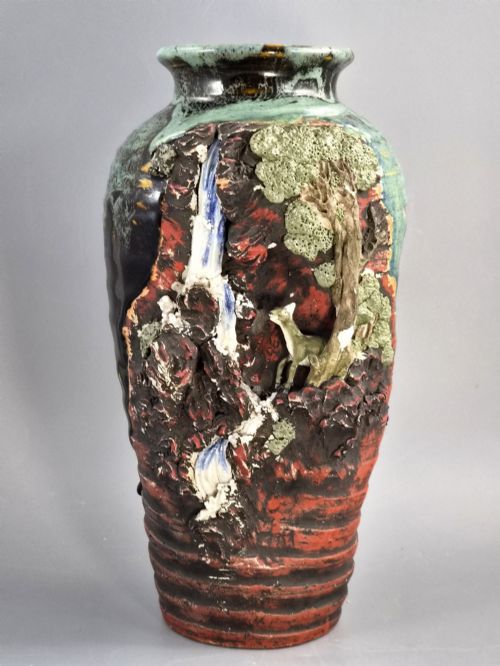
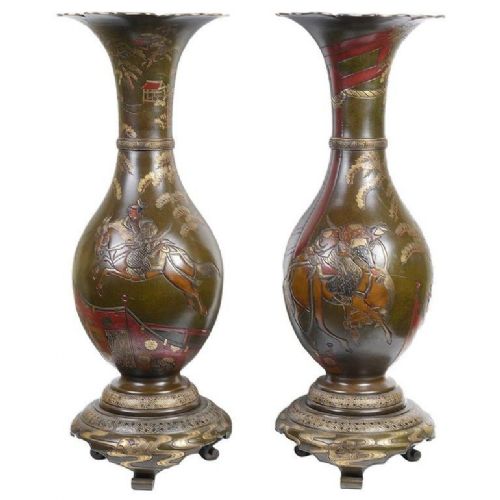
Buyers will most frequently encounter heavy bronze pairs and single large vessels finished with patination, mixed metal elements or enamel details. Forms range from classical amphora shapes to sculptural landscape vases featuring trees and wildlife.
Materials and methods
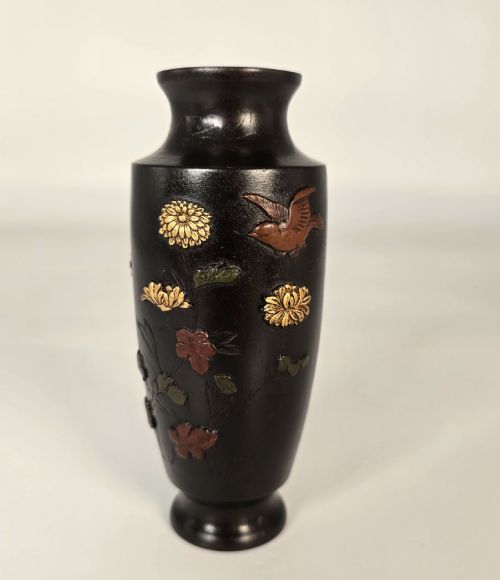
Foundry work relies on cast bronze and copper, often treated with chemical patination to achieve deep brown or dark surface tones. Artisans then apply gold inlay and mixed metals to highlight specific decorative elements.
Sculptural relief details are either cast directly with the body or applied separately before finishing. Enamel and glazes appear on select stoneware and bronze pieces to introduce colour and contrast.
Current listings span the Victorian era, Meiji period and early twentieth century, featuring bronze, copper, enamel and stoneware.
Judging quality
The definition and crispness of the raised metalwork dictate the standard of a vessel, separating sharp hand-finished chasing from softer cast surfaces. Heavier gauge metal and balanced proportions also mark out superior examples.
Integration of mixed metal accents and the subtlety of the patination show the maker's hand. Signed pieces by established workshops carry distinct artisanal distinction.
Genryusai Seiya
The Japanese High Relief Urn Glossary
- Meiji Period
- The era in Japanese history spanning from 1868 to 1912, noted for a surge in metalwork craftsmanship exported to Western markets. Pieces from this time often feature elaborate bronze casting.
- Patinated Bronze
- Bronze treated with acids or heat to produce a stable surface colour ranging from warm brown to deep black. This finish protects the metal and defines the sculptural details.
- Mixed Metal
- The combination of different metallic alloys such as brass, copper and silver on a single bronze ground. Artisans use this technique to create contrasting visual tones.
- Jardiniere
- A large ornamental pot or planter designed to hold growing plants. These heavy vessels often share the same high relief bronze motifs as tall display vases.
- Amphora
- A two-handled jar with a narrow neck used in classical design vocabulary. Victorian and Meiji makers borrowed this ancient Greek silhouette for decorative bronze urns.
Japanese High Relief Urn: Frequently Asked Questions
Were these pieces made for export?
Many large bronzes and decorative vases were produced specifically for Western markets during the Meiji period, satisfying Victorian demand for elaborate oriental metalwork.
Japanese artisans combined traditional foundry skills with popular European forms such as amphoras and jardinieres.
What is Sumida Gawa ware?
Sumida Gawa refers to sculptural pottery featuring thick glazes and applied figures, animals or landscapes modelled in high relief.
These ceramic pieces share the dramatic three-dimensional aesthetic of contemporary bronze vessels.
How do I spot Meiji period work?
Look for dense, naturalistic motifs including birds, flowers and waterfalls rendered in heavy bronze with meticulous detail.
Signatures or seals stamped into the metal often identify specific Meiji workshops and founders.