



Meiji Bronze Okimono
Meiji bronze okimono are Japanese decorative sculptures made for display, bringing precise animal forms and human figures into a room.
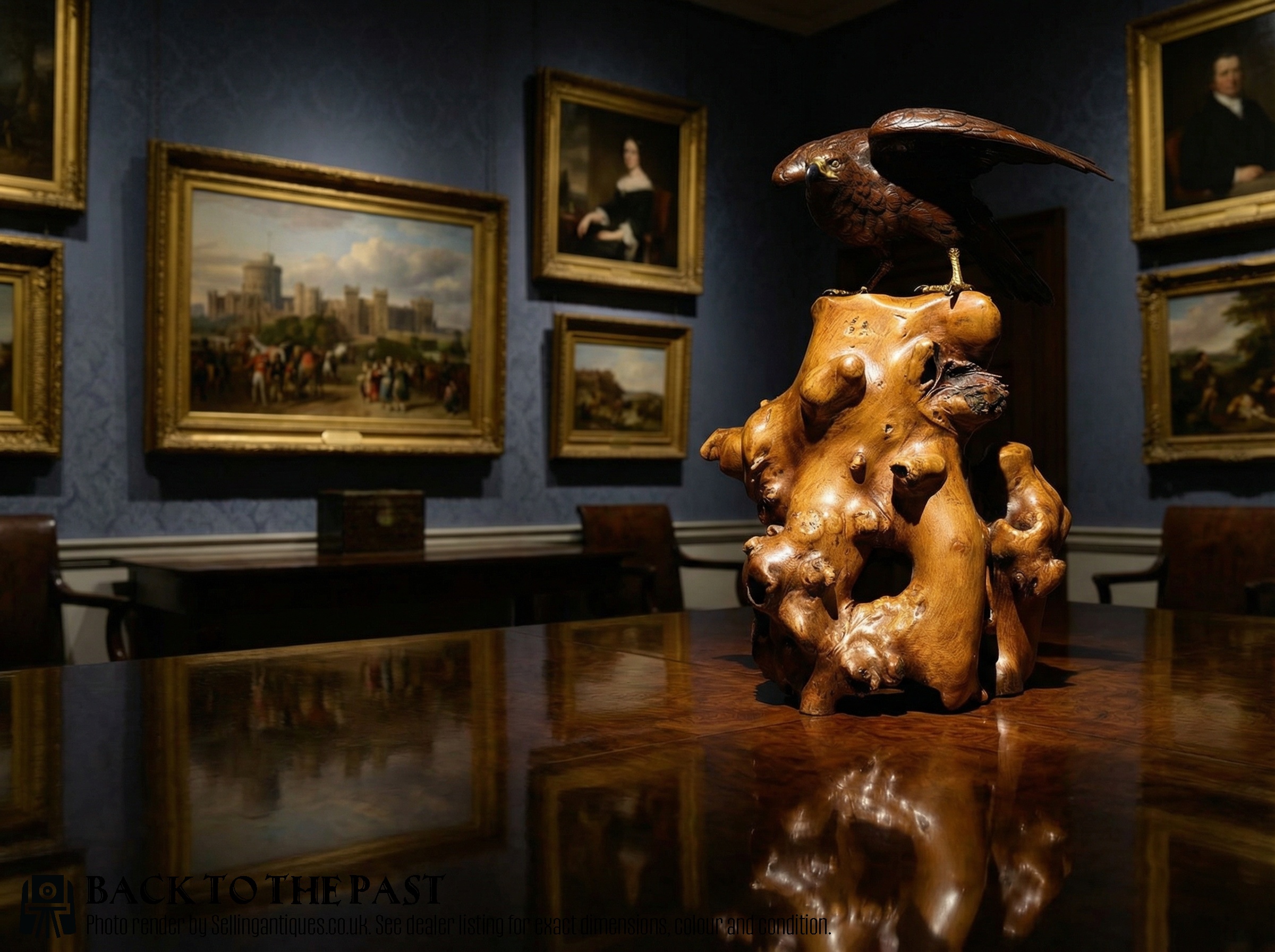
Meiji bronze okimono
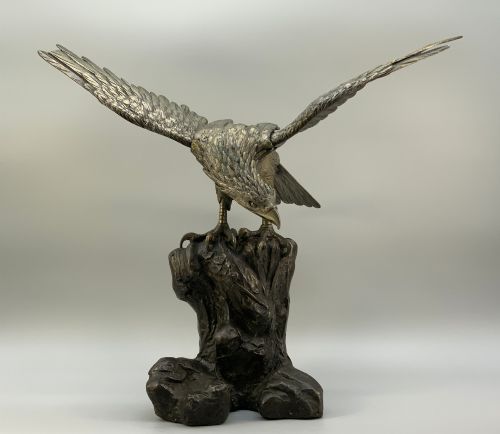
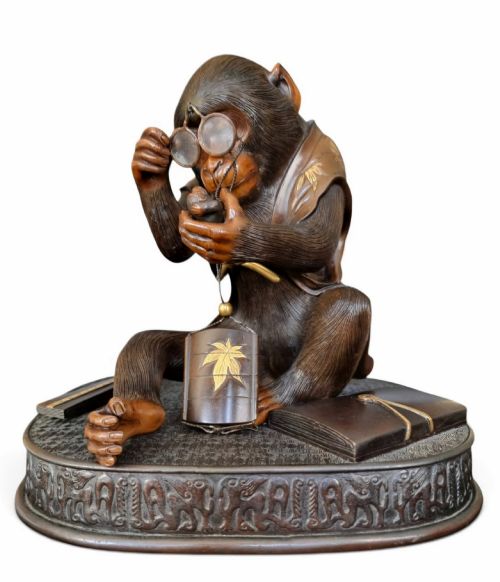
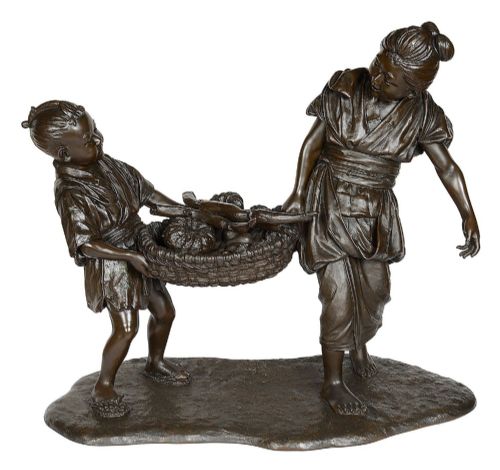
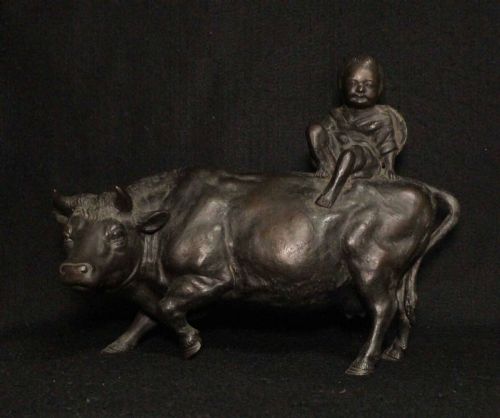
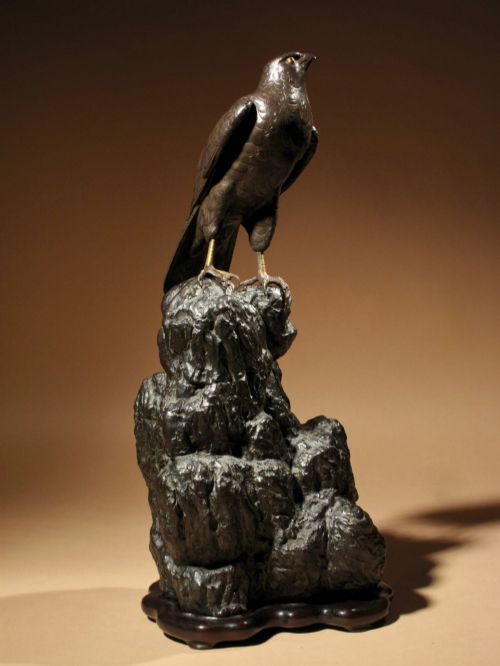
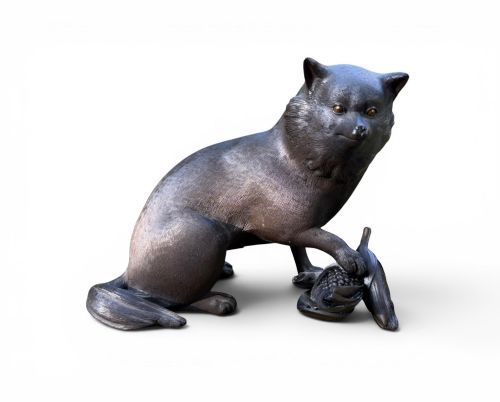
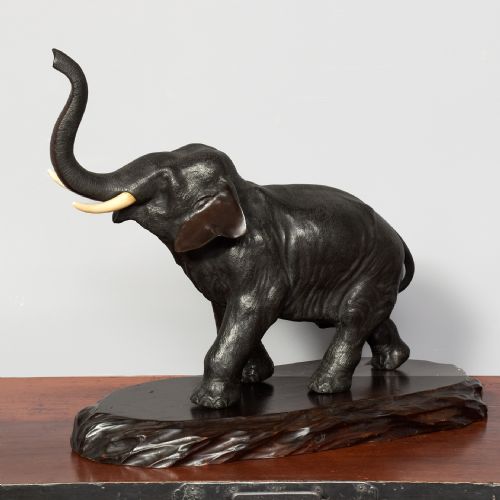
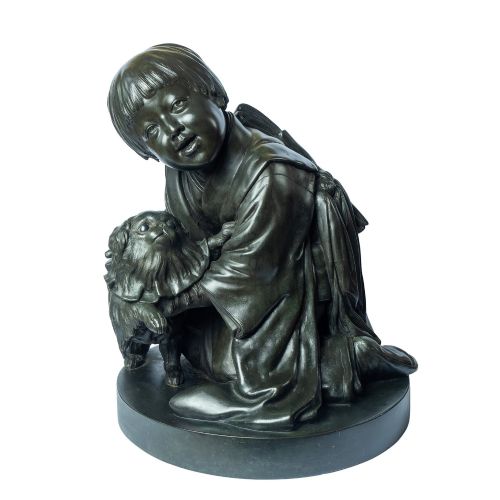
A meiji bronze okimono is a standalone sculpture created during the Meiji period, depicting subjects from nature and mythology. These pieces range from realistic fauna like tigers, elephants, and beetles to human figures such as deities and historical personalities.
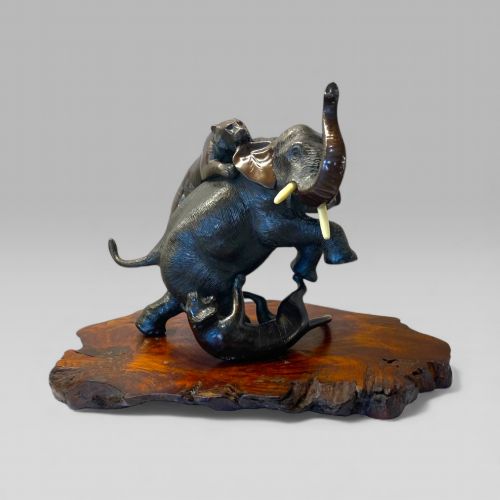
The objects frequently encountered on this page date from the 19th century and the early 20th century. Forms vary widely, taking the shape of single animals, complex combat scenes, and articulated figures with moving joints.
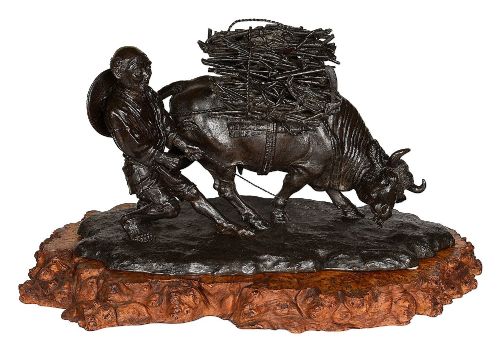
Makers utilised bronze, patinated metal, and patinated iron to achieve distinct surface tones. Rootwood occasionally appears as a base material alongside the metal work.
Method and material
Metalworkers employed lost-wax casting techniques to shape the bronze, iron, and silvered bronze into complex animal and human anatomies. This method allowed for intricate detailing in feathers, scales, and fur.
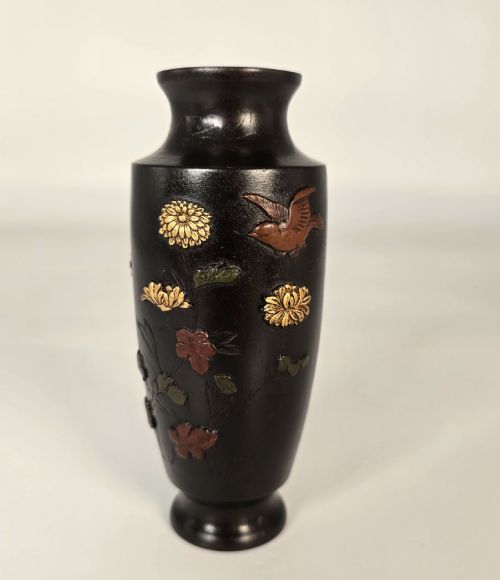
Surface treatments involved chemical patination to darken the metal, complemented by gold inlay and gilt highlights. Bone tusks were occasionally added to elephant figures as separate inserted elements.
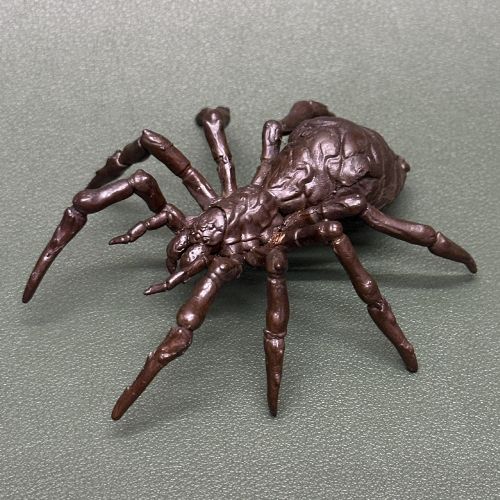
Articulated pieces required individual segments to be cast separately and pinned together internally to allow movement in the limbs of crabs, centipedes, and grasshoppers.
Retail Price Guide 2026
Typical UK retail prices for meiji bronze okimono, calculated from the Sellingantiques database of over a million retail prices indexed since 2003. This retail price guide relies exclusively on Sellingantiques data; no external sources or auction records are used, so the figures do not describe the wider market.
Listings feature 19th-century and early 20th-century objects cast in bronze, patinated iron, and silvered bronze.
Standards of craftsmanship
Quality rests upon the naturalism of the anatomy and the precision of the surface chiselling. Works by known artists demonstrate superior control over texture and proportion compared to unsigned or commercial studio output.
The complexity of the casting distinguishes standard statues from exceptional creations. Articulated joints that move smoothly and multi-figure compositions involving animals or human subjects demand advanced technical skill from the foundry.
Unno Shomin·Maruki Company·Genryusai Seiya·Kisetsu Koku·Takamura Koun·Nogami Ryuki·Ryomin·Yoshitani·Mitsumoto Saku·Hideyama
The Meiji Bronze Okimono Glossary
- Okimono
- A Japanese ornamental statue designed for display on a shelf or in a tokonoma alcove. These objects were produced primarily for export and domestic interior decoration during the late 19th and early 20th centuries.
- Jizai
- An articulated metal sculpture with fully movable joints engineered to mimic the actual movement of an animal or insect. Makers constructed these with hidden pins and overlapping plates.
- Patination
- The chemical treatment of a metal surface to produce a specific colour and finish. Dark brown and black tones are common on these bronzes.
- Shishi
- A mythical temple lion or guardian dog symbolising protection. These beasts are frequently depicted alongside peony flowers in Japanese metalwork.
- Shojo
- A mythical sea spirit or sprite from Japanese folklore known for a fondness of alcohol. Figures of this spirit appear in traditional sculpture carrying vessels.
Frequently Asked Questions
What is an okimono?
An okimono is a Japanese decorative sculpture intended for display within a home rather than for religious use. These pieces represent animals, insects, deities, and genre scenes.
Craftsmen produced them in large numbers during the Meiji era to satisfy both domestic demand and the Western export market for Japanese art.
How do you display them?
These sculptures suit tabletops, shelves, and cabinets where light can catch the patinated surfaces and fine details. They require stable placement away from dampness and direct heat.
Smaller figures pair well with wooden bases, while larger tiger or horse sculptures stand effectively as independent focal points in a room.
Are the joints on articulated pieces functional?
Articulated okimono feature functional joints designed to move like real creatures. Crabs, centipedes, and insects have segmented limbs and bodies that flex and bend.
These moving parts were engineered through precise metalwork and should be handled with care to preserve the internal pins.
How are signed pieces identified?
Signatures typically appear as cast or engraved characters on the underside or back of the sculpture. These foundry marks or artist signatures indicate the maker or workshop responsible.
Unsigned examples remain common, as many high-quality works left the studios without explicit signatures from the artisan.