





Meiji Bronze Bird Vase
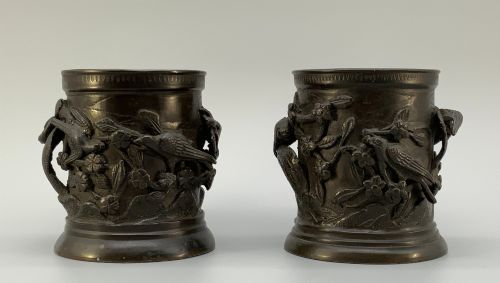
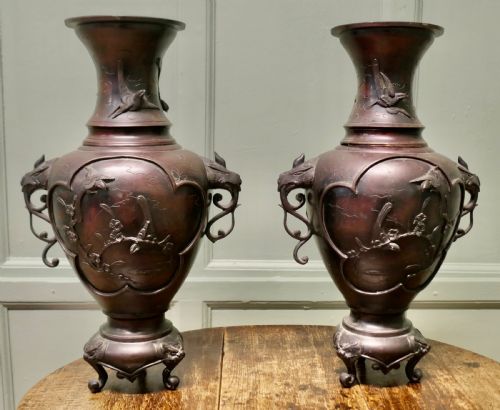
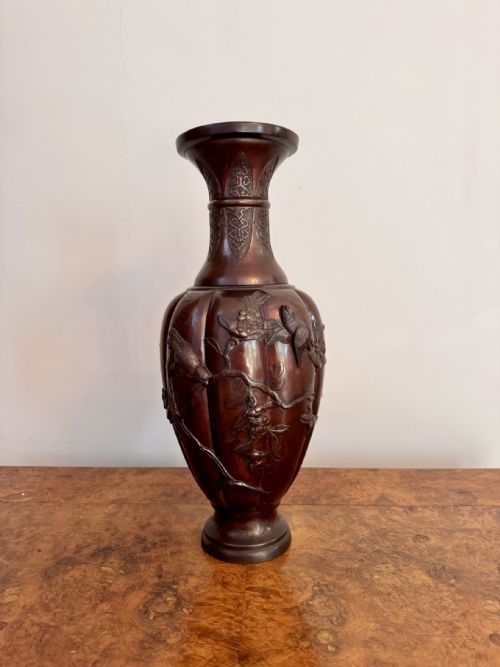
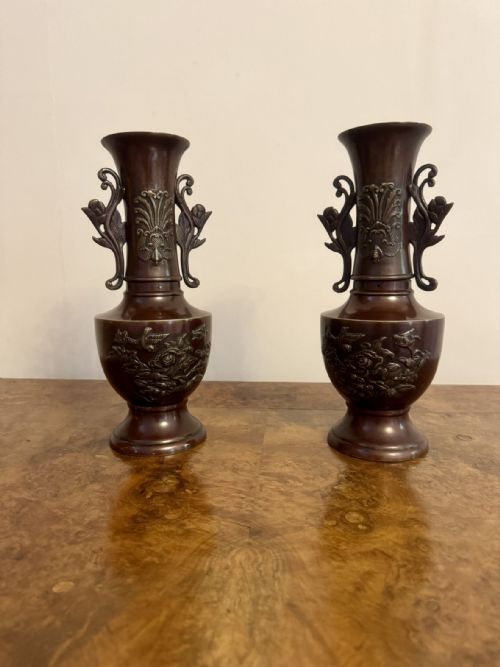
These meiji bronze bird vases are sculptural Japanese works of art that bring striking naturalistic metalwork into a room.
Meiji Bronze Bird Vase
A meiji bronze bird vase is a piece of Japanese metalwork originating from the late nineteenth and early twentieth centuries, capturing the distinct aesthetic of the era. Buyers encounter these vessels in various formats, from solitary display urns to matched pairs featuring raised bird and floral decoration.
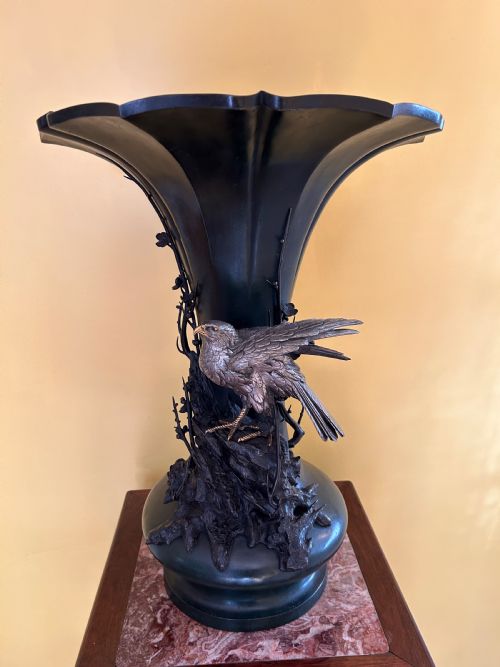
The forms span baluster urns, stem vases, and larger decorative vessels, frequently incorporating natural motifs such as egrets, blossom, and birds. Many examples reflect the stylistic shifts occurring between the Edo period and the early twentieth century, aligning with Victorian importation tastes.
How They Were Made
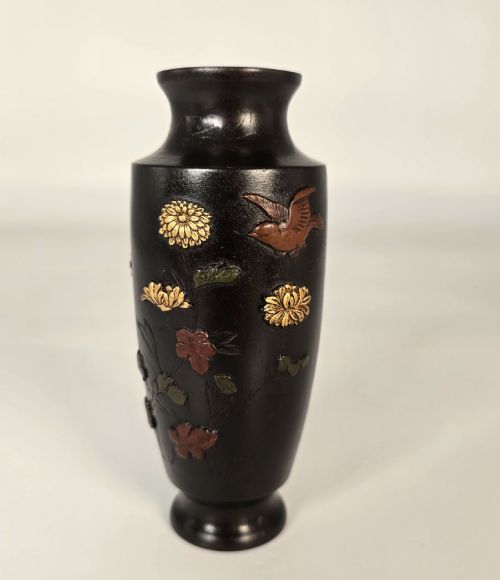
These vessels rely primarily on cast bronze, often enhanced with patinated surfaces, copper elements, and mixed metal highlights. Artisans employed intricate techniques such as gold inlay, gilt metal detailing, and enamel work to delineate birds, foliage, and natural scenes against the dark metal ground.
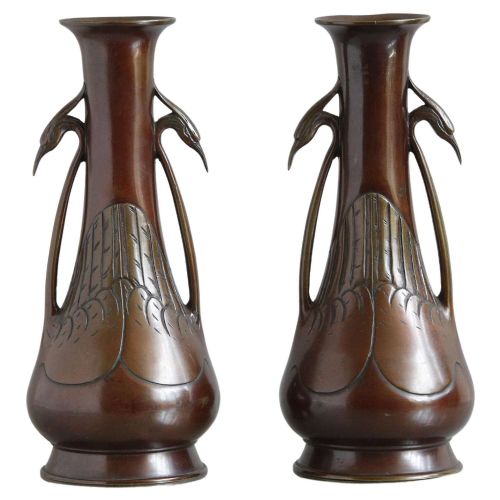
Raised detail work and applied elements, including egret handles, required high levels of metallurgical skill. The combination of bronze casting with contrasting metallic accents creates the rich visual depth characteristic of this period.
Egrets frequently serve as handles, allowing a bird to double as practical hardware.
What Varies in Quality
The distinction between standard production pieces and superior examples rests upon the crispness of the casting and the precision of the surface decoration. Finer pieces demonstrate exceptionally sharp relief in the rendering of birds, plumage, and blossom, whereas simpler items show softer, less defined contours.
The complexity of the metalwork also separates the ranges, with mixed metal additions, gold inlay, and intricate patination elevating certain vessels above plain patinated surfaces. The scale and balance of matched pairs further influence their standing within the category.
The Meiji Bronze Bird Vase Glossary
- Meiji Period
- The era in Japanese history spanning from 1868 to 1912, characterised by rapid modernisation and the opening of trade with Western markets. This period produced the vast majority of decorative metalwork traded internationally during the Victorian and Edwardian eras.
- Patinated Bronze
- Bronze treated with chemicals, heat, or acids to produce a specific surface colour and texture. This technique accentuates relief details on decorative vessels.
- Mixed Metal
- The practice of combining different metallic alloys, such as copper, brass, and bronze, within a single composition. It creates contrasting colour tones across the decorated surface.
- Baluster Urn
- A vase form characterised by a rounded body that tapers toward the base and swells near the centre. This shape provides a stable canvas for expansive bird and floral motifs.
Meiji Bronze Bird Vase: Frequently Asked Questions
How do I identify a meiji period vase?
Authentic pieces typically date from the late nineteenth or early twentieth century, reflecting Japanese export styles popular during the Victorian and Edwardian periods. They frequently utilise patinated bronze or mixed metals with raised naturalistic decoration.
Look closely at the manufacturing techniques and material composition, such as applied copper or gold inlay. The weight and method of casting also help distinguish these historical items from later reproductions.
Were these vases made as pairs?
Many examples on the market were produced as matched pairs for export and display on mantelpieces or large pieces of furniture. Single vases also appear frequently, often functioning as standalone decorative urns or posy vessels.
Pairs often command greater attention from collectors seeking symmetrical arrangements. Examining the dimensions and motif consistency confirms whether two vessels were originally created together.
What motifs appear on these vases?
Natural subjects dominate the surface decoration, with birds, blossom, floral sprays, and egrets appearing most frequently. These elements are often rendered in high relief or highlighted with contrasting metals.
The imagery reflects traditional Japanese artistic interests popularised during the Meiji era. Such details provide immediate visual context for dating and attributing the piece.
How should I clean a bronze vase?
Bronze requires minimal intervention to preserve its historical patination. Gentle dusting with a soft, dry cloth is usually sufficient for routine maintenance.
Avoid using metal polishes, abrasive cleaners, or water, as these can strip the original patina and damage mixed metal inlays. Preserving the surface finish maintains both the character and the historical integrity of the piece.