


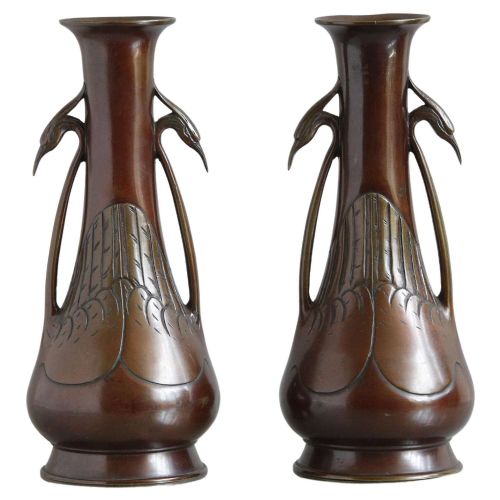


Meiji Bird Vase
When you search for a meiji bird vase, you are looking at intricate Japanese metalwork and ceramics decorated with feathered life from a distinct era of craftsmanship.
Meiji Bird Vase
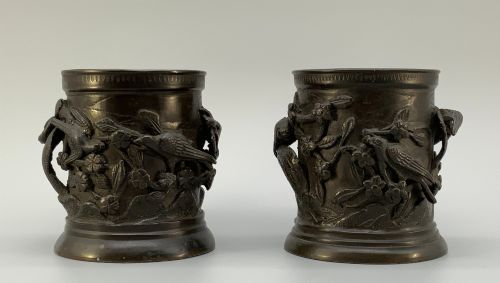
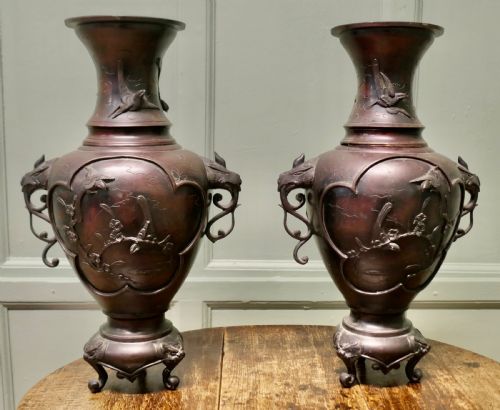
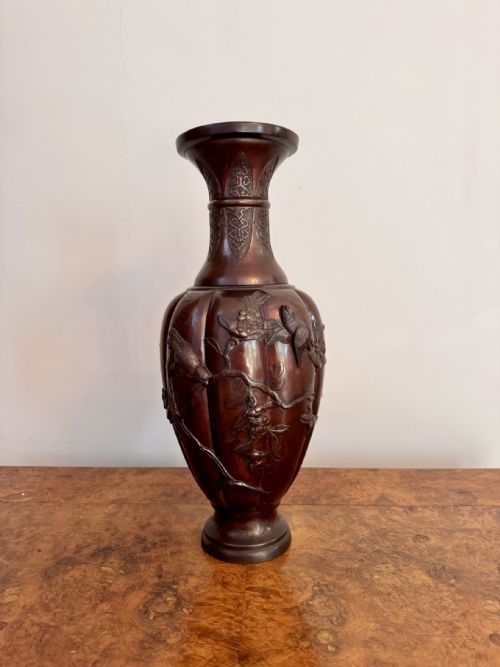
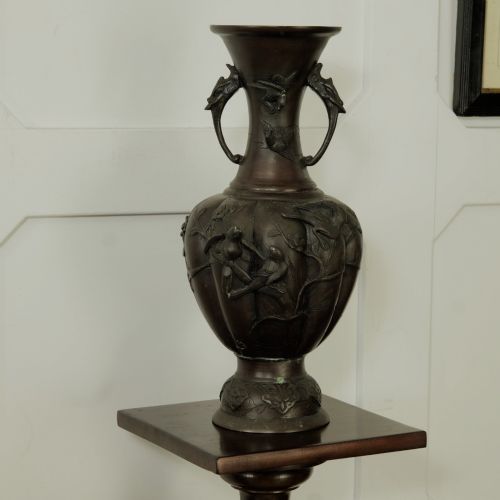
A meiji bird vase brings together traditional Japanese artistry and the decorative tastes of the late nineteenth and early twentieth centuries. These vessels depict birds such as egrets and phoenixes among blossom and foliage, rendered in bronze, porcelain, and cloisonné enamel.
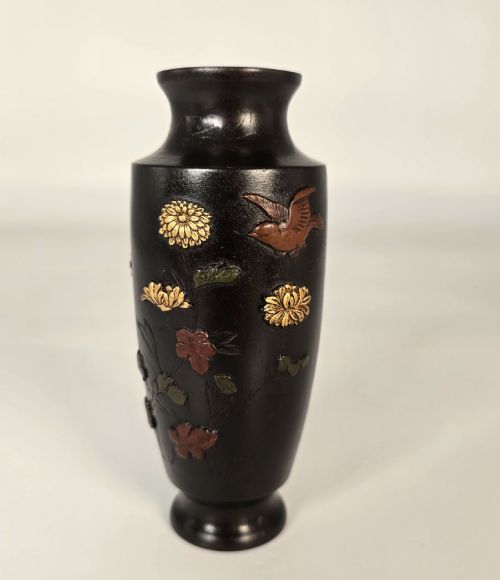
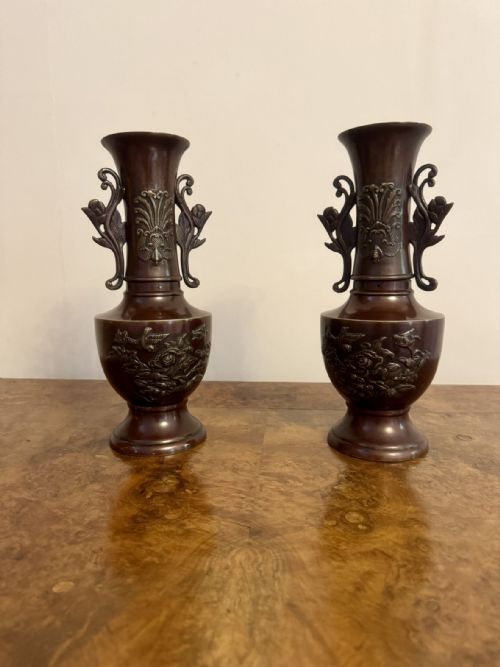
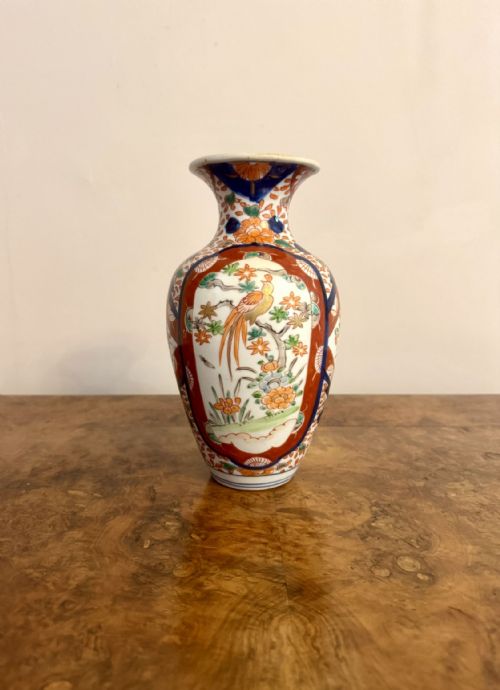
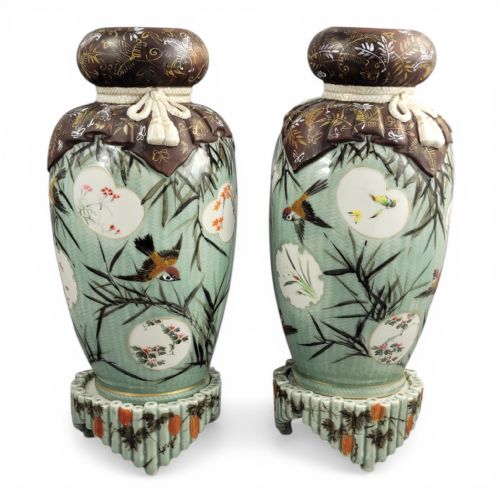
The pieces on this page appear primarily as bronze or mixed metal urns, alongside porcelain and earthenware Satsuma or Kutani vessels. Forms range from modest baluster stems and posy vases to monumental pairs with matching stands.
Originating largely from the Meiji period and surrounding decades, these works reflect both domestic studio pottery traditions and pieces destined for international exhibition.
Materials and Construction
Bronze forms dominate the selection, frequently enhanced through mixed metal inlay, patination, and raised relief work depicting birds and floral scenes. Artisans utilised contrasting metals to achieve tonal depth in plumage and branches.
Enamel works rely on silver wire cloisonné and ginbari techniques, where translucent red or coloured enamels overlay textured or engraved foils. Porcelain and earthenware examples utilise underglaze painting, overglaze enamels, and gilt detailing to bring avian subjects to life.
Some bronze specimens incorporate cheeky elephants alongside feathered birds, proving that Meiji artisans enjoyed a touch of unexpected wildlife.
Distinctions in Execution
Quality rests in the crispness of the casting, the delicacy of the wirework, and the precision of the hand-painted or inlaid detail. Superior bronze vessels display sharply defined feathers and secure mixed metal applications without messy solder.
In cloisonné and ceramic pieces, the fineness of the enamel cells, the harmony of the palette, and the inclusion of documented workshop marks distinguish ambitious exhibition pieces from standard commercial output.
Kinkōzan·Kato Sanhei·Ando Jubei·Makuzu Kozan II·Kinrin Workshop
The Meiji Bird Vase Glossary
- Meiji Period
- The era in Japanese history spanning from 1868 to 1912, characterised by rapid modernisation and the opening of trade with the West. This period produced the vast majority of decorative metalwork and export ceramics collected today.
- Cloisonné
- A metalwork technique where flat wires are soldered to a base to form compartments, which are then filled with enamel paste and fired. Silver wire cloisonné allows for exceptionally fine outlines around intricate bird motifs.
- Satsuma
- A type of Japanese earthenware featuring a pale, ivory-coloured cracked glaze decorated with polychrome enamels and gold. These pieces were extensively produced for export during the late nineteenth century.
- Patinated Bronze
- Metal treated with chemical solutions to produce a specific surface colour or aged finish. This process highlights the relief details of birds and foliage against a darker background.
- Mixed Metal
- An artistic method combining different metallic alloys, such as copper, brass, and silver, embedded into a bronze body to create multicoloured pictorial scenes. It requires considerable skill to ensure the metals bond securely.
Meiji Bird Vase: Frequently Asked Questions
How do I identify a Meiji period piece?
Look for the characteristic blend of traditional Japanese motifs, such as birds and blossom, combined with the refined casting or enamelling techniques typical of the late nineteenth and early twentieth centuries. Many pieces also carry workshop signatures or marks on the base.
Material choices like patinated bronze, mixed metal inlay, and silver wire cloisonné provide further clues to this era of Japanese export production.
Were these vases made for use or display?
Most of these vessels served as decorative showpieces rather than functional flower containers, particularly the larger bronze urns and finely detailed cloisonné pieces. Their intricate surface work and monumental scale indicate they were designed for prominent placement in period interiors.
Smaller stem vases and posy vessels could hold single blooms, but their artistic execution remained the primary focus for both makers and contemporary buyers.
What is the difference between Satsuma and Kutani?
Satsuma ware is an earthenware ceramic defined by its distinctive ivory craquelure glaze, typically ornamented with dense enamel designs and heavy gilding. Kutani ware generally refers to porcelain or stoneware featuring vibrant colour palettes dominated by greens, blues, and reds.
Both styles frequently depict birds and natural scenes, but their underlying clay bodies and glazing traditions are distinct.
How should I display a bronze or cloisonné vase?
Place these vessels on stable surfaces away from direct sunlight to protect delicate patination and enamel work from environmental wear. Many bronze examples benefit from being paired with their original wooden or porcelain stands.
Ensure adequate clearance around larger items to appreciate the three-dimensional bird and floral relief details from multiple angles.