
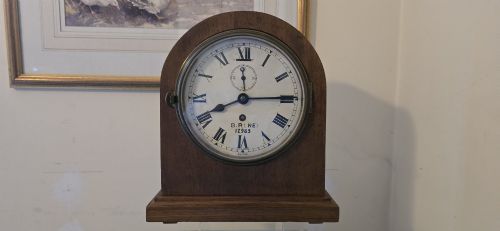
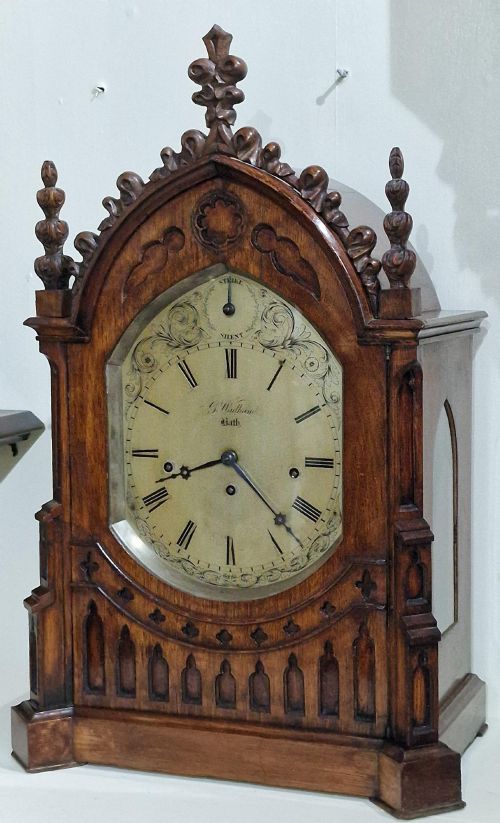
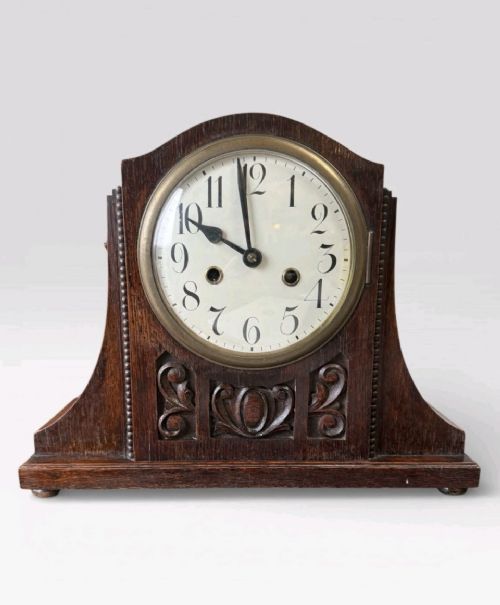


Mechanical Oak Table Clock
These mechanical oak table clock examples combine heavy timber cases with intricate brass movements, offering both dependable timekeeping and robust period character for any interior.
Mechanical Oak Table Clock
A mechanical oak table clock sits comfortably on mantelpieces, desks, and sideboards, serving as both a functional timepiece and a decorative centrepiece. When exploring a mechanical oak table clock on this page, buyers encounter various forms ranging from compact timepiece designs to large bracket and mantel clocks.
The selection spans several distinct eras, notably the Victorian period, the Edwardian years, and the 1920s. Common structural formats include four-glass cases that display the internal mechanism, traditional arched top bracket designs, and sturdy rectangular mantel pieces.
Makers utilised different stylistic influences across these decades, producing items in Gothic Revival, Art Deco, and traditional British idioms. Selecting the right piece involves matching the architectural style of the clock case to the proportions of the room it will occupy.
Materials and construction
The primary structural material is oak, appearing in finishes such as golden oak or solid dark timber, paired with glass panels that protect the dial and movement. Brass components form the internal gear trains, bezels, and decorative mounts.
Dials often feature silvered metal or enamel chapters with distinct numerals, sometimes supplemented by chrome accents in later twentieth-century pieces. Movements rely on mechanical gear systems, including single, double, and triple fusee setups or spring-driven mechanisms.
Some clocks hide their winding holes behind tiny brass doors, requiring a steady hand and a quiet room to hear the gentle tick.
Assessing quality and craftsmanship
Superior examples demonstrate meticulous timber selection, featuring tightly grained oak cases with crisp mouldings and well-fitted joints. The complexity of the internal movement also dictates quality, with multi-train fusee or chiming mechanisms representing a higher standard of horological engineering than simple time-only movements.
The integration of secondary materials elevates a piece, such as heavy bevelled glass side panels, finely engraved brass backplates, and clear silvered metal dials. Balance in proportions and the original harmony between case and movement separate standard production clocks from finer workshop output.
George Wadham·Winterhalder·DeLa Salle And Christie
The Mechanical Oak Table Clock Glossary
- Fusee
- A conical pulley used in mechanical clocks to maintain an even pull on the gear train as the mainspring unwinds. This mechanism ensures more accurate timekeeping throughout the duration of the wind.
- Bracket clock
- A portable clock originally designed to sit on a wall bracket or a table. Many examples feature arched tops and sturdy carrying handles.
- Triple fusee
- A complex movement mechanism that drives the going train, the striking train, and the chime train separately. Such movements are typically found in higher-grade musical or chiming bracket clocks.
- Silvered metal
- A brass or copper dial plate treated with a silver solution to create a bright, matte finish. This surface treatment provides high contrast for engraved numerals and markings.
Mechanical Oak Table Clock: Frequently Asked Questions
How do fusee movements work?
A fusee movement uses a conical pulley connected to the mainspring via a chain or cord. As the spring loses tension, the chain moves to a wider part of the cone, compensating for the drop in power.
This clever mechanical adjustment ensures the force delivered to the escapement remains consistent, leading to much more reliable timekeeping over the running period.
Where should I place a bracket clock?
Bracket clocks look best on sturdy wooden surfaces such as sideboards, desks, or dedicated mantelpieces where their weight and proportions are fully supported. Avoid spots subject to heavy vibrations or damp conditions.
Because many examples feature glass panels on multiple sides, positioning them away from direct foot traffic keeps the case safe while allowing light to pass through the movement.
What is a chiming movement?
A chiming movement includes additional gear trains and hammers that strike bells or gongs on the quarter hour, half hour, or hour. These mechanisms range from simple hour strikes to intricate Westminster chime patterns.
Clocks with these complex systems require careful setting and regular maintenance to keep the trains synchronised and sounding correctly.
How do I identify an Edwardian oak clock?
Edwardian oak clocks often display cleaner, lighter woodwork compared to the heavier, darker carvings of the preceding Victorian era. They frequently incorporate inlaid banding, brass bracket feet, and simplified Edwardian architectural motifs.
The dials generally feature clear arabic or roman numerals behind flat or slightly curved glass bezels, reflecting early twentieth-century domestic interior tastes.