


Edwardian Oak Timepiece
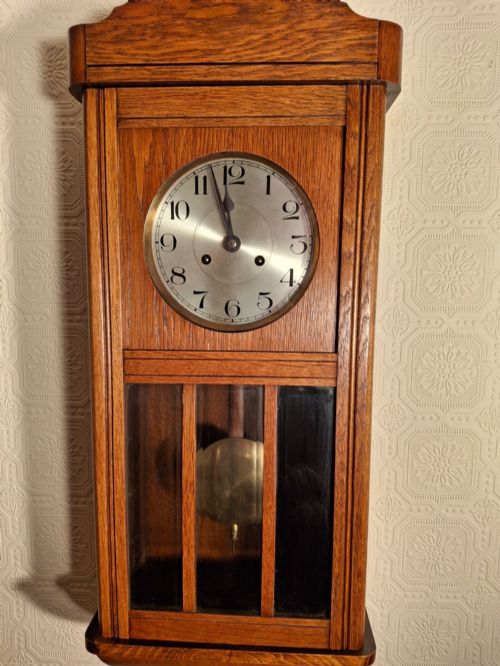
An edwardian oak timepiece brings sturdy timber and reliable movement into a room, offering both practical timekeeping and period character.
Edwardian Oak Timepiece
When you search for an edwardian oak timepiece, you encounter a variety of mantle, bracket and wall clocks spanning the late nineteenth and early twentieth centuries. The selection ranges from plain domestic wall dials to decorative mantelpieces featuring marquetry inlay and carved details.
The historical spread reaches from the late Victorian era through the Edwardian period and into the nineteen-twenties, reflecting enduring styles in British cabinet making. Pieces take various forms, from simple balloon cases to four glass-sided mantel clocks that reveal the internal movement.
How they were made
Makers constructed the cases primarily from solid and golden oak, frequently incorporating contrasting inlay, brass bezels and carved motifs. Interiors house mechanical movements, ranging from standard timepieces to eight-day striking mechanisms and fusee movements.
Dials display Roman or Arabic numerals rendered in enamel or silvered metal, protected behind curved or flat glass panels. Craftspeople applied hand-carved details and decorative woodwork, aligning with Arts and Crafts ideals or the flowing lines of Art Nouveau.
Listings feature oak material across multiple periods, including the Edwardian era, the nineteenth century, and the nineteen-twenties.
What varies in quality
The distinction between ordinary and superior pieces rests on the complexity of the movement and the refinement of the timber case. High-end examples incorporate fusee movements and precise joinery, whereas standard models rely on simpler time-only mechanisms.
Detailing such as hand carving, delicate wood inlay, and the quality of the brass and silvered metal components elevates certain pieces above standard production models. The clarity of the enamel dial and the integrity of the oak case further determine the standing of each clock.
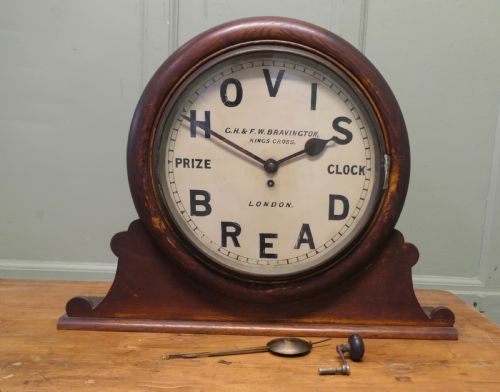
G.H.& F.W. Bravington London·Jas Whitelaw of Edinburgh·Harrods
The Edwardian Oak Timepiece Glossary
- Fusee
- A conical pulley connected to the mainspring by a chain or cord, designed to equalise the driving force as the spring unwinds. This mechanism is typically found in higher quality British clocks.
- Mantel clock
- A portable clock designed to stand on a mantelpiece or shelf above a fireplace. These domestic objects often feature decorative wooden cases suited to reception rooms.
- Wall clock
- A timepiece designed to be hung directly on a wall rather than placed on furniture. Dial clocks of this type were common in offices, hallways and kitchens.
- Bracket clock
- A portable spring-driven clock originally designed to sit on a wall bracket or table. The term later applied broadly to square or architectural mantel clocks.
- Inlay
- A decorative technique where contrasting woods or metals are inserted into depressions in the oak surface to create patterns. This method appears frequently on Edwardian mantel pieces.
Edwardian Oak Timepiece: Frequently Asked Questions
How do I wind an oak timepiece?
Use the appropriate winding key inserted into the dial aperture, turning it gently until resistance is felt. Care must be taken not to over-wind the mainspring.
Ensure you support the clock case with one hand while operating the key with the other to avoid shifting the position on the mantelpiece.
Where should I place a wall clock?
Mount the clock on a sturdy internal wall at a comfortable viewing height, away from direct sources of heat or damp air. Solid fixings ensure the case remains plumb and the pendulum beats evenly.
Avoid exterior walls that experience significant temperature fluctuations, as this can affect the wood and the expansion of metal components.
What is a fusee movement?
A fusee movement uses a conical drum and a chain to regulate the pull of the mainspring, ensuring even tension as the power diminishes. This provides greater timekeeping accuracy.
Such movements represent a higher standard of clockmaking craftsmanship compared to standard barrel spring mechanisms.
How do I clean an oak clock case?
Dust the timber regularly with a soft, dry cloth to prevent the accumulation of grime in carved recesses and inlay work. Avoid household sprays or silicone polishes.
Apply a traditional beeswax sparingly if the wood appears dry, buffing gently with a clean cloth to maintain a natural lustre.