


Vintage Oak Table Clock
A vintage oak table clock brings solid timber presence and precise mechanical movement to a room, grounding your interior with architectural period character.
Vintage Oak Table Clock
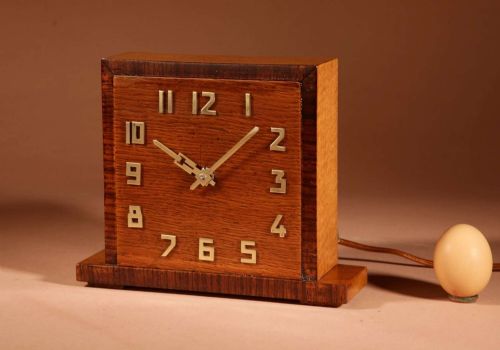
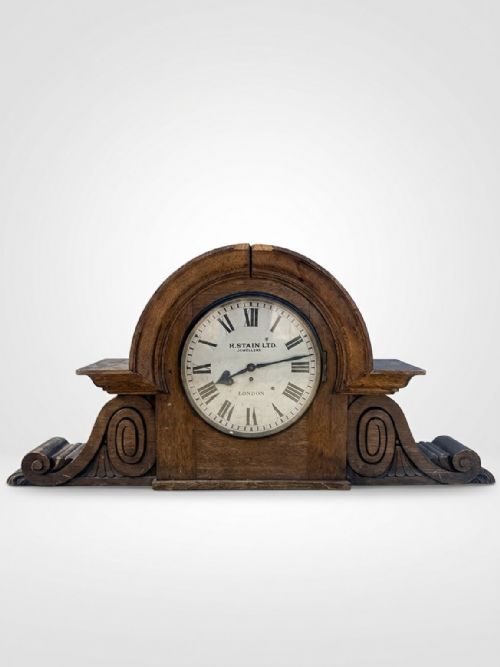
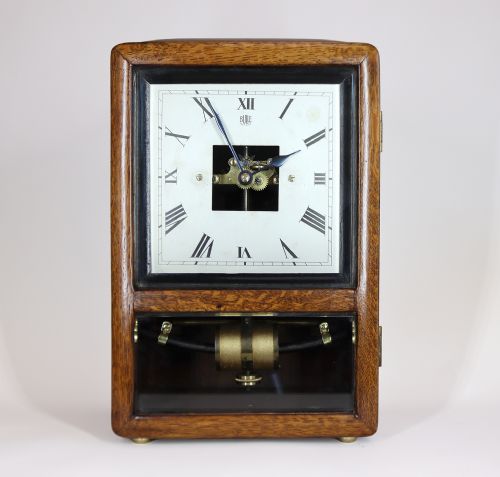
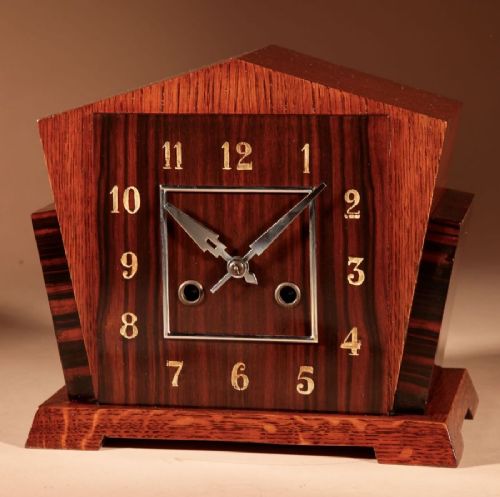
A vintage oak table clock brings together sturdy domestic timbers and traditional horological movement, serving as both a functional timekeeper and a decorative mantel piece. When you search for a vintage oak table clock, you encounter forms ranging from simple Edwardian timepieces to striking bracket clocks and geometric Art Deco designs.
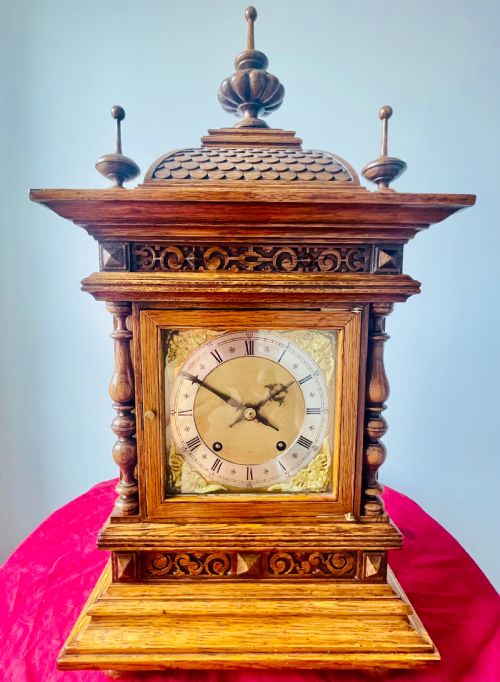
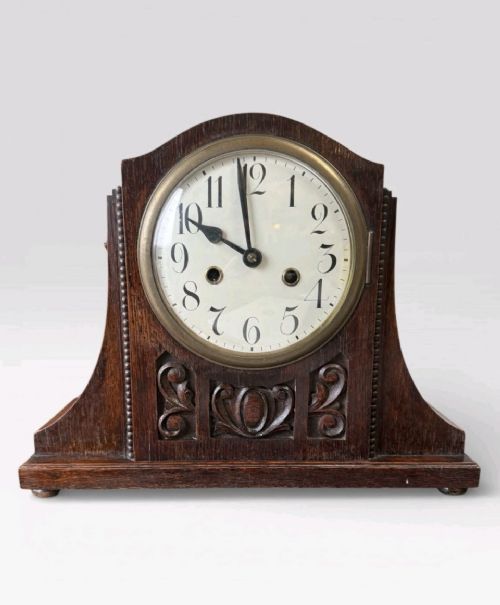
The pieces listed here span the nineteenth and twentieth centuries, taking shapes such as balloon cases, architectural bracket clocks, and Amsterdam School interpretations. Oak predominates as the primary carcass material, often paired with contrasting woods like macassar ebony or enriched with brass dials and bevelled glass panels.
You are most likely to meet oak-cased mantel clocks dating from the early twentieth century, alongside heavier Victorian and Edwardian bracket formats. These domestic timepieces reflect the shifting design vocabulary of their eras, moving from carved revival styles toward streamlined modernist geometries.
Judging quality in oak timepieces
Quality in these clocks rests upon the integration between the cabinet maker's joinery and the horologist's movement. Superior examples exhibit tightly fitted cabinet work, substantial timber thickness such as pollard oak, and refined movement architecture featuring signed plates and fusee mechanisms.
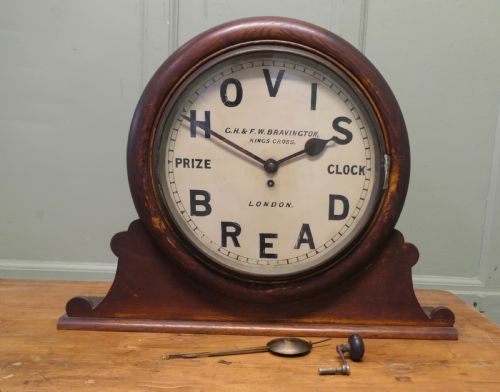
One listed clock carries an official Hovis prize pedigree, proving that even household bread brands once commissioned serious horological engineering.
G.H. & F.W. Bravington London·Winterhalder and Hofmeier·Jas Whitelaw of Edinburgh·Pennington of Camberwell London·DeLa Salle and Christie London·Pfeilkreuz Junghans·Payne and Co of London
The Vintage Oak Table Clock Glossary
- Bracket clock
- A portable mechanical clock originally designed to sit upon a wall bracket, though later placed upon tables and mantelpieces. These typically feature robust spring-driven movements and architectural wooden cases.
- Fusee
- A conical pulley used in mechanical clocks to maintain an even pull on the gear train as the mainspring unwinds. This mechanism ensures consistent timekeeping accuracy across the power reserve.
- Pollard oak
- Timber taken from the upper branches of pollarded trees, exhibiting a dense, swirling grain pattern. Cabinet makers prize this decorative wood for high-status clock cases.
- Chapter ring
- The outer ring on a clock dial that displays the hour numerals. These are frequently silvered brass or enamelled inserts set behind a glazed bezel.
- Single fusee
- A movement driven by one fusee cone that powers the timekeeping train only. Such movements require regular winding but omit the complex striking gear found in quarter-chiming models.
Vintage Oak Table Clock: Frequently Asked Questions
What is the difference between a mantel clock and a bracket clock?
Bracket clocks historically featured sturdy carrying handles and heavy brass-trimmed wooden cases designed for portability between rooms. Mantel clocks emerged later as dedicated stationary ornaments for the fireplace surround.
Despite their distinct origins, both categories utilise similar mechanical movements housed in architectural oak cabinetry.
How do I identify an Amsterdam School clock?
Amsterdam School designs feature expressive, heavily textured woodwork with geometric massing and contrasting timber veneers like macassar ebony. These pieces date primarily from the early twentieth century and reject traditional revival ornamentation in favour of dynamic modernist forms.
The clock cases often emphasise vertical grain patterns and sculptural wooden surrounds framing circular brass dials.
Where should I place an oak table clock in my home?
Position your clock on a stable, level surface away from direct sunlight, central heating vents, and damp exterior walls. Solid oak cases and delicate internal gear trains respond poorly to extreme temperature fluctuations and humidity.
A sturdy sideboard, desk, or mantelpiece provides the ideal acoustic and physical platform for the movement to keep accurate time.