


Oak Shelf Clock
An oak shelf clock brings functional timekeeping and rich cabinetwork to any mantel, spanning styles from Edwardian inlay to bold Art Deco geometries.
Oak Shelf Clock
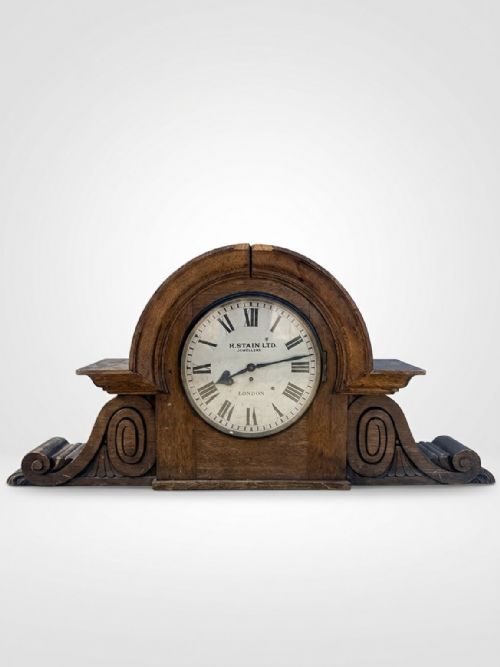
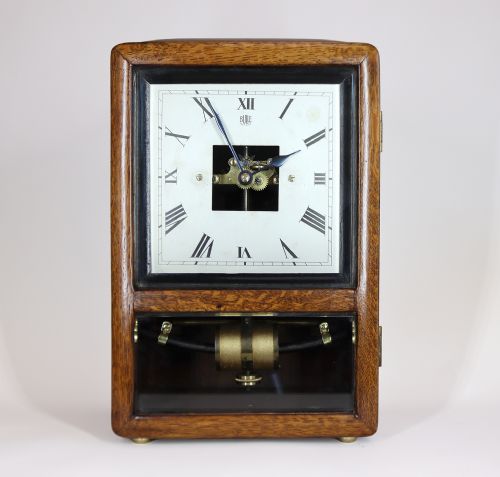
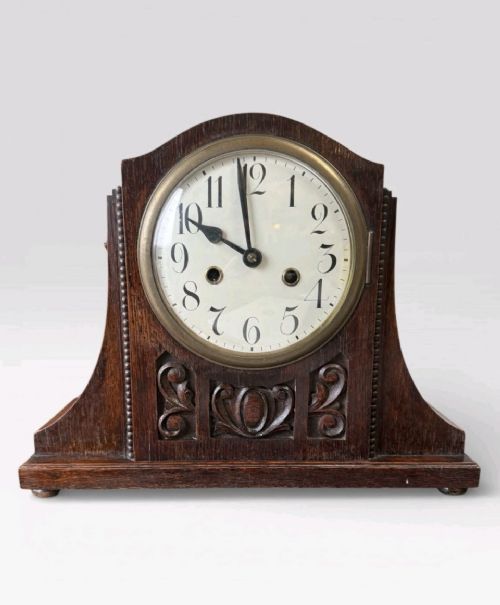
When searching for an oak shelf clock, you encounter timepieces designed for mantel or bracket display, originating from periods such as the nineteenth century, Edwardian era, and the nineteen-twenties. The examples on this page encompass various forms including traditional balloon shapes, architectural bracket clocks, and striking mechanical movements.
The materials and aesthetic influences range widely across these pieces, featuring styles such as Art Nouveau, Black Forest carving, Amsterdam School design, and mid-twentieth century military contexts. Most specimens rely on substantial timber cases paired with brass fittings and enamel dials to register the hours.
Materials and construction
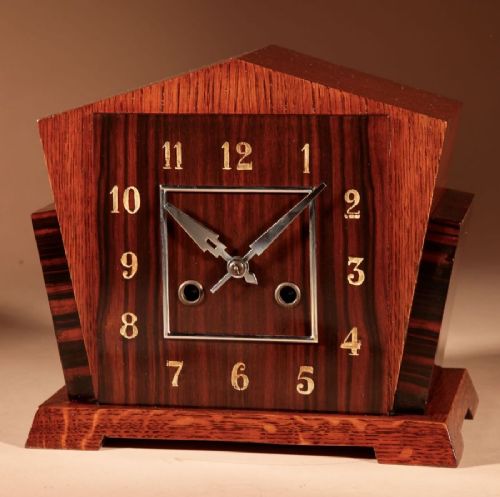
Cases are primarily built from solid or veneered oak, sometimes enriched with contrasting timbers like macassar ebony and coromandel, or detailed with intricate inlay work. Metal components such as brass and chrome integrate into the dials, bezels, and mechanical movements housed within.
Makers utilised glass viewing panels to protect enamel clock faces, whilst specific regional traditions incorporated hand-carved wooden elements as seen in Black Forest examples or refined joinery typical of Amsterdam School pieces.
Listings span multiple decades from the nineteenth century through the nineteen-forties, uniting oak woodwork with brass, enamel, and glass.
Assessing quality and design
Quality in an oak shelf clock rests upon the crispness of the timber cabinetwork, the presence of refined secondary veneers such as ebony, and the sophistication of the movement itself. Pieces featuring twin fusee mechanisms or distinctive stylistic articulation from recognised design movements command greater attention.
The harmony between the clock face, whether enamel or two-tone wooden geometric arrangements, and the outer case defines the overall success of the piece. Superior examples demonstrate careful attention to proportion, detailing, and structural integrity across diverse stylistic periods.
Jas Whitelaw of Edinburgh·Pennington of Camberwell·DeLa Salle And Christie·Pfeilkreuz Junghans·Beha
The Oak Shelf Clock Glossary
- Bracket clock
- A portable timekeeper originally designed to sit upon a wall bracket or shelf. These pieces often feature substantial wooden cases and complex mechanical movements.
- Twin fusee
- A mechanical system utilising a chain or cord and a conical pulley to equalise the drive force of the mainspring as it unwinds, ensuring more accurate timekeeping.
- Macassar ebony
- A heavily figured exotic timber with distinctive dark brown and golden stripes used frequently for contrasting inlay and decorative banding on clock cases.
- Amsterdam School
- An architectural and design movement from the early twentieth century characterised by expressionist forms, rounded masonry, and elaborate brickwork or woodwork.
Oak Shelf Clock: Frequently Asked Questions
Where should I place an oak shelf clock?
These clocks suit stable horizontal surfaces such as mantelpieces, sideboards, or deep shelves where they can remain level and undisturbed.
Avoid positioning them in areas prone to excessive moisture or direct sunlight to protect the wood and internal mechanics.
How do I identify an Edwardian clock?
Edwardian timepieces often display lighter timber tones, refined string inlay, and graceful outlines such as the traditional balloon shape.
They reflect the decorative tastes prevalent during the early years of the twentieth century.
What is an Art Deco shelf clock?
Art Deco pieces typically feature geometric forms, contrasting wood veneers like oak and macassar ebony, and stylized metal dials.
These designs emerged strongly during the nineteen-twenties and nineteen-thirties, favouring bold architectural lines.