
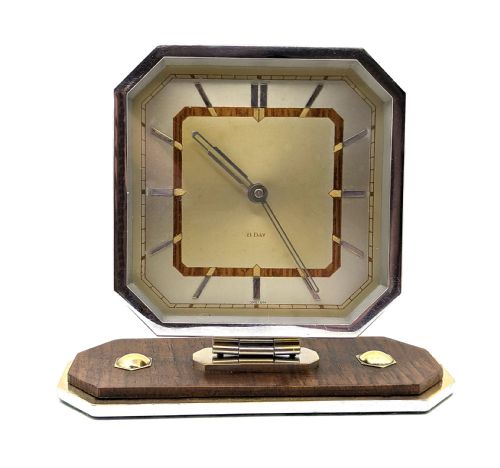
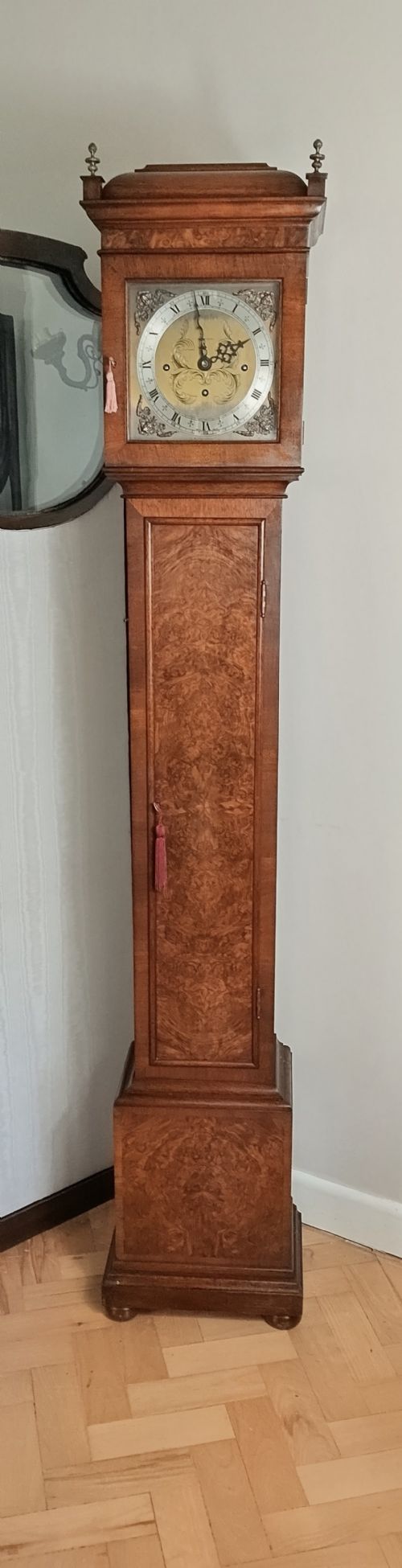

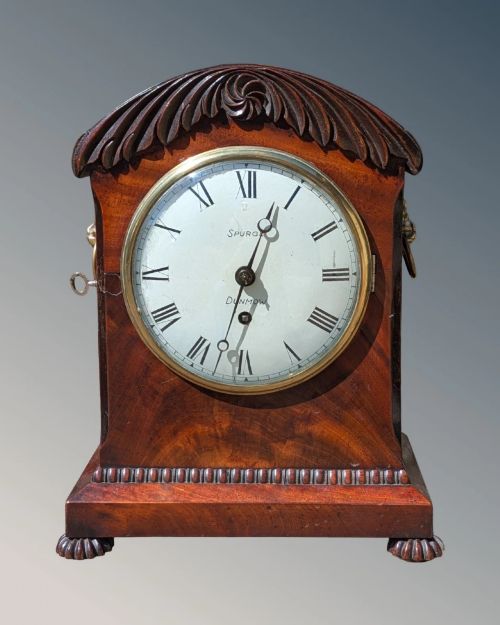

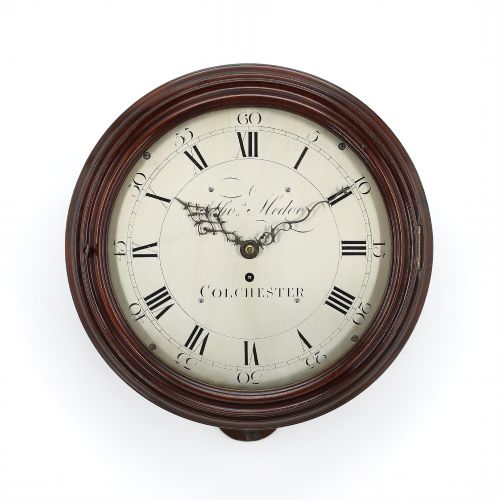


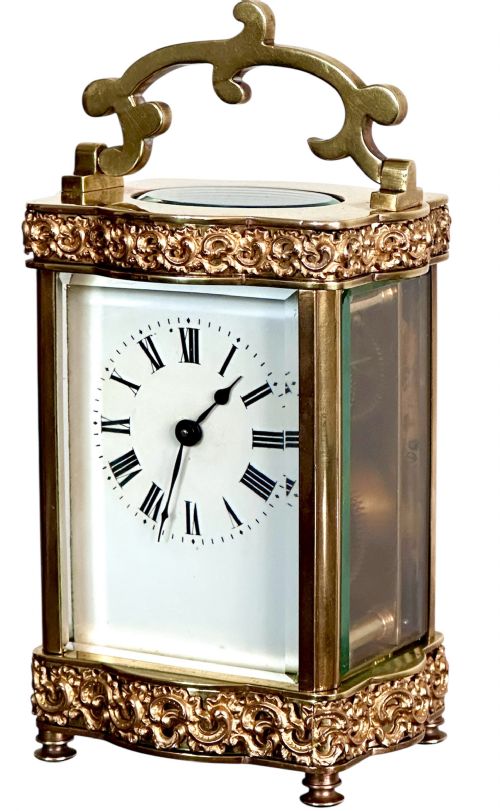


Mechanical Movement Clock
These mechanical movement clock examples span robust railway timepieces and intricate skeleton designs, offering tactile brass gear trains and dependable spring power.
Mechanical Movement Clock
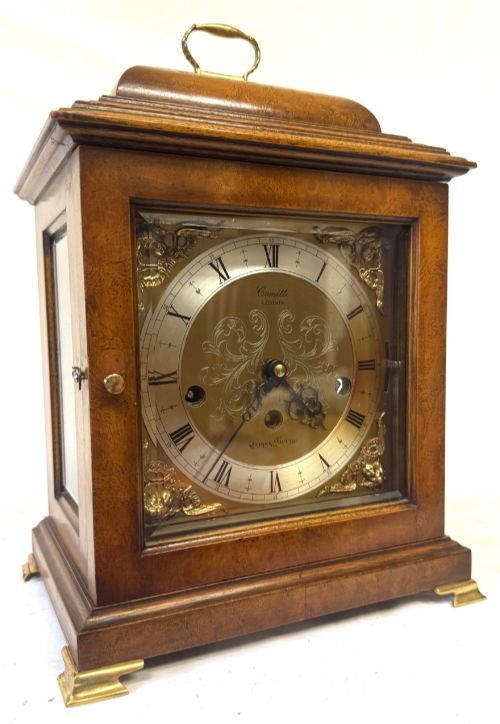
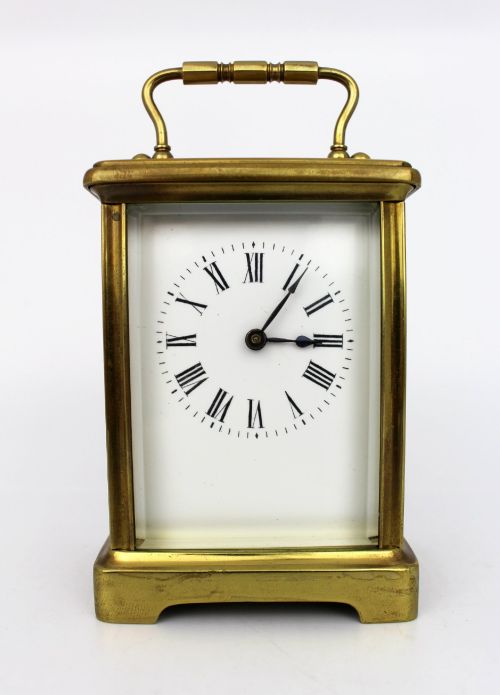
A mechanical movement clock functions through weight or spring drive, utilising escapements and gear trains rather than electronic circuits to measure time. When examining a mechanical movement clock on this page, buyers encounter diverse forms ranging from wall-hanging fusee dials to domestic mantel clocks.
The selection encompasses Victorian and Edwardian pieces alongside mid-century examples, produced by makers in Britain, France, and Switzerland. Mantels, desks, and walls accommodate these working machines, which bridge functional timekeeping and decorative carpentry.
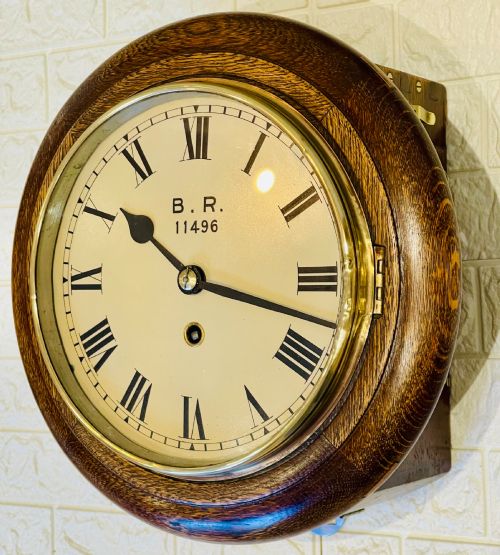
Railway stations, parlours, and offices originally housed these varied items, preserving mechanical traditions across the nineteenth and twentieth centuries. Oak, mahogany, and brass predominate, matching the cabinet-making standards of their respective eras.
Materials and mechanics
Makers housed precision brass gear trains within timber cases built from mahogany, oak, or walnut, protecting delicate escapements behind glass panels. Dials employ enamelled metal, silvered brass, or painted wood, marked with Roman or Arabic numerals.
Fusee cones and barrel springs drive the gear work, transferring stored energy evenly through the train to maintain consistent pendulum swings or balance wheel oscillations. Heavy bronze, gilt frames, and marble mountings support complex striking and repeating mechanisms.
Some railway clocks bear the scars of platform soot and decades of schedule-keeping, quietly ticking away long after steam trains vanished.
Craft and execution
Fine execution reveals itself in hand-cut wheel work, signed backplates, and robust fusee chain construction that ensures even tension across the entire power reserve. Superior examples retain original glass domes, clean dial painting, and crisp cabinetry without heavy timber replacement.
Workmanship differs between mass-produced utility office pieces and bespoke domestic bracket clocks fitted with multiple tune movements or complicated deadbeat escapements. The degree of preservation in the brass pivots, train wheels, and escapement components dictates long-term mechanical reliability.
Comitti Of London·Thomas Hedge·Brunelot·Duverdrey & Bloquel·William Evans·Winterhalder·John Walker
The Mechanical Movement Clock Glossary
- Fusee
- A conical pulley connected to the mainspring by a chain or cord, designed to equalise the torque as the spring unwinds. This ensures steady force reaches the escapement throughout the running cycle.
- Escapement
- The mechanism that controls the release of the gear train, giving impulses to the pendulum or balance wheel. Common types include verge, anchor, and detached detent systems.
- Skeleton clock
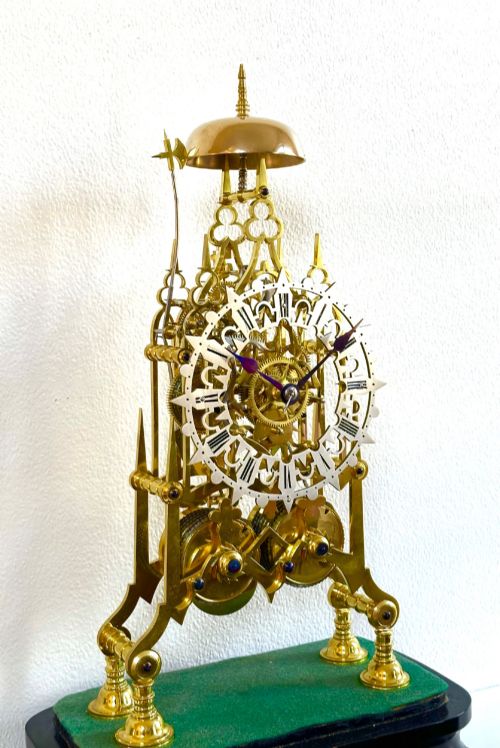
- A timepiece designed with an open frame that exposes the gear wheels, plates, and movement to view. These are frequently housed beneath glass domes to protect the delicate motion from dust.
- Striking movement
- A gear train that sounds the hours or quarters on a bell, gong, or chime block. Repeating variations can sound the last elapsed hour upon demand via a pull cord or lever.
Mechanical Movement Clock: Frequently Asked Questions
How do fusee clocks work?
A fusee clock uses a conical pulley and chain to regulate the pull of the mainspring. As the spring loses tension, the chain rides higher on the cone to maintain consistent power.
This clever geometric design prevents the timekeeping from slowing down as the clock runs through its weekly or eight-day cycle.
Are skeleton clocks fragile?
Skeleton clocks expose their delicate wheel trains directly to the air rather than hiding them inside a solid wooden box. They require careful handling during transport and benefit from protective glass domes.
Keep them away from direct sunlight, draughts, and heavy footfall that might disturb their sensitive pendulum or balance assembly.
How do I wind a mechanical clock?
Winding requires a dedicated key matching the square arbours on the dial or movement backplate. Turn the key smoothly and steadily until you feel firm resistance, avoiding over-winding.
Check whether the piece has a single, double, or triple train so you wind every relevant arbour for time, strike, and chime.