
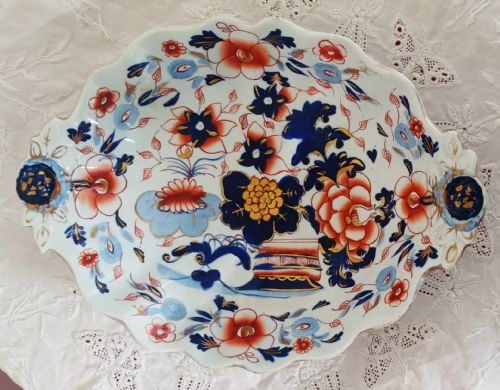
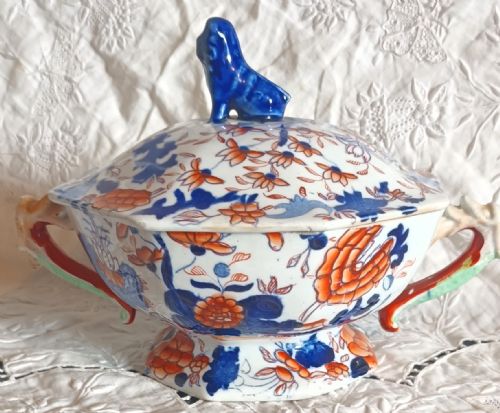


Masons Ironstone Dish
A masons ironstone dish brings heavy ceramic durability and vibrant transfer-printed pattern work to the table, making these pieces essential for collectors of nineteenth-century tableware.
Masons Ironstone Dish
When you search for a masons ironstone dish, you encounter heavy earthenware ceramics developed in the nineteenth century to withstand daily use while imitating expensive oriental porcelain. These pieces range from large meat platters and footed cheese dishes down to small pickle dishes and soap dishes.
You are most likely to meet nineteenth-century examples decorated in styles such as Chinoiserie, Japan pattern, and Old School House pattern. The forms frequently include service dishes, comports, and tureens spanning the Georgian, Victorian, and Edwardian periods.
The category encompasses both utilitarian dining table items and decorative serving vessels that combine robust ceramic bodies with hand-painted enamel colours and gilding. Production stretches from early patent pieces through later nineteenth-century iterations up to the twentieth century.
How they were made
Potters constructed a masons ironstone dish using a dense ceramic body known as ironstone china, which blended ceramic materials to achieve greater strength than standard earthenware. This durable substrate supported heavy potting for items like soup tureens, chargers, and platters.
Makers applied intricate designs using transfer printing combined with hand-painted enamel colours, often finished with gold leaf or gilding. A clear glaze sealed the surface, protecting the underlying decoration and ceramic body.
Listings feature ironstone china pieces spanning the Georgian, Victorian, and Edwardian periods, utilising enamel, gold leaf, and glaze.
What varies in quality
The standard of a masons ironstone dish depends heavily on the crispness of the transfer printing and the richness of the hand-painted enamel work. Pieces featuring extensive gilding and complex motifs like exotic birds or detailed Chinoiserie landscapes stand apart from simpler utilitarian wares.
Early period production items, particularly those bearing patent marks from the early nineteenth century, exhibit superior potting weight and refined decorative execution. The preservation of the original glaze and the vibrancy of colours across patterns like Japan basket or Indian grasshopper dictate collector standing.
C.J. Mason·Francis Morley
The Masons Ironstone Dish Glossary
- Ironstone
- A dense, durable ceramic body patented in the nineteenth century to provide an alternative to porcelain. It resists chipping and bears heavy enamel decoration well.
- Chinoiserie
- A decorative style reflecting European interpretations of Chinese and East Asian artistic traditions. It appears frequently on nineteenth-century tableware with motifs like pagodas and exotic landscapes.
- Comport
- A raised serving dish or pedestal bowl used for fruit and sweetmeats during dessert courses. These vessels stand on a footed base.
- Tureen
- A deep covered serving bowl used for soup, vegetables, or sauce. Pairs of sauce tureens with matching ladles are common in larger dinner services.
- Ashet
- A Scottish term for a large meat platter or serving dish. These oval vessels accommodate joints of meat at the dining table.
- Gilding
- The application of gold leaf or gold paint to highlight ceramic details. It enhances the decorative borders and motifs on service plates and chargers.
Masons Ironstone Dish: Frequently Asked Questions
How do I date an old ironstone dish?
Dating relies on examining the factory marks stamped or printed on the underside, alongside the style of decoration and the weight of the ceramic body. Early pieces often feature specific patent stamps from the early nineteenth century.
Later Victorian and Edwardian examples show subtle shifts in paste composition, colour palettes, and mark styles. Comparing the pattern name and border details against known production periods helps narrow down the decade.
Can I use these dishes for serving food?
Most pieces remain structurally sound for serving food, provided you handle them with care and wash them by hand. The durable ironstone body withstands normal use, though nineteenth-century surfaces can scratch.
Avoid dishwashers and harsh detergents to protect the historic glaze, enamel colours, and delicate gilding. Gentle hand washing preserves the integrity of the ceramic.
What is the difference between ironstone and porcelain?
Ironstone is a heavy, opaque earthenware ceramic designed for strength and everyday utility. It contains materials that make it much tougher than traditional soft-paste pottery.
Porcelain is a translucent, vitrified ceramic fired at higher temperatures to achieve a glass-like body. Ironstone offers the visual appeal of oriental porcelain at a heavier weight and sturdier build.
Why are some patterns called Japan pattern?
Japan pattern refers to nineteenth-century European designs inspired by Japanese Imari porcelain imports. These patterns typically feature a palette of iron-red, cobalt blue, and gold leaf.
Potters adapted these exotic motifs to suit British dining tastes, applying them across comports, plates, and toilet sets. The style remains one of the most recognisable decorative groups in the category.