
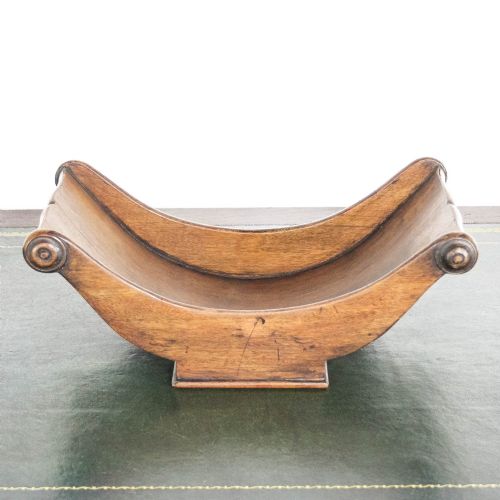
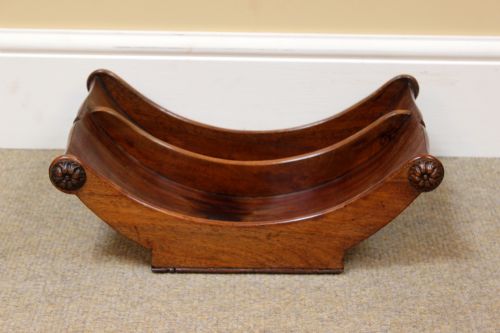

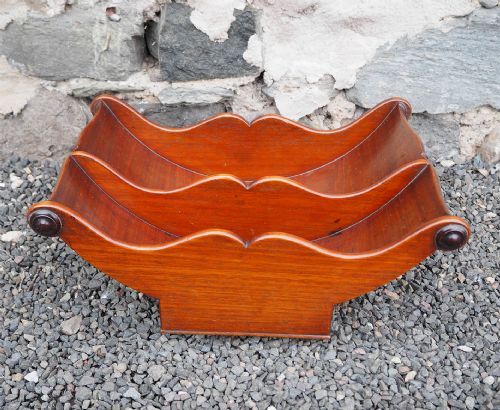


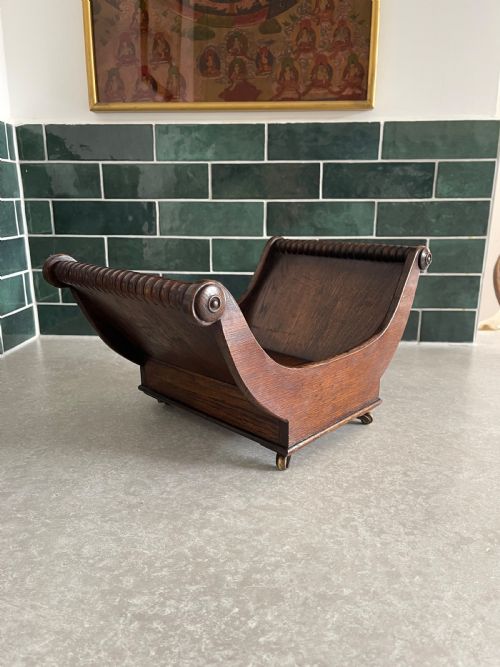


Antique Cheese Coaster
An antique cheese coaster serves the dining table with timber or ceramic form, offering a practical accessory for passing cheese during dessert.
Antique Cheese Coaster
An antique cheese coaster is a table accessory designed to hold a wedge or truckle of cheese during the formal dining course. These pieces date across the Georgian, Regency, and Victorian periods, appearing in forms from simple wooden trays to ironstone dishes.
Mahogany forms the majority of the pieces seen on this page, often shaped in curves or crescents to suit the dining table layout. Oak, fruitwood, and ceramic ironstone also feature amongst the objects.
Buyers meet variations including wooden coasters fitted with castors for smooth movement along the mahogany surface of a dining table. Treen pieces and toleware examples also appear within the wider selection.
Materials and construction
Makers shaped timber such as mahogany, oak, and fruitwood into curved trays and stands, often utilising the natural grain of the wood to decorative effect. Metal fittings like brass castors occasionally assist the movement of wooden coasters across the dining table.
Ceramic examples employ ironstone china with a glazed finish, moulded into footed dishes specifically for serving cheese. Treen techniques apply simple turning and woodworking skills to create utilitarian dining accessories from solid timber.
One listed Georgian mahogany piece doubles as a fruit bowl, proving that dining table accessories were ready to multitask when dessert arrived.
Judging quality and character
Quality rests in the precision of the timber turning and the crispness of any applied mouldings on the wooden body. Finer examples display a warm, aged patina on the mahogany or fruitwood surface through decades of careful polishing.
The sophistication of the form dictates distinction, ranging from straightforward circular wooden trays to shaped crescents and footed ironstone china dishes. Ironstone pieces separate themselves by the clarity of their glaze and the sharpness of the moulded details.
The Antique Cheese Coaster Glossary
- Cheese coaster
- A small tray or stand designed to hold cheese on the dining table, often fitted with castors or cast in ceramic. This forms the central object of search.
- Truckle
- A small, cylindrical wheel of cheese or the specific stand made to fit its shape. The evidence notes truckle cheese stands within the dining accessories.
- Treen
- Small handmade wooden household objects and utensils produced before the age of mass plastics. The materials listed include treen amongst mahogany and ironstone.
- Toleware
- Painted or japanned metalware created to imitate oriental lacquer or decorated with bright pigments. An English antique toleware cheese coaster appears in the archive.
- Ironstone
- A heavy, durable type of commercial earthenware patented in the nineteenth century. A Mason's ironstone china footed cheese dish represents this ceramic group.
Antique Cheese Coaster: Frequently Asked Questions
What is an antique cheese coaster?
An antique cheese coaster is a small serving accessory designed to sit on the dining table during the dessert course. It holds a wedge or truckle of cheese for guests.
These pieces date from the Georgian, Regency, and Victorian periods. They take the form of wooden trays, crescents, or ceramic dishes.
How were cheese coasters used?
Diners used cheese coasters to pass cheese along the dining table without marking the polished wood surface. Many wooden examples feature small castors underneath for this purpose.
They formed part of formal dining service alongside other tableware and serveware. The design allowed a heavy cheese truckle to glide smoothly between guests.
How do I date an antique cheese coaster?
Dating relies on the prevailing style, the timber used, and the construction methods visible in the piece. Georgian and Regency examples often feature solid mahogany with smooth turned edges.
Victorian pieces introduce ironstone china dishes and alternative ceramic materials. Archive records show George III period items alongside later 19th-century designs.