
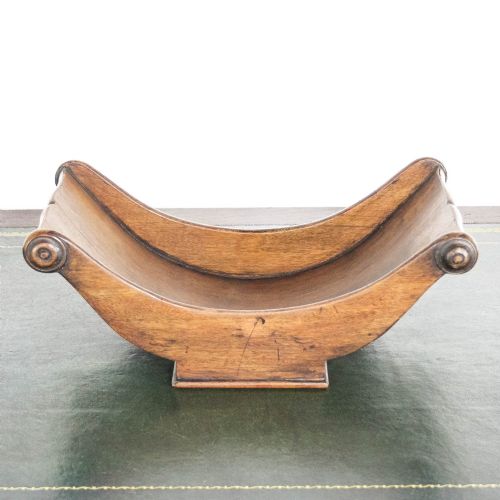
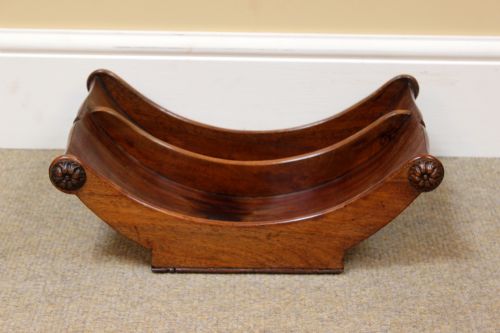

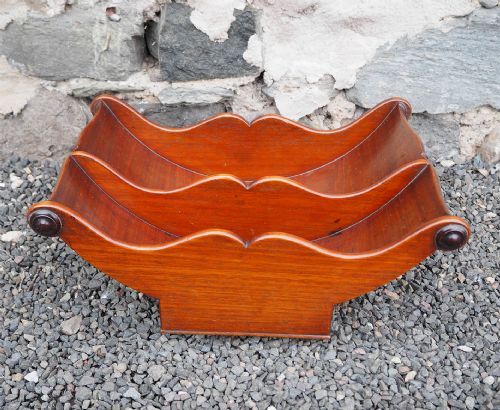


Mahogany Cheese Coaster
These mahogany cheese coaster pieces are Georgian and Regency dining accessories designed to glide across the table with ease.
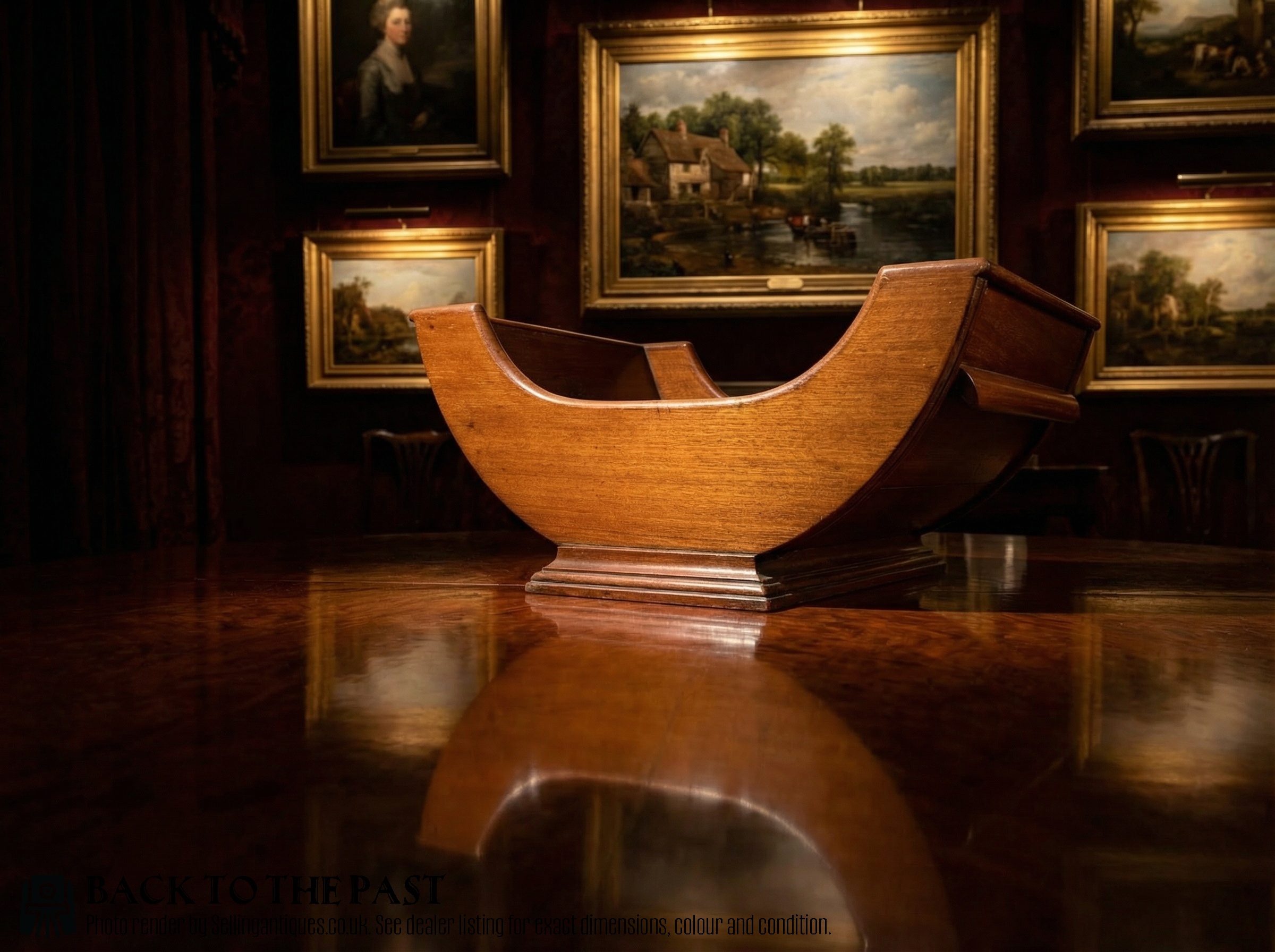
Mahogany Cheese Coaster Forms
A mahogany cheese coaster functions as a table accessory designed to hold large wheels of cheese during Georgian and Regency dining. These pieces appear primarily as curved troughs or crescent stands intended to carry heavy truckles without damaging polished dining tables. Examples date from the eighteenth century through the Victorian period, reflecting formal dining habits of past centuries.
Materials and Construction
Craftsmen built each mahogany cheese coaster from dense tropical timber chosen for its deep colour and durability. Cabinetmakers shaped the heavy wood into sweeping curves that mirror the circular or crescent profile of a cheese truckle. Joinery techniques ensured the sturdy construction needed to contain weighty provisions during movement across dining boards.
Metal components such as brass roller castors appear on select iterations, allowing the wooden trough to roll smoothly between guests. Bone details occasionally supplement the timber structure. Treen manufacturing methods govern the turned and curved surfaces of these nineteenth-century items.
Retail Price Guide 2026
Typical UK retail prices for mahogany cheese coaster, calculated from the Sellingantiques database of over a million retail prices indexed since 2003. This retail price guide relies exclusively on Sellingantiques data; no external sources or auction records are used, so the figures do not describe the wider market.
Listings feature mahogany cheese coasters spanning the Georgian, Regency, and Victorian periods, alongside eighteenth-century examples.
Defining Quality
Superior quality rests in the grain figuration of the timber and the crispness of the turned mouldings. Pieces featuring integrated brass roller castors display a higher degree of functional sophistication than static stands. The weight and stability of the mahogany body dictate the overall standard of the tableware.
Unusual sizes and adjustable designs represent finer craftsmanship within the category. The integration of materials like bone and brass elevates the construction. Condition and historical integrity separate everyday utility pieces from superior examples.
The Mahogany Cheese Coaster Glossary
- Mahogany cheese coaster
- A dining accessory fashioned from tropical hardwood to hold cheese at the table. These items take curved or crescent shapes.
- Truckle
- A solid wheel of cheese traditionally served at grand dinners. Coasters were specifically proportioned to cradle this heavy form.
- Castor
- A small wheel fitted beneath furniture and tableware to facilitate rolling movement. Brass versions appear on select dining stands.
- Treen
- Small wooden domestic objects created by turning or carving. This category encompasses utilitarian items produced before the industrial era.
- Crescent
- A curved shape resembling a waxing moon. Many cheese stands adopt this profile to accommodate large portions efficiently.
Frequently Asked Questions
What is a mahogany cheese coaster used for?
A mahogany cheese coaster serves as a table accessory designed to hold heavy wheels of cheese during formal meals. The curved wooden trough allows diners to pass large portions across the board safely.
These pieces protected polished timber dining surfaces from spills and heavy friction. Their design accommodated the substantial truckles popular in Georgian and Regency households.
How do I identify a Georgian cheese coaster?
Georgian examples display dense mahogany timber and period-appropriate cabinetmaking techniques. Many feature curved crescent shapes built for eighteenth-century dining rooms.
Matching the construction methods and wood patination to eighteenth-century standards helps confirm the period. Brass roller castors and treen details further signal the era of production.
Were these items made in pairs?
Makers produced both single stands and matched pairs of cheese coasters for large dining tables. Pairs allowed host households to serve multiple cheeses simultaneously at opposite ends of the room.
Finding a matched pair remains less common than encountering individual stands. Both single items and pairs utilise the same curved mahogany construction.
Can I use an antique cheese coaster today?
These sturdy wooden accessories remain functional for serving cheese and fruit at the dining table. Their original purpose as mobile tableware translates directly to modern hosting.
Careful handling protects the antique mahogany timber and any integrated brass castors. Regular use preserves the historical utility of these nineteenth-century items.