
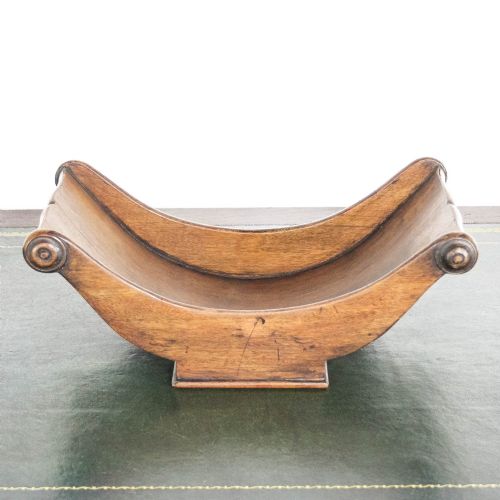
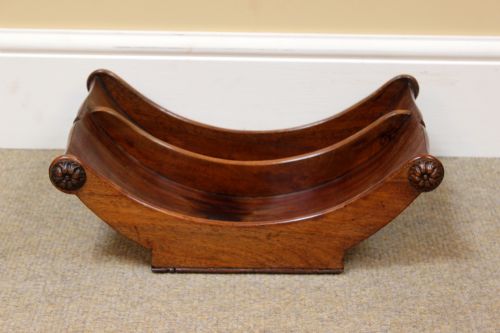

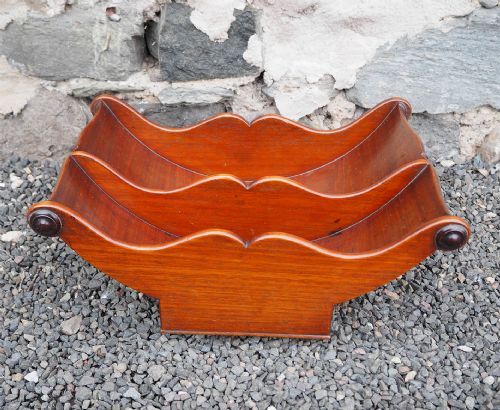


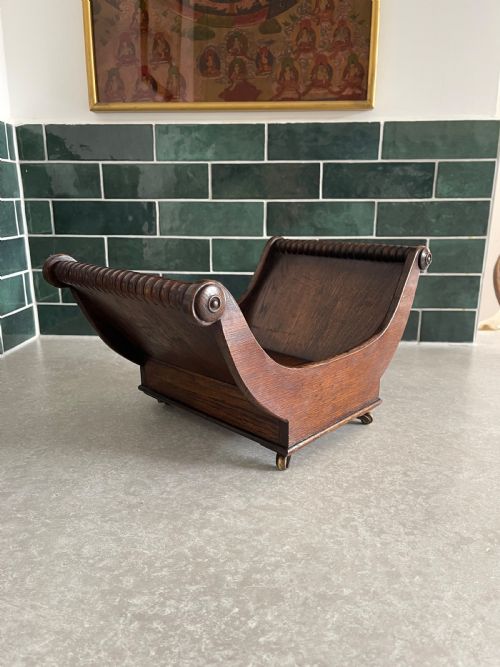


Georgian Cheese Coaster
A georgian cheese coaster is a curved table accessory designed for passing cheese around the dining table.
What georgian cheese coasters are
A georgian cheese coaster takes the form of a crescent or semicircular dish meant to hold a portion of cheese for guests during dessert. These pieces emerge primarily from the Georgian, eighteenth century, and Regency periods.
The evidence shows forms ranging from standard wooden coasters to specific crescent shapes, occasionally identified as butler's stilton stands or truckles. Mahogany dominates the examples, alongside fruitwood and oak.
Most items on this page function as tableware and serveware within the treen category, reflecting the domestic dining habits of the period. Collectors encounter both standard and unusual sizes across these historical periods.
How they were made
Makers constructed these pieces using solid hardwoods such as mahogany and fruitwood, often selecting timber for rich grain patterns. Craftsmen shaped the wood into curved forms suitable for sliding along the dining table.
Detailing on these items includes subtle turned elements and occasional bone additions. Woodworkers employed traditional joinery and turning techniques suited to treen production.
Retail Price Guide 2026
Typical UK retail prices for georgian cheese coaster, calculated from the Sellingantiques database of over a million retail prices indexed since 2003. This retail price guide relies exclusively on Sellingantiques data; no external sources or auction records are used, so the figures do not describe the wider market.
What varies in quality
The distinction between standard examples and superior pieces rests on the choice of timber, the crispness of the turning, and the survival of the original surface patination. Richly figured mahogany and well-preserved fruitwood command greater attention.
Proportion and scale also separate the items, with unusual dimensions or particularly graceful curves marking out the more accomplished pieces in this category.
The Georgian Cheese Coaster Glossary
- Cheese coaster
- A small serving dish designed to hold cheese and slide along the mahogany dining table after a meal. These items often feature curved timber walls to keep the cheese secure.
- Truckle
- A small, wheel-shaped block of cheese or a low stand designed to hold one. The word shares its root with small wheels used on furniture.
- Regency
- The historical period in Britain spanning the early nineteenth century, characterised by distinct neoclassical design influences. Furniture from this era often displays refined lines and dark timber.
Frequently Asked Questions
What is a georgian cheese coaster used for?
These pieces held portions of cheese during the dessert course of a formal meal. Diners passed them around the table on their bases.
The curved shape allowed the dish to follow the contour of the table or fit alongside other serving vessels.
How do I tell Regency from earlier pieces?
Regency items generally display the leaner, classical lines associated with the early nineteenth century. Earlier Georgian examples often rely on heavier mahogany proportions and simpler turning.
Looking closely at the timber grain and the style of construction helps clarify the date of manufacture.
Are all these items made of mahogany?
Mahogany is the primary timber recorded in the evidence, valued for its durability and deep colour. Makers also utilised fruitwood and oak for specific pieces.
These alternative woods show distinct grain patterns compared to the standard mahogany pieces.
What does treen mean in this context?
Treen refers to small wooden objects made for domestic use before modern manufacturing. Cheese coasters form part of this tradition of turned and carved woodenware.
Collectors prize treen for the tool marks and patination left by early woodworkers.