
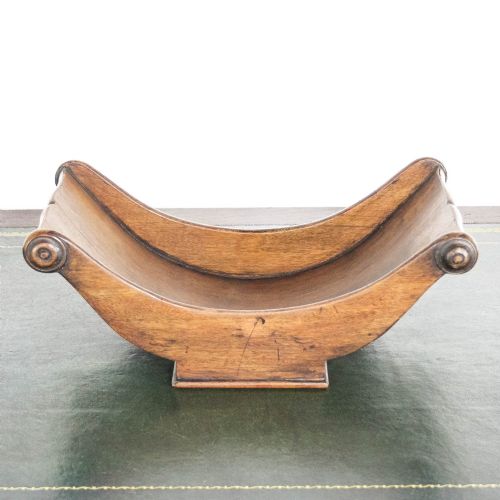
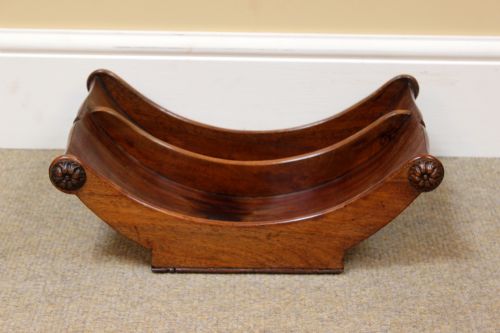

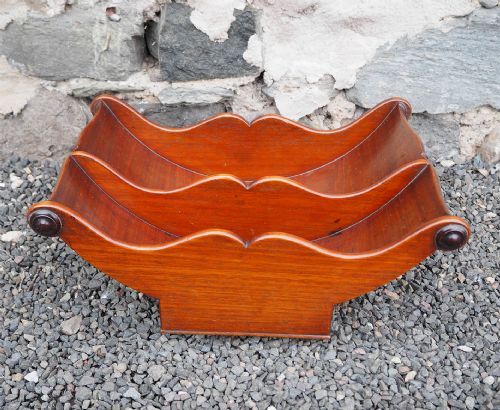


Mahogany Cheese Cradle
These mahogany cheese cradles are table pieces built to hold a sturdy cheese truckle for dining.
Mahogany Cheese Cradle
A mahogany cheese cradle serves as a dining accessory for holding large cheeses at the table during Georgian and Victorian meals. These items appear in formats described as cheese coasters, cheese stands, and fruit bowls.
The pieces on this page span the Georgian, Regency, and Victorian periods, with several specific examples dating to the eighteenth century. Buyers most frequently encounter straightforward mahogany or fruitwood coasters designed to roll along the dining table.
Makers fashioned these serveware items in shapes that range from traditional crescent truckle stands to standard circular coasters. Each object reflects the formal dining habits of past centuries when cheese was rolled between guests.
How they were made
Craftsmen shaped solid mahogany and fruitwood into curved bodies, often turning the timber on a lathe to create smooth circular or crescent walls. These wooden components form the primary structure of every cheese stand.
Makers incorporated brass and bone elements into the construction, using metal for castors or decorative mounts and bone for subtle details. The combination of dense hardwood and small metal fittings allowed the heavy coasters to move easily across timber dining tables.
Mahogany Cheese Cradle Retail Price Guide 2026
Typical asking prices for mahogany cheese cradle among the pieces listed under this phrase on Sellingantiques today, from the lower quarter to the upper quarter. They describe what is for sale here now, not the wider market.
Some cheese coasters double as fruit bowls, proving that eighteenth-century dining tables allowed fruit and cheese to share the same transport.
What varies in quality
Quality in a mahogany cheese cradle rests on the choice of timber grain and the precision of the turned woodwork. Superior pieces display rich figuring in the mahogany alongside well-balanced proportions that suit the scale of a large cheese truckle.
The integration of secondary materials such as brass fittings and bone highlights the level of care taken during production. Finer examples maintain crisp detailing in the woodwork and retain their original metal elements without clumsy replacements.
The Mahogany Cheese Cradle Glossary
- Mahogany cheese cradle
- A wheeled serveware accessory designed to hold a large cheese truckle on the dining table. These items are also referred to as cheese coasters or cheese stands.
- Truckle
- A small, solid wheel of cheese served at the conclusion of a meal. The curved wooden stands accommodated this specific shape.
- Fruitwood
- A lighter domestic timber utilised by makers alongside mahogany for dining accessories. This material appears in eighteenth-century examples.
- Crest
- A decorative element occasionally incorporated into the woodwork of dining accessories. It personalises the tableware for specific households.
- Treen
- Small handmade wooden objects produced for domestic use. Cheese cradles form a distinct part of this broader category.
Mahogany Cheese Cradle: Frequently Asked Questions
What is a mahogany cheese cradle?
A mahogany cheese cradle is a specialised dining accessory designed to hold and roll a large cheese truckle along the table. These pieces date across the Georgian and Victorian periods.
They functioned as practical tableware that allowed diners to pass heavy cheeses easily between guests during formal meals.
How were cheese cradles used?
Hosts placed a wheel of cheese inside the wooden cradle at the conclusion of the main meal. Small wheels on the base allowed the stand to glide smoothly across the dining surface.
This method kept the heavy cheese stable and made it accessible for guests to help themselves without lifting the heavy truckle.
How do I date a cheese cradle?
Dating relies on observing the timber choice, construction techniques, and stylistic markers associated with specific eras like the Georgian or Regency periods. Eighteenth-century pieces often feature simpler fruitwood construction or deep mahogany patination.
Comparing the turned woodwork and any integrated brass or bone elements helps place the object within its correct historical timeframe.