
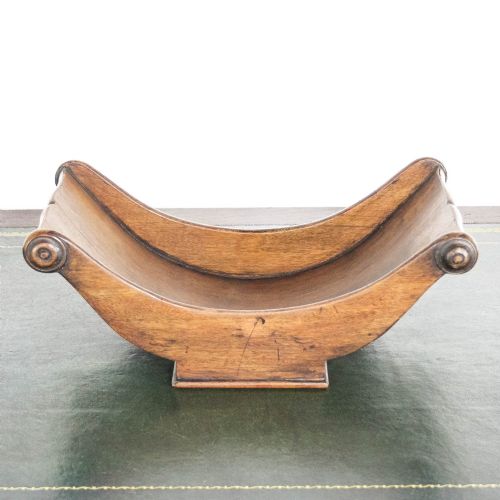
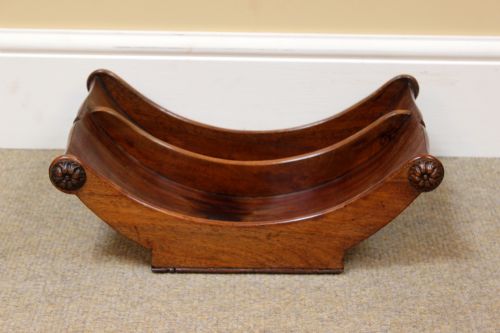

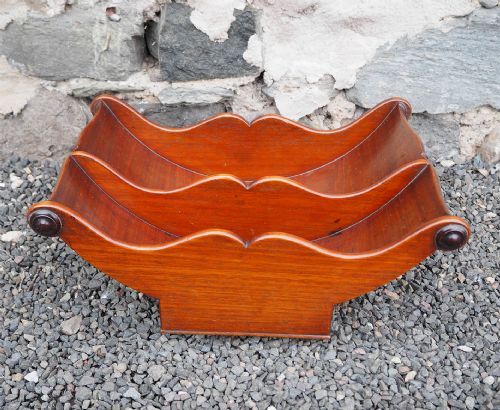


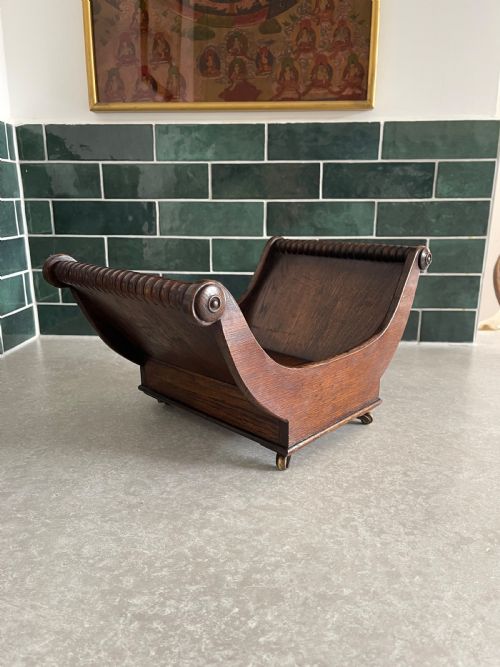


Antique Wooden Cheese Cradle
An antique wooden cheese cradle is a tactile serving piece designed for the dining table, crafted to hold large wedges or truckles of cheese.
Antique Wooden Cheese Cradle
An antique wooden cheese cradle is primarily represented on this page by cheese coasters and cheese stands designed for formal dining. These pieces function as tabletop serveware and tableware, holding portions of cheese during meals or after-dinner service.
The forms span the Georgian period, the Regency era, and the Victorian age. Most examples take the shape of low coasters or crescent stands intended to sit smoothly upon a dining table.
Makers historically shaped these items from timber to complement other dining accessories of the period. Collectors encounter variations that double as fruit bowls or specific Stilton stands.
How they were made
Cabinet makers utilised dense hardwoods such as mahogany, oak, and fruitwood to shape the bodies of these pieces. These timbers provided the structural durability required for holding heavy cheeses on a dining table.
Makers frequently incorporated brass hardware, such as castors or handles, allowing the cradle or coaster to be slid along the mahogany surface of a dining table. Bone details occasionally appeared as subtle decorative accents on specific tableware items.
Some Georgian pieces double happily as fruit bowls, proving that even a cheese cradle enjoys a career change.
What varies in quality
Quality rests in the selection of the timber grain and the precision of the joinery used to form the curved walls of the cradle or coaster. Superior examples exhibit rich patination on the mahogany or fruitwood surface achieved through generations of polishing.
The refinement of any integrated brass components, such as original castors or mounts, distinguishes finer pieces from simpler utilitarian items. The crispness of the turning and the harmony of the proportions separate standard dining accessories from exceptional ones.
The Antique Wooden Cheese Cradle Glossary
- Cheese coaster
- A low, rolling vessel designed to hold a block or wedge of cheese on the dining table. They typically feature wooden bases and rollers or feet.
- Truckle
- A small, solid wheel of cheese, which these stands and cradles were specifically proportioned to hold. The term also extends to describe the stand itself.
- Treen
- Small handmade wooden objects for domestic use. These cheese cradles fall under this broader category of historic wooden tableware.
- Mahogany
- A durable, reddish-brown tropical hardwood favoured by Georgian and Regency makers for fine dining furniture and accessories. Its stability made it ideal for turned coasters.
Antique Wooden Cheese Cradle: Frequently Asked Questions
What is an antique wooden cheese cradle?
An antique wooden cheese cradle is a piece of dining table serveware designed to hold and present blocks or truckles of cheese. These items date from periods such as the Georgian and Victorian eras.
Craftsmen shaped them from timbers like mahogany and fruitwood to suit formal dining customs. They often incorporated rolling mechanisms or crescent shapes for ease of sharing.
How were cheese cradles used historically?
These items were placed directly on the dining table during the cheese course following a meal. Guests or hosts could slide the coaster along the surface to pass the cheese.
Their sturdy wooden construction supported heavy wedges safely. Some designs accommodated specific cheeses like Stilton on dedicated stands.
What woods do collectors look for?
Makers predominantly used mahogany, oak, and fruitwood for these pieces. Mahogany was especially popular during the Georgian and Regency periods for its rich grain and strength.
Fruitwood appears in earlier or more regional pieces, offering a lighter tone. Brass fittings were frequently added to assist with movement across the table.
How do I date a cheese cradle?
Dating relies on stylistic clues, the choice of timber, and construction methods. Georgian examples often showcase fine mahogany turning, while Victorian pieces might employ heavier oak.
Comparing the form to documented tableware of the same era provides further clarity. The presence of period brass castors also helps narrow down the timeframe.