




Wooden Fruit Bowl
These wooden fruit bowl selections bring tactile warmth to a table, offering solid oak, mahogany, and sycamore vessels carved or turned for daily service.
Wooden Fruit Bowl
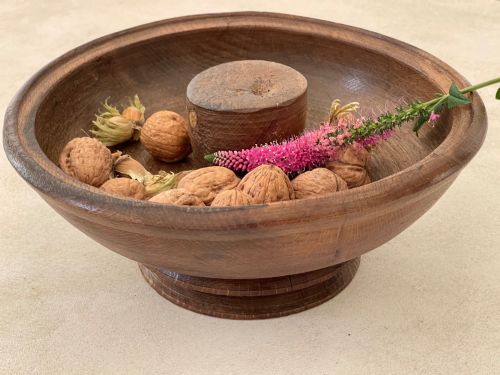
When you search for a wooden fruit bowl, you are looking at turned and carved vessels designed to hold table fruit, nuts, or breads. The pieces here span the Georgian period through the 1930s, encompassing simple dairy bowls and decorative centrepieces.
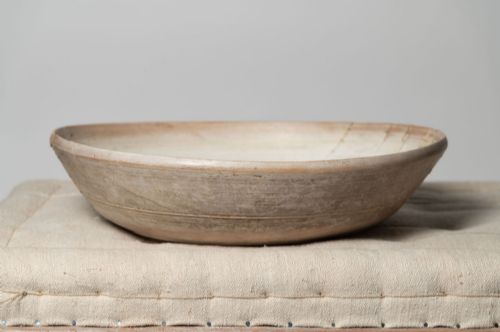
You are most likely to meet substantial oak and mahogany pieces from the nineteenth and early twentieth centuries. Forms range from deep Georgian containers and sycamore dairy bowls to carved Edwardian presentation pieces and Swiss folk art designs.
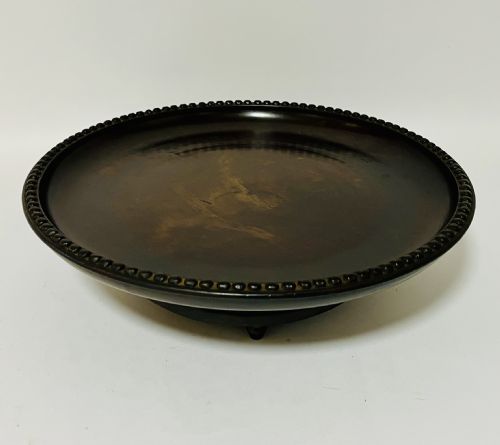
The selection includes items intended for multi-purpose domestic service, such as cheese coasters, presentation prize bowls, and rustic platters. Each example reflects the prevailing tastes of its era, from Arts and Crafts simplicity to Art Nouveau silver mounting.
How they were made
Maker-craftsmen shaped these bowls using traditional woodturning and hand-hewn techniques on native timbers such as oak, mahogany, ash, sycamore, and pine. Selected grain patterns were exploited to ensure structural stability alongside visual appeal.
Many examples incorporate mixed media, mounting dark stained wood and plain timber into silver plate or brass mounts, ceramic inserts, and carved fruiting vine decorations. Swiss and Scandinavian pieces frequently employ detailed manual relief carving.
Surfaces were finished to highlight natural textures, ranging from the smooth polish of Georgian mahogany containers to the rustic utility of hand-hewn nineteenth century dairy bowls.
Wooden Fruit Bowl Retail Price Guide 2026
Typical asking prices for wooden fruit bowl among the pieces listed under this phrase on Sellingantiques today, from the lower quarter to the upper quarter. They describe what is for sale here now, not the wider market.
Listings span periods from the nineteenth century and the Georgian era through Edwardian times to the 1930s, using oak, mahogany, pine, and silver plate.
What varies in quality
Quality rests upon the selection of timber and the dexterity of the turning or carving. Superior examples display thoughtful grain alignment, balanced proportions, and crisp execution of decorative details like carved fruiting vines.
The integration of secondary materials dictates distinction at the upper end of the range. Seamless mounting of silver plate, brass, or ceramic elements onto solid oak or mahogany bodies separates standard utility pieces from presentation items.
The Wooden Fruit Bowl Glossary
- Dairy bowl
- A wide, shallow wooden vessel historically used in dairying before finding a later domestic life for fruit and serving.
- Treen
- Small handmade wooden domestic objects prized for their tactile qualities and simple craftsmanship.
- Cheese coaster
- A low, wheeled or stationary tray designed to slide along a dining table, often doubling in utility to hold fruit.
- Sycamore
- A pale, close-grained hardwood favoured by turners for dairy and domestic bowls due to its clean finish and resistance to splitting.
- Presentation bowl
- A specially commissioned or awarded vessel, often featuring silver plate or ceramic mounts to mark an occasion.
Wooden Fruit Bowl: Frequently Asked Questions
What woods were used for these bowls?
Makers utilised native hardwoods and softwoods depending on availability and purpose. Oak, mahogany, ash, sycamore, and pine appear frequently across the periods.
Finer decorative presentation pieces often combined these timbers with silver plate, brass, or ceramic components.
How do I date a wooden bowl?
Dating relies on timber choice, tool marks, and stylistic clues from periods such as the Georgian era or the Arts and Crafts movement. Hand-hewn surfaces and Georgian mahogany indicate earlier origins.
Later Edwardian and 1930s examples often feature machine assistance or distinct decorative motifs like carved fruiting vines.
Were these always meant for fruit?
Many vessels served multiple domestic functions in period homes. Georgian containers held nuts, cheese, or fruit, while dairy bowls originated for processing milk.
Over time, robust turned timber objects naturally transitioned into display and serving roles on the dining table.
How do I care for an antique bowl?
Keep wooden bowls away from direct heat sources and extreme humidity fluctuations to prevent timber movement. Clean gently with a dry or barely damp cloth.
Applying occasional appropriate food-safe oils helps nourish older wood without damaging original patinas or metal mounts.