




Masons China Platters
These masons china platters combine sturdy ironstone bodies with vibrant hand-painted patterns for practical dining and display.
Masons China Platters
When you search for masons china platters, you encounter robust serving vessels and drainers dating from the Georgian, Regency, and nineteenth century eras. These objects include large meat platters, serving dishes, and specialised drainers designed to sit within a well.
The versions you are most likely to meet on this page feature transfer-printed and hand-painted Chinoiserie designs such as the Blue Pheasants, Mogul, Tonquin, Grasshopper, and Pagoda patterns. Alongside these broad platters, related forms like footed cheese dishes and dessert shapes also appear.
Materials and construction
Makers utilised durable ironstone ceramic and earthenware bodies capable of withstanding heavy daily use in country house dining rooms. These dense ceramic fabrics provided a stable white canvas for intricate surface decoration.
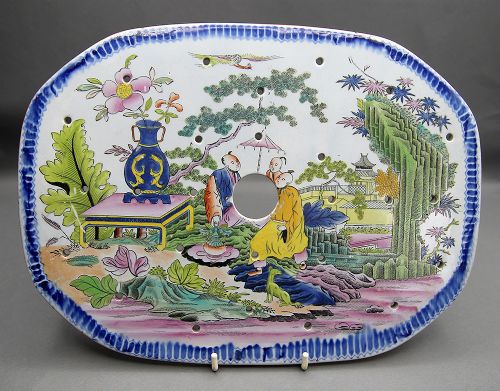
Artisans applied rich enamels and gold leaf highlights over transfer-printed outlines, capturing detailed Chinoiserie and Italianate landscape motifs. Clear glaze sealed the surfaces, while specialist items like platter drainers were pierced with drainage holes to separate juices from meat.
Listings span the Georgian and Regency periods into the wider nineteenth century, featuring ironstone ceramic, earthenware, enamel, and gold leaf.
Judging quality and execution
The distinction between standard utility wares and superior examples rests upon the crispness of the transfer printing and the precision of the hand-applied enamel colours. Rich gilding and well-preserved gold leaf elevate the visual impact of nineteenth century pieces.
Scale also dictates status, as exceptionally large country house meat platters demonstrate greater ceramic ambition than smaller standard serving dishes. The complexity of the pattern, from simple landscapes to densely detailed Imari and Chinoiserie scenes, separates ordinary services from high-status output.
Mason's Ironstone China
The Masons China Platters Glossary
- Ironstone
- A heavy, durable ceramic body patented in the nineteenth century that bridged the gap between earthenware and porcelain.
- Ashet
- A Scottish and northern regional term for a large meat platter or serving dish used at the table.
- Drainer
- A pierced ceramic insert placed inside a platter to keep joints of meat raised above their cooking juices.
- Chinoiserie
- European decorative motifs inspired by Chinese artistic traditions, featuring pagodas, exotic birds, and imaginary landscapes.
- Imari
- A decorative style employing rich cobalt blue, iron red, and gold leaf, influenced by Japanese export ceramics.
Masons China Platters: Frequently Asked Questions
What are masons china platters?
These are durable ceramic serving vessels produced in nineteenth-century England, primarily utilising heavy ironstone bodies.
They often feature elaborate Chinoiserie patterns transferred onto the clay and finished by hand with vibrant enamels.
How were platter drainers used?
Platter drainers are perforated ceramic inserts that sit inside a matching meat platter or well.
During carved meat service, they allowed juices to drain away from the joint so the meat remained elevated.
How do I date these platters?
Dating relies on stylistic markers such as Regency shapes, Georgian proportions, and nineteenth-century pattern names.
Markings on the reverse and the specific density of the ironstone ceramic also help narrow the production period.
Can I use them for serving food?
Most of these historic pieces remain structurally sound for serving dry foods or display purposes.
Careful hand washing preserves the delicate enamel colours and gold leaf highlights against modern detergents.
What styles are most common?
Chinoiserie motifs dominate the surviving examples, including pattern names like Blue Pheasants, Grasshopper, and Pagoda.
Italianate landscape designs and traditional Imari colour palettes also appear frequently across the serving dishes.