
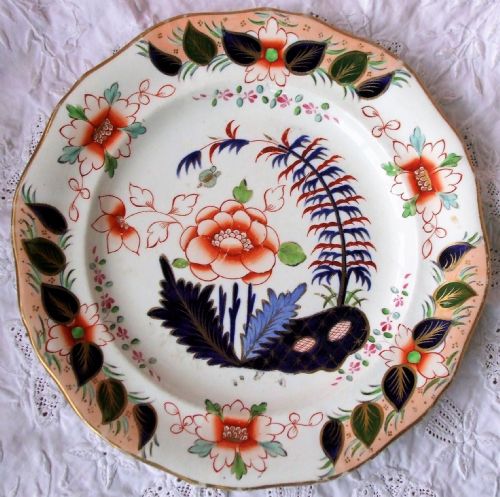


Imari Ironstone Platters
Imari ironstone platters combine robust ceramic bodies with rich enamels and gold leaf.
Imari Ironstone Platters
Imari ironstone platters are durable ceramic serving dishes decorated in the distinct Japanese-inspired palette of iron red, cobalt blue and gold leaf. These pieces belong to the nineteenth century, spanning the Georgian, Regency and Victorian eras, and often appear as large serving dishes or well and tree platters.
The versions most commonly met on this page range from large country house platters to meat serving platters and dinnerware sets. Makers such as John Davenport, John Ridgway, Minton and Mason's produced these items in earthenware and stoneware bodies, incorporating styles like Victorian Imari and Victorian Chinoiserie.
Collectors encounter various forms including ashets, dessert shapes and dishes with strainers. The patterns draw on Imari aesthetics and specific named designs like Penang, Tonquin China and Grasshopper.
How they were made
These platters rely on dense ceramic bodies including ironstone china and stoneware, which provide the heavy, durable foundation required for large serving dishes. Potters shaped these bodies into substantial serving platters, ashets and dishes with strainers to withstand heavy dining use.
Makers applied white glaze over the ceramic base before painting detailed patterns using enamel colours and gold leaf. The combination of underglaze blue and overglaze iron red enamel defined the traditional Imari look seen across Georgian and Victorian examples.
Listings feature nineteenth-century ironstone platters in forms ranging from well and tree dishes to ashets and dessert shapes.
What varies in quality
Quality in these platters rests upon the crispness of the moulded ironstone body and the precision of the hand-painted enamels. Finer examples retain bright cobalt blue, vibrant iron red enamel and intact gilding without heavy rubbing from historical use.
The complexity of the form dictates distinction, separating standard serving plates from massive well and tree platters or large country house pieces with integrated strainers. Superior pieces display careful balance between the dense ceramic weight and the intricate decorative patterns.
John Davenport of Longport·John Ridgway·Minton
The Imari Ironstone Platters Glossary
- Ironstone
- A heavy, durable type of ceramic or stoneware patented in the nineteenth century to provide a tough alternative to porcelain. It forms the solid body of many large serving platters.
- Imari
- A decorative style inspired by Japanese export porcelain, characterised by a palette of cobalt blue, iron red and gold leaf. This aesthetic defines the pattern work on nineteenth-century English plates.
- Ashet
- A regional British term for a large serving platter or meat dish. These large oval vessels are typical of nineteenth-century dinner services.
- Well and tree platter
- A large serving dish featuring a carved channel system and a well to collect meat juices during carving. These heavy platters are frequently found in ironstone.
- Enamel
- Opaque vitreous material fused to the ceramic surface to add colour to the design. Enamels provide the bright red and blue highlights above the glaze.
Imari Ironstone Platters: Frequently Asked Questions
What is an imari ironstone platter?
An imari ironstone platter is a durable ceramic serving dish decorated in the traditional Imari palette of iron red, cobalt blue and gold leaf. These nineteenth-century pieces were made by English potteries to serve meat and large courses at the dining table.
They combine a heavy ironstone or stoneware body with rich enamel decoration, often drawing on Japanese export porcelain styles. Collectors find them in various sizes, from standard serving platters to large country house ashets.
How do I identify a Georgian imari platter?
Georgian imari platters display the characteristic iron red and cobalt blue colour scheme combined with gold leaf on a dense ceramic body. They date from the early nineteenth century, reflecting the Regency and Georgian periods of English pottery.
Makers such as Mason's and John Davenport produced notable examples during this era. Examining the weight of the ironstone and the style of the hand-painted Chinoiserie or Imari pattern helps confirm the period.
How do I care for ironstone platters?
Caring for nineteenth-century ironstone platters involves gentle hand washing in warm water with mild soap. Harsh detergents and modern dishwashers can damage the delicate enamel colours and gold leaf applied over the glaze.
Storing them securely prevents chipping on the heavy ceramic edges. Displaying them safely allows the vibrant blue and red Imari patterns to remain protected from impact.