


Chinoiserie Ironstone Plates
Chinoiserie ironstone plates combine robust ceramic bodies with imaginative Eastern-inspired decoration, making them durable centerpieces for collectors of nineteenth-century ceramics.
Chinoiserie Ironstone Plates
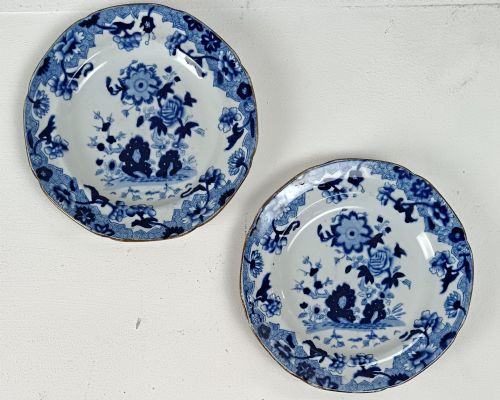
Chinoiserie ironstone plates encompass a variety of utilitarian and decorative forms, ranging from modest tea plates to large country house meat platters and footed cheese dishes. These pieces predominantly date from the nineteenth century, spanning Georgian, Regency, and Victorian periods.
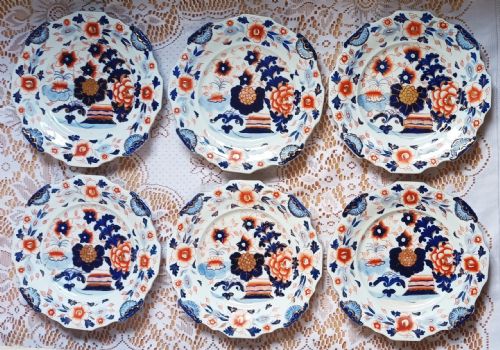
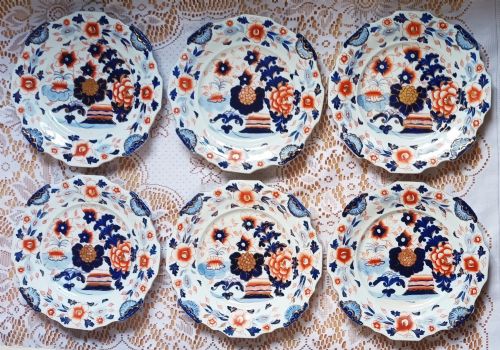
Buyers are most likely to encounter sets of patterned plates or individual chargers bearing traditional motifs such as the Japan pattern, Tonquin china designs, or exotic bird and grasshopper scenes. The forms vary from standard dinnerware to specialised serveware like serving platters and decorative chargers.
The aesthetic merges European ceramic manufacturing techniques with fantastical interpretations of Asian art, creating dense arrangements of pagodas, flora, and fauna. Such tableware served both functional dining purposes and decorative display in period interiors.
Materials and Technique
Makers utilised heavy ironstone, stoneware, and earthenware bodies to produce thick, resilient ceramic vessels capable of withstanding daily dining use. This dense paste was fired at high temperatures to achieve stone-like durability, distinguishing it from finer porcelains.
Surface decoration relied on enamel paints, glaze, and occasional gold leaf or gilt accents applied over transfer-printed or hand-painted motifs. Coloured grounds in orange and yellow frequently underpinned the vibrant pictorial elements.
Early nineteenth-century potters painted fantastical grasshoppers and exotic birds onto heavy ceramic meat platters, feeding domestic fantasies of distant Asian lands.
Evaluating Quality
Quality rests upon the crispness of the transfer printing and the precision of the hand-applied enamel colours and gilding. Superior examples display rich, saturated hues on vibrant coloured grounds rather than flat or muddy tones.
The depth of the moulding and the condition of the heavy ceramic body also determine value. Well-preserved ironstone with intact gilt highlights and minimal wear to the glaze represents the upper tier of production.
Spode·John Ridgway·Mason’s Patent Ironstone·C.J. Mason
The Chinoiserie Ironstone Plates Glossary
- Ironstone
- A heavy, durable ceramic patented in the nineteenth century as a robust alternative to porcelain. It takes enamel colours and complex patterns exceptionally well.
- Chinoiserie
- A European artistic style reflecting Chinese and East Asian motifs, including pagodas, exotic birds, and imaginary landscapes. It flourished across Georgian and Victorian decorative arts.
- Charger
- A large decorative plate utilised primarily for service or display rather than individual dining. These pieces often feature the most elaborate painted scenes.
- Imari
- A decorative style borrowing from Japanese export porcelain, characterised by iron red, underglaze blue, and gilt highlights. Victorian interpretations adapted these palettes onto ironstone bodies.
- Gilt
- A thin application of gold leaf or gold paint used to accentuate rims and design elements. Its preservation indicates the handling history of the piece.
Chinoiserie Ironstone Plates: Frequently Asked Questions
What is ironstone china?
Ironstone is a dense, durable ceramic body patented to resist chipping and heavy wear while resembling fine porcelain.
Potters used it extensively throughout the nineteenth century for robust dinnerware, platters, and decorative chargers.
How do I date these plates?
Dating relies on maker marks stamped into the ceramic base, alongside stylistic clues like colour palettes and decorative motifs.
Georgian and Regency examples tend to feature hand-painted details, whereas later Victorian and Edwardian pieces incorporate varied transfer-printing techniques.
Can I use them for dining?
These nineteenth-century plates were manufactured for robust dining use, particularly meat platters and service dishes.
Hand-washing is recommended to protect the historic enamel paints, gold leaf, and delicate surface glazes from modern detergents.
What are transfer-printed patterns?
Transfer printing is a method where an engraved copper plate applies ink onto tissue paper, which is then stamped onto the ceramic body.
This technique allowed potteries to produce intricate Chinoiserie scenes consistently across large sets of tableware.