
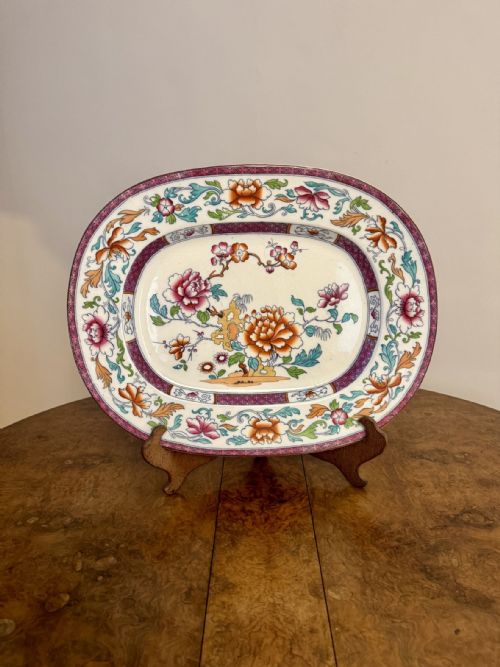


Large Ironstone Platters
Large ironstone platters are heavy, durable earthenware serving dishes designed for carving and presenting meat at the dining table, offering both practical utility and bold decorative presence.
Large Ironstone Platters
Large ironstone platters are heavy ceramic serving vessels created to handle the demands of formal dining and substantial joints of meat. When you search for large ironstone platters, you encounter nineteenth-century pieces ranging from plain white meat dishes to richly decorated Victorian examples.
The objects on this page span the Georgian and Victorian eras, taking the form of meat plates, deep well and tree platters with drainage channels, and wide decorative chargers. Many of these sturdy ceramic pieces originate from the nineteenth century, often displaying transfer-printed patterns or hand-painted enamel details.
You are most likely to meet rectangular meat serving dishes and wide chargers featuring Chinoiserie motifs, Imari palettes, or blue and white landscapes. These substantial earthenware platters reflect the scale and hospitality of nineteenth-century country houses.
How they were made
Potters made these heavy service vessels using a dense, vitrified earthenware body known as ironstone, designed to resist chipping and thermal shock during heavy kitchen and dining use. The fired clay body received a smooth glaze that sealed the porous earthenware beneath.
Decoration on these nineteenth-century ceramics involved transfer printing for intricate blue and white scenes, combined with hand-painted enamel colours and occasional touches of gold leaf. Skilled artisans applied these patterns by hand before a final high-temperature kiln firing.
Listings feature nineteenth-century ironstone platters, meat dishes, and chargers decorated with transfer-printed Chinoiserie, blue and white landscapes, and hand-painted enamel patterns.
What varies in quality
Quality in these earthenware dishes lies in the crispness of the transfer print, the richness of the hand-applied enamel colours, and the presence of specialised forms like built-in strainers or well and tree drainage systems. Early nineteenth-century examples often display sharper moulding and more ambitious decorative programmes.
The refinement of the ceramic body and the depth of the glaze also separate standard utility wares from exhibition pieces. Superior platters retain crisp borders and vibrant gilding without excessive kiln pitting or glaze pooling.
Minton·Mason's Ironstone
The Large Ironstone Platters Glossary
- Ironstone
- A heavy, durable type of earthenware patented in the nineteenth century to imitate Chinese porcelain while remaining robust enough for daily service. It provides a dense, opaque base for complex glazes and printed patterns.
- Well and tree
- A clever drainage system moulded into the surface of a meat platter featuring a central well and sloping channels. This design collects meat juices away from the joint during carving.
- Chinoiserie
- A European decorative style reflecting imaginative, Western interpretations of Chinese and East Asian artistic traditions. It frequently appears on nineteenth-century ceramic platters in blue and white or multicoloured enamel schemes.
- Charger
- A large decorative plate or platter used historically for ceremonial service or displayed upright on a sideboard. These wide ceramic pieces often carry the most ambitious painted or printed designs.
- Transfer printing
- A mechanical method of applying complex decorative patterns to ceramics by pressing paper from an engraved copper plate onto the biscuity clay body. This technique allowed potteries to produce intricate landscapes and Oriental scenes consistently.
Large Ironstone Platters: Frequently Asked Questions
What were large ironstone platters used for?
These heavy earthenware dishes served as the centrepiece for presenting large joints of meat, poultry, and game at nineteenth-century dining tables. Their robust construction allowed them to hold heavy roast meats and withstand the carving knife.
Some specialised forms included internal wells and channels to catch juices, keeping the meat elevated during carving. Beyond the dining room, the largest examples served as decorative chargers displayed on sideboards.
How do I date an antique ironstone platter?
Dating these ceramics relies on examining the factory marks stamped into the base, the style of the printed or painted decoration, and the weight of the earthenware body. Georgian examples often feature simpler, heavier forms, while Victorian pieces embrace richer colours and transfer-printed scenes.
Specific pattern names and stylistic cues like Imari palettes or Chinoiserie borders help narrow down the period of production within the nineteenth century.
How do I care for and live with ironstone platters?
These durable earthenware platters integrate easily into modern homes as display pieces on dressers, plate racks, or walls, making use of their substantial scale and decorative patterns. Their heavy glaze protects the ceramic body from daily wear.
Wash them gently by hand in warm soapy water rather than using a modern dishwasher, as harsh detergents and high heat can damage historic enamel colours and delicate gold leaf details.
Are ironstone platters waterproof?
The dense vitrified ironstone body and glassy surface glaze make these serving dishes essentially waterproof for normal food presentation and hand washing. The impermeable glaze protects the porous earthenware beneath from moisture absorption.
Historic pieces with fine crackle in the glaze should not be left sitting in standing water for extended periods to prevent staining the underlying clay.