


Marquetry Wooden Clock
These marquetry wooden clock pieces combine precise timekeeping with intricate decorative wood veneers, forming a sophisticated focal point for any interior.
Marquetry Wooden Clock
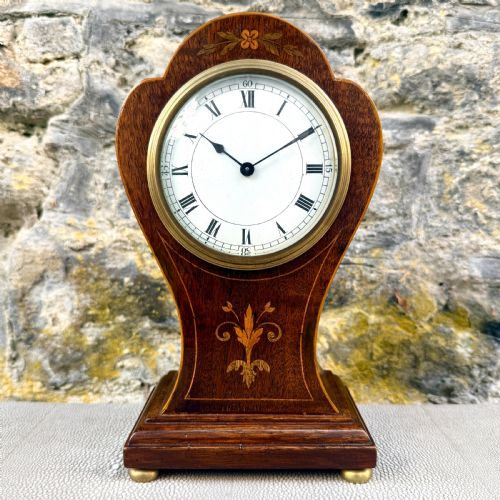
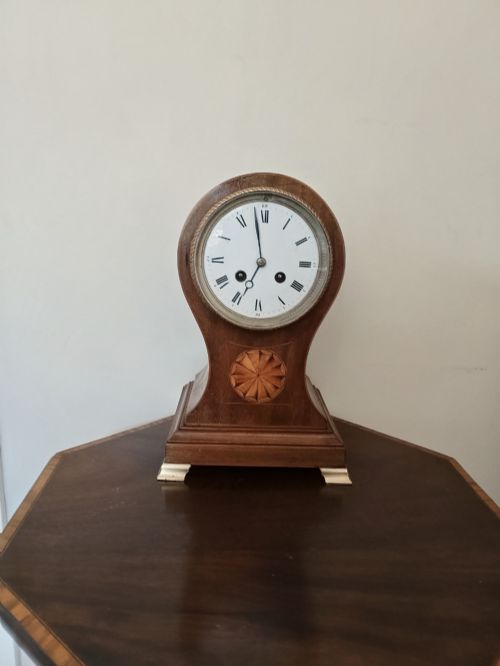
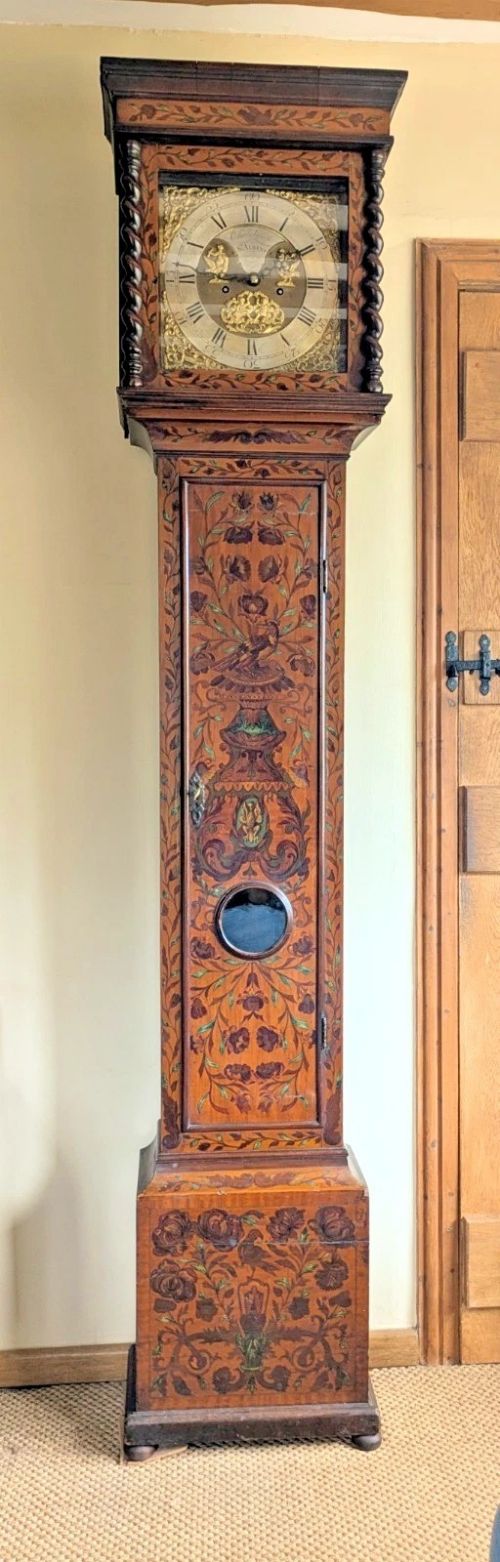
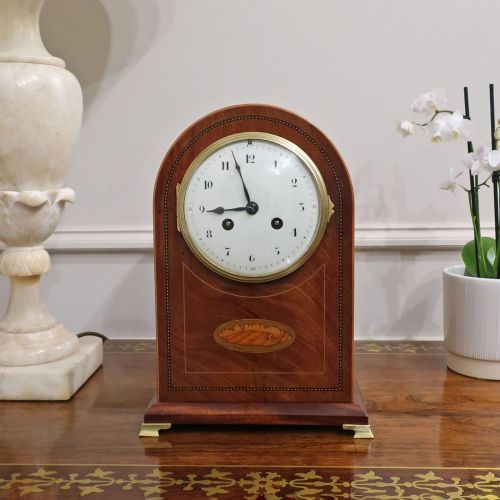
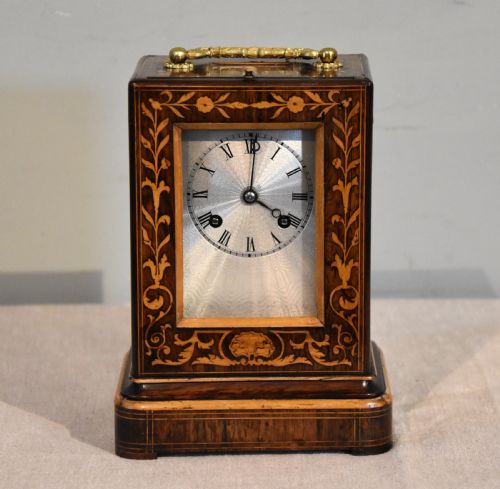
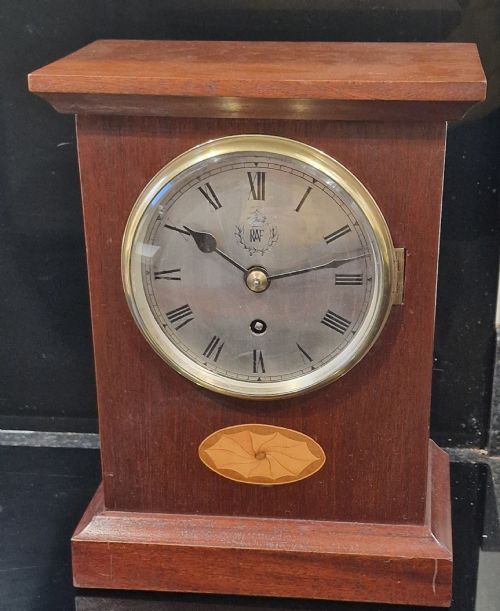
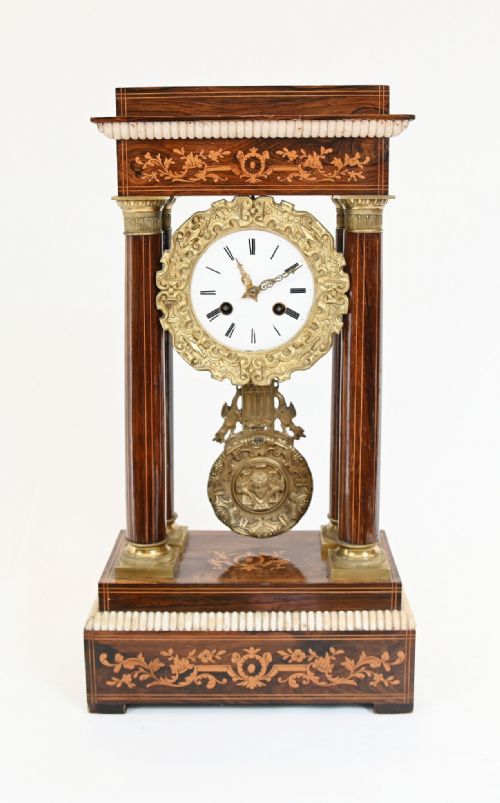
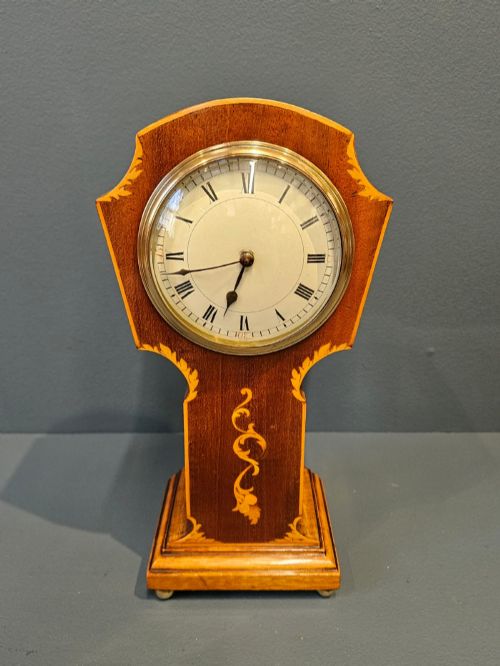
A marquetry wooden clock serves as both a functional timepiece and an ornate decorative object, spanning mantel, wall, and longcase formats. The selection here leans heavily towards Edwardian and nineteenth-century examples in mahogany, rosewood, and walnut.
Makers housed these movements in varied housings, from compact balloon-shaped mantel clocks to taller grandfather and longcase varieties. French and British regional workshops produced the majority of these timber and brass timepieces.
How they were made
Craftsmen built structural carcases from timbers such as mahogany, rosewood, and walnut, applying contrasting veneers of boxwood, satinwood, and brass to form intricate marquetry patterns. Dial faces combined silvered metals, enamel, and brass bezels, protected behind fitted glass panels.
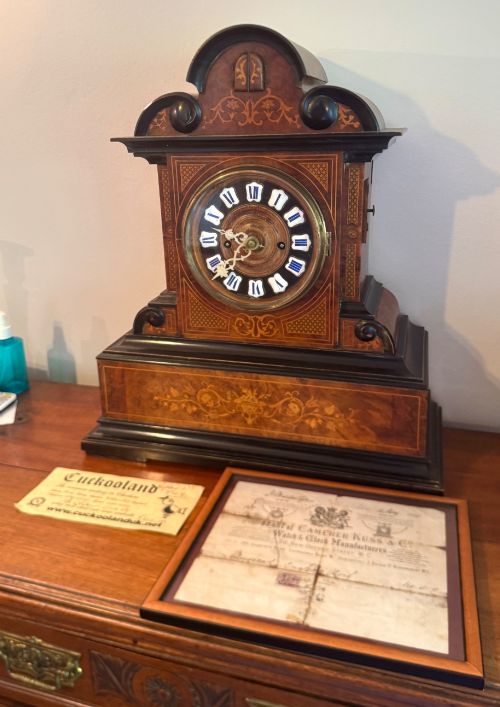
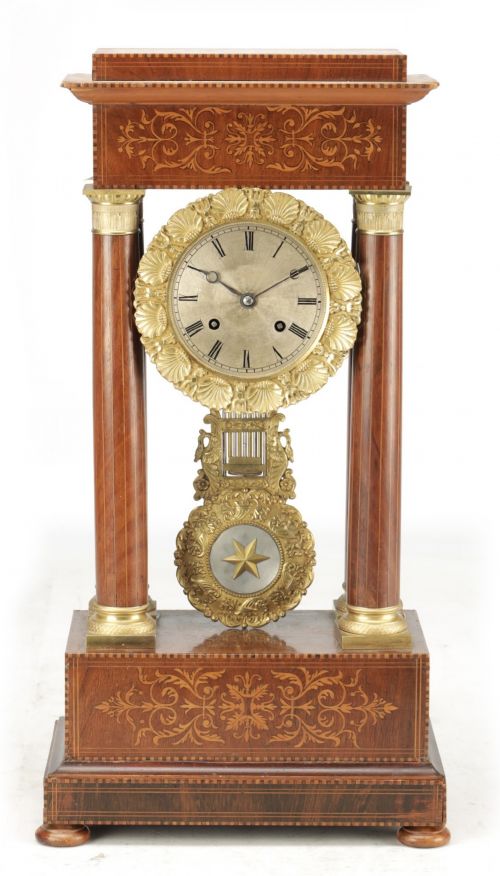
Movements relied on brass gear trains, often driven by fusee mechanisms or pendulum weights, housed securely within the timber case. Ormolu mounts and ebonised details frequently supplemented the wood marquetry on French and Victorian pieces.
Listings span the eighteenth, nineteenth, and early twentieth centuries, featuring materials like brass, rosewood, and satinwood across mantel, wall, and longcase formats.
What varies in quality
The precision and complexity of the wood inlay determine much of the visual merit, distinguishing simple banding from pictorial floral or figural marquetry. The crispness of the brass dial engraving and the robustness of the eight-day movement dictate mechanical worth.
Case proportions and the preservation of original French polish or wax finishes separate refined examples from altered or heavily restored pieces. High-grade specimens retain matching timber patination across both case and door.
Charles Louch St Albans·W Burton·Henry Marc·Edward East
The Marquetry Wooden Clock Glossary
- Marquetry
- Decorative veneer work applied to a wooden carcase, forming pictorial or geometric patterns using contrasting timbers and brass. This technique defines the visual character of the wooden clock category.
- Fusee
- A conical pulley used in clock movements to maintain equal force on the gear train as the mainspring unwinds. Better quality nineteenth-century timepieces frequently utilise this mechanism.
- Ormolu
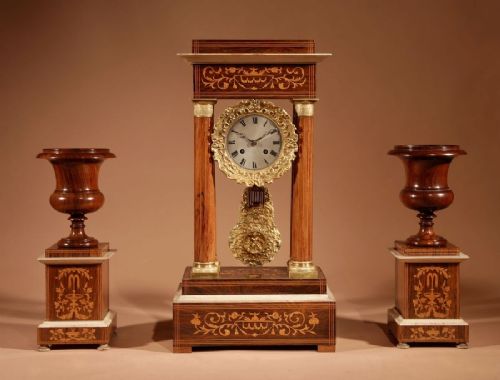
- Gilded bronze used for decorative mounts and feet on French mantel and portico clocks. It provides a bright metallic contrast to dark rosewood and mahogany cases.
- Portico clock
- A distinct architectural style of mantel clock featuring columns supporting a central pediment containing the dial. These pieces often date from the nineteenth century.
Marquetry Wooden Clock: Frequently Asked Questions
How do I wind an eight day clock?
Insert the winding key into the designated arbour on the dial face and turn it gently until resistance is felt. Care should be taken not to over-wind the mainspring.
Most movements require a clockwise turn, though consulting the specific mechanism helps prevent internal damage to the gear train.
Where should I place a wooden clock?
Position the clock on a stable, level surface away from direct sunlight and fluctuating heat sources. Mantel clocks sit securely on firm wooden ledges.
Longcase and grandfather clocks require a plumb vertical alignment against a wall to ensure the pendulum swings evenly.
How do I identify an Edwardian clock?
Edwardian timepieces typically feature inlaid mahogany cases with lighter satinwood or boxwood stringing. The dial faces often display Arabic numerals behind bevelled glass.
These pieces generally date from the period surrounding 1900, showing lighter proportions than earlier Victorian heavy walnut designs.
What is a fusee movement?
A fusee is a mechanical device designed to regulate the power delivered from the mainspring to the escapement. It ensures uniform timekeeping as the spring tension lessens.
This mechanism is commonly found in better quality British and French mantel and wall clocks from the nineteenth century.