


Inlaid Wood Mantle Clock
An inlaid wood mantle clock brings period warmth to a room, offering both reliable timekeeping and fine cabinet work.
Inlaid Wood Mantle Clock
An inlaid wood mantle clock is a tabletop or bracket timekeeper housed in a wooden case decorated with contrasting timber or metal veneer.
The pieces on this page span several centuries, with Edwardian mahogany examples and Regency rosewood models appearing most frequently alongside Victorian and Georgian pieces.
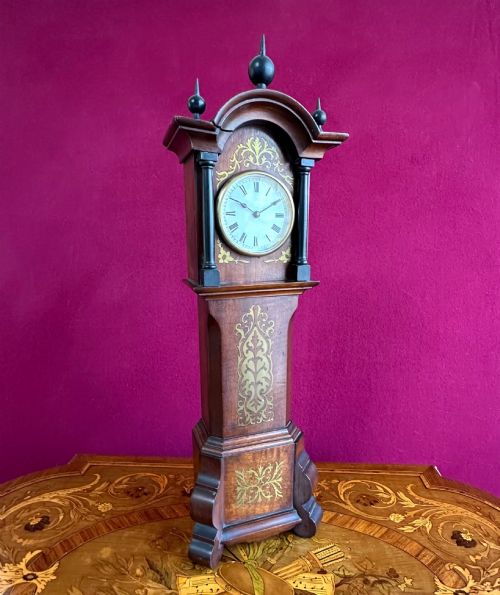
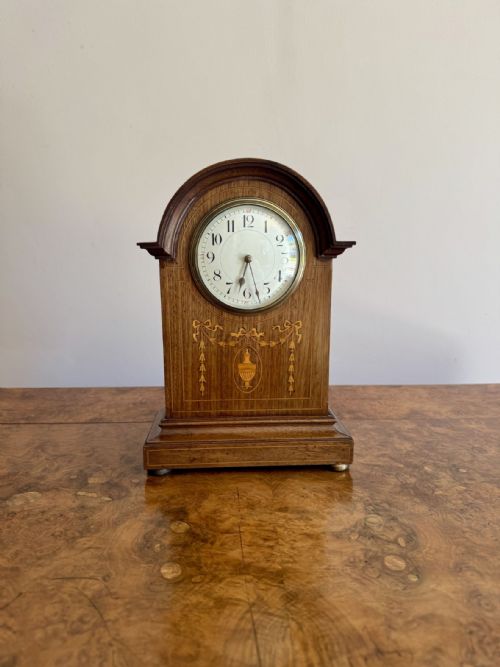
Forms range from traditional balloon shapes and dome tops to miniature grandfather styles and bracket clocks, originating from English, French, and Japanese makers.
How they were made
Cabinet makers utilised dense hardwoods like mahogany and rosewood for the primary cases, often adding delicate satinwood or boxwood inlay to create geometric and floral patterns.
Gilt metal, brass, and silvered metal components furnished the dials and bezels, whilst glass protected the enamel faces and delicate internal movements.
One extraordinary miniature grandfather clock exists purely to make timekeeping feel like an architectural joke.
What varies in quality
The standard of an inlaid wood mantle clock rests on the crispness of the cabinet work and the finesse of the timber selection, such as figured mahogany or rich rosewood.
Superior examples display precise, well-preserved inlay work and balanced proportions, accompanied by complex mechanical movements like double fusee or chiming systems.
Paul Garnier·Walker and Hall·Seikosha Seiko·Vulliamy·Mappin and Webb London·Le Roy of Paris
The Inlaid Wood Mantle Clock Glossary
- Bracket clock
- A portable timekeeper originally designed to sit upon a wall bracket, though later placed on tables and mantles. These often feature robust mechanical movements.
- Fusee
- A conical pulley used in better quality clocks to maintain equal power as the mainspring unwinds. This mechanism improves timekeeping accuracy across the running period.
- Inlay
- A technique where pieces of contrasting wood, such as satinwood, or metal are inserted into depressions within the primary timber. This creates decorative surface patterns.
- Portico clock
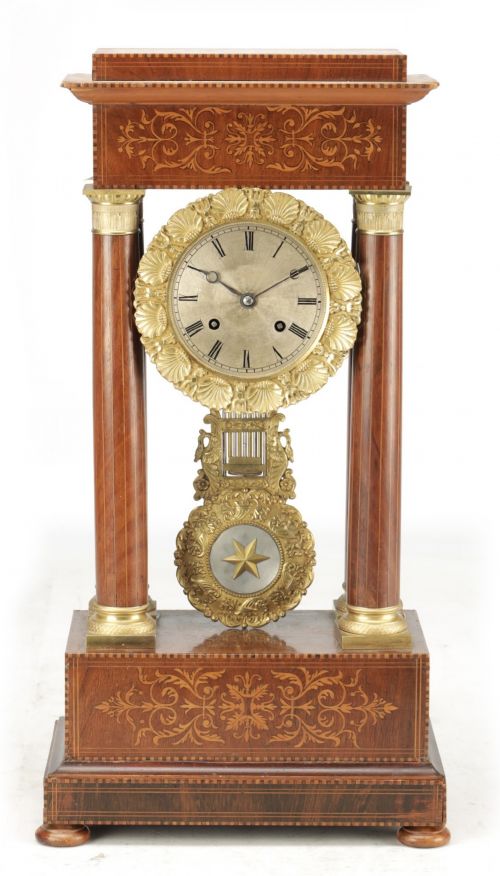
- A architectural mantle clock style featuring side columns supporting a lintel, popular during the Regency and French Empire periods. They frequently incorporate gilt metal mounts.
- Break arch
- A dial or case shape featuring a rounded arch top that steps inward at the corners. It is a common architectural feature found on traditional bracket and mantle clocks.
Inlaid Wood Mantle Clock: Frequently Asked Questions
How do I wind an antique mantle clock?
Most mechanical clocks require a key to tighten the mainspring through holes on the dial face. Care must be taken not to overwind the mechanism.
Consulting the specific movement instructions helps preserve the internal brass gears and escapement over years of regular use.
Where should I place a mantle clock?
These clocks suit flat surfaces like mantelpieces, sideboards, or wooden brackets where they remain stable and level. Keeping them away from direct sunlight protects the wood polish.
Placing the clock away from damp areas prevents moisture from affecting the internal metal parts and delicate wood veneers.
How do I tell an Edwardian clock from a Georgian one?
Edwardian pieces often feature lighter mahogany cases with refined satinwood inlay, reflecting the revival styles popular around nineteen hundred. Georgian examples tend to show heavier proportions and darker timber.
Dial construction and movement signatures also offer clues, as earlier pieces rely on simpler fusee or anchor escapement setups.
Did all these clocks come from England?
While many pieces originate from English workshops and London makers, several examples demonstrate continental European origins. French mantle and officers clocks appear alongside British designs.
Makers from Paris and Japan contributed different aesthetic choices, broadening the range of timber cases and dial layouts found in the collection.