


Edwardian Inlaid Desk Clock
An edwardian inlaid desk clock combines precise timekeeping with delicate marquetry, bringing functional elegance and period charm to any writing surface or mantel.
Edwardian Inlaid Desk Clock
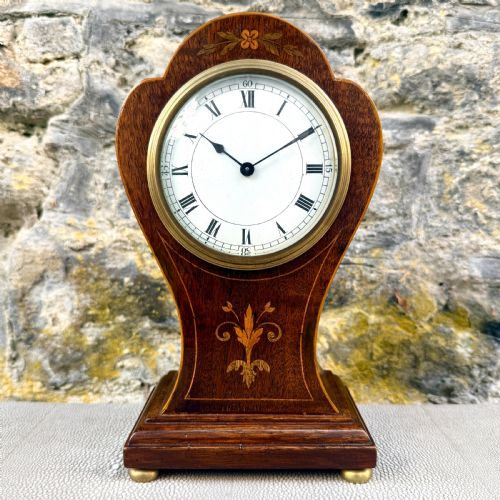
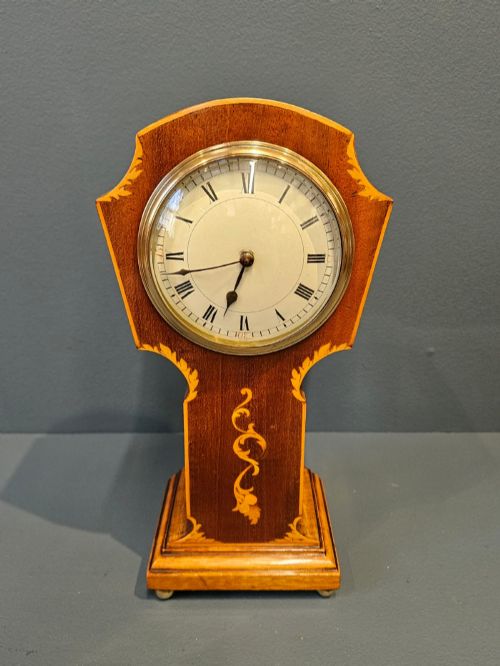
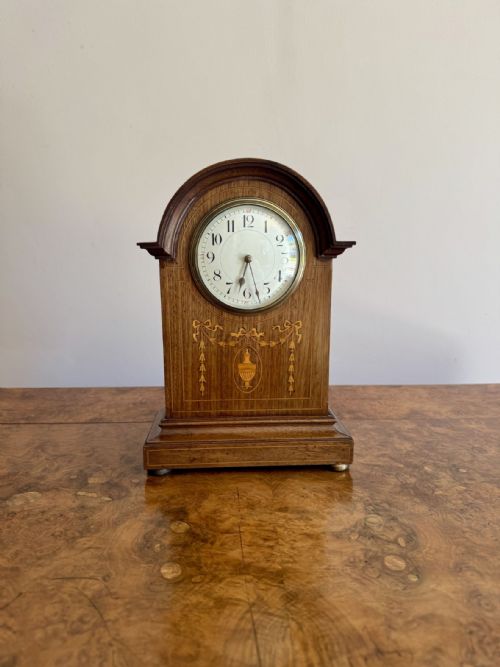
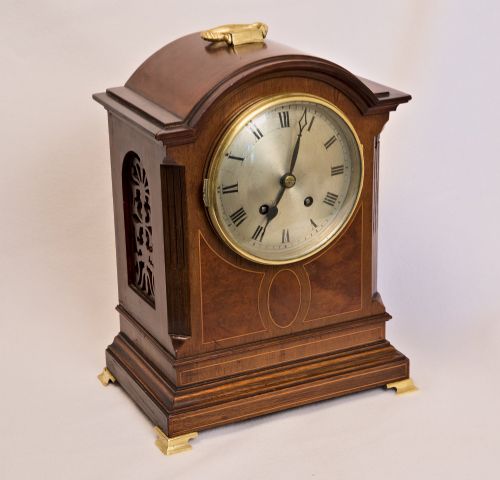
An edwardian inlaid desk clock is typically housed in a compact wooden case designed to sit upon a table, desk, or mantelpiece. Most examples found here date from the Edwardian period or around 1900, though related pieces stretch from the Victorian era into the 1920s.
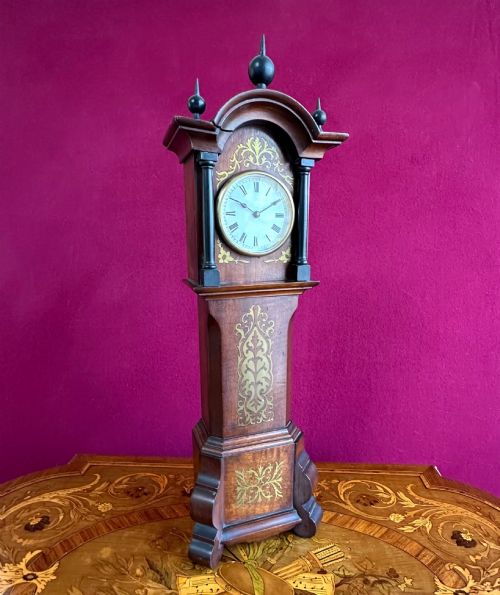
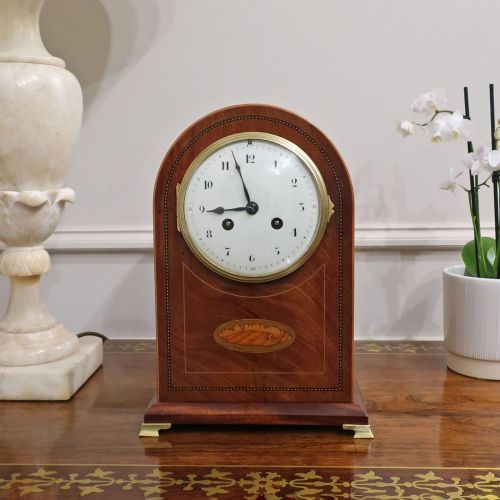
The form encompasses various silhouettes, from balloon shapes and dome tops to miniature grandfather clock formats and portable pocket watch cases. These pieces frequently double as bedside or travel timepieces, combining utility with decorative cabinetwork.
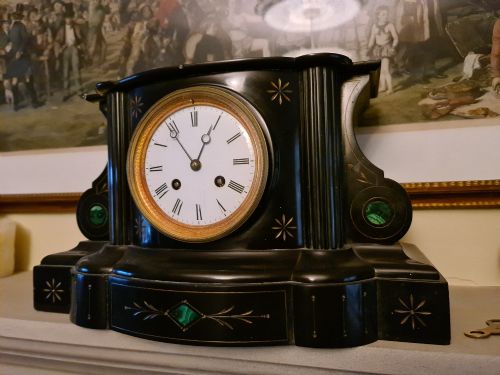
Makers utilised rich timbers and contrasting stringing to create visual interest on the compact surfaces of these timepieces. Buyers encounter both domestic English designs and continental styles such as French Belle Epoque and Art Nouveau variants.
Materials and Construction
Mahogany serves as the primary timber for the majority of these clock cases, often paired with satinwood, boxwood, and general wood inlay. Cabinetmakers fashioned decorative motifs such as floral patterns, including poppies and Dutch girl designs, directly into the wood surface.
Metal and glass components complete the construction, with brass utilised for bezels, feet, and movement fittings, alongside protective glass dials. Dials often feature white enamel with distinct numerals, sometimes driven by eight-day movements or single fusee mechanisms.
Variations in Quality
The refinement of the timber and the precision of the inlay work distinguish finer examples from standard production pieces. Crisp satinwood and boxwood banding, alongside well-executed pictorial marquetry, indicates higher craftsmanship in the cabinet shop.
The reputation of the maker and the sophistication of the internal movement also dictate the standing of a piece. Signed works by established makers carry greater distinction than unsigned or generic workshop variants.
W. Burton·Dent of London
The Edwardian Inlaid Desk Clock Glossary
- Inlay
- The technique of inserting pieces of contrasting timber into a recessed surface to form a decorative pattern. This defines the visual character of Edwardian desk clocks.
- Fusee
- A conical pulley used in clock movements to maintain even driving power as the mainspring unwinds. It represents a mark of mechanical quality.
- Enamel
- A glassy substance fused to a metal dial surface to create a smooth, durable face for painted numerals. White enamel dials are standard on these pieces.
- Marquetry
- Elaborate veneer work arranged in pictorial or decorative designs across the wooden case. It appears in floral and figural motifs on clock fronts.
- Mantel clock
- A clock designed to stand on the shelf above a fireplace, though frequently placed on desks and tables. Many examples in this category share this dual designation.
Edwardian Inlaid Desk Clock: Frequently Asked Questions
How do I wind an eight-day desk clock?
Eight-day movements require winding approximately once a week using a matching key inserted into the dial holes. Care must be taken not to overwind the mainspring.
Most Edwardian clocks operate on a simple spring-driven mechanism that benefits from professional servicing if kept running continuously.
Can I use an Edwardian clock on a working desk?
These pieces were originally built for domestic surfaces like writing desks, tables, and mantelpieces. Their compact proportions make them suitable for modern display.
Users should place them away from direct heat sources and vibrating surfaces to protect the antique wooden case and mechanical movement.
What is the difference between a desk clock and a mantel clock?
Desk clocks generally feature smaller, more portable proportions designed for close viewing on a table or writing surface. Many period pieces, however, overlap in terminology and serve both functions.
In practice, retailers often categorise the same compact wooden timepiece under either description depending on its specific shape and case design.
How do I identify an Edwardian clock style?
Edwardian timepieces often display lighter mahogany timbers contrasted with satinwood and boxwood inlay. Decorative touches range from simple stringing to specific motifs like inlaid flowers.
Clocks from this era around 1900 also show influence from Art Nouveau and Belle Epoque aesthetics, distinguishing them from heavier Victorian designs.