




Arched Top Desk Clock
These arched top desk clock examples bring timeless timber and precise mechanics to a study, uniting Edwardian, Victorian, and Regency craftsmanship in one functional form.
Arched Top Desk Clock
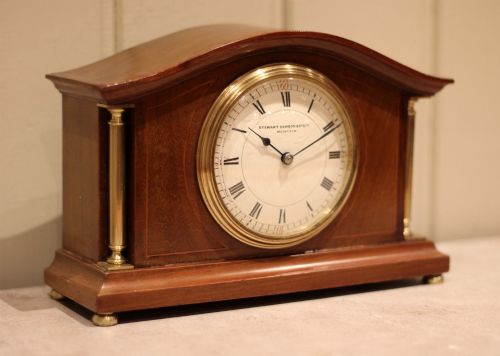
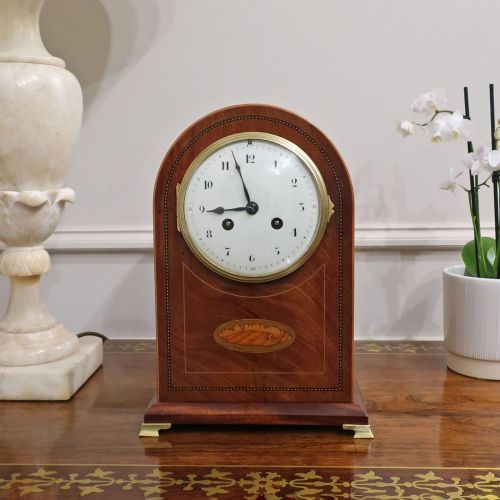
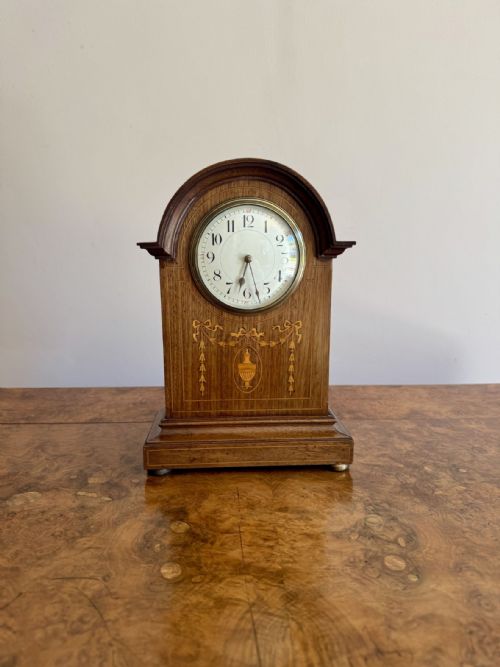
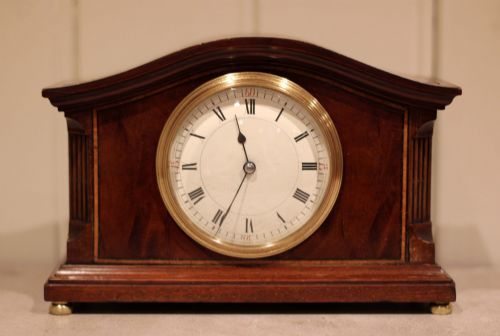
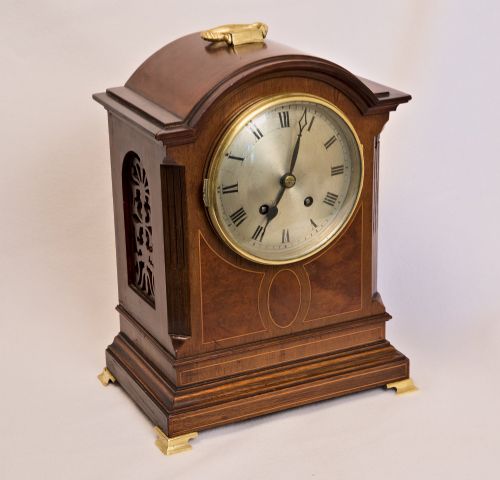
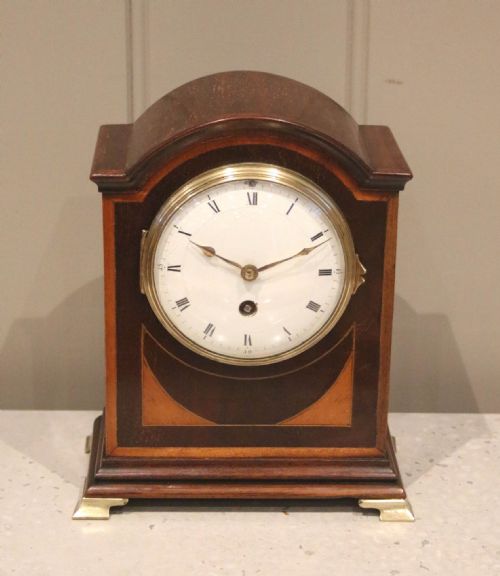
An arched top desk clock brings traditional timekeeping to a desk, table, or mantelpiece through compact wooden cabinetry. The selection centres heavily on mahogany cases, frequently enhanced with delicate satinwood or brass inlay.
Most pieces date from the nineteenth and early twentieth centuries, spanning Victorian, Edwardian, and Regency periods. Buyers frequently encounter Edwardian and late nineteenth-century specimens featuring simple timepieces or more complex bracket movements.
Materials and construction
Cabinetmakers constructed these clocks primarily from solid and veneered mahogany, occasionally turning to rosewood for grander bracket formats. Brass details such as feet, bezels, and intricate inlay work add structural contrast and visual weight to the timber.
Enamel dials provide clear legibility beneath protective glass panes, while internal movements rely on precision brass gear trains. Inlaid motifs like poppies and geometric stringing demonstrate fine hand-finishing techniques executed by period makers.
At least one Edwardian clock sports hand-inlaid poppies, proving that floral enthusiasm reached right into the workshop.
Distinctions in quality
Superior examples separate themselves through the crispness of their cabinet woodwork and the sophistication of their internal movements. Finer pieces incorporate contrasting satinwood stringing, elaborate brass inlay, or specialised mechanisms like fusee and ting-tang strikes.
Simpler timepieces rely on straightforward mahogany cases without complex striking trains, representing a more utilitarian approach to domestic horology. The depth of the timber grain and the integrity of the original enamel dial further elevate a piece above standard production.
S Simpson Southampton·Wilkinson Leicester·W H
The Arched Top Desk Clock Glossary
- Bracket clock
- A portable clock originally designed to sit on a wall bracket or table surface. These often feature substantial brass handles and complex movements.
- Fusee
- A conical pulley used in clock mechanisms to equalize the declining pull of a mainspring as it unwinds. This device ensures consistent timekeeping accuracy.
- Timepiece
- A clock that indicates the time without possessing any striking mechanism. It requires winding solely for the motion of the hands.
- Stringing
- A narrow strip of contrasting wood inlay used to outline the edges of furniture or clock cases. It provides a delicate decorative border.
- Ting-tang
- A two-hammer striking system that sounds on two different bells or gongs to indicate the quarters of the hour. It offers a distinct auditory signature.
Arched Top Desk Clock: Frequently Asked Questions
Where should I place an arched top desk clock?
These clocks suit flat wooden surfaces such as writing desks, sideboards, and mantelpieces where their curved silhouettes can be fully appreciated.
Ensure the location remains stable and free from excessive vibrations to keep the internal pendulum or balance wheel running smoothly.
How do I wind a period mantel clock?
Use the appropriate winding key gently in the dedicated dial holes until you feel firm resistance, avoiding any over-winding.
Different movements require different intervals, so check whether your specific mechanism runs for a single day or eight days.
How can I tell an Edwardian clock from a Victorian one?
Edwardian examples often display lighter mahogany tones and delicate decorative marquetry, such as inlaid poppies or subtle stringing. Victorian pieces tend to feature heavier proportions, darker woods, and more austere or functional bracket designs.
Examining the interior movement and the style of the enamel dial also helps clarify the period of manufacture.