

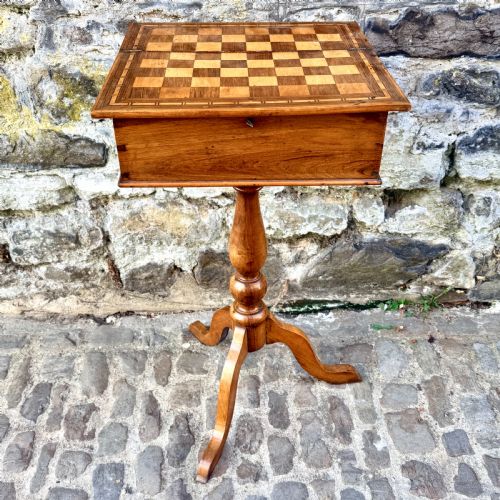
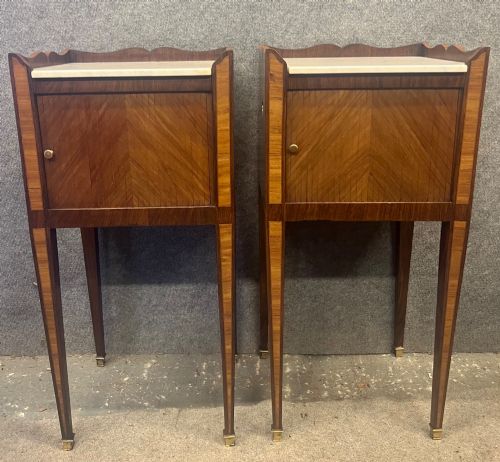
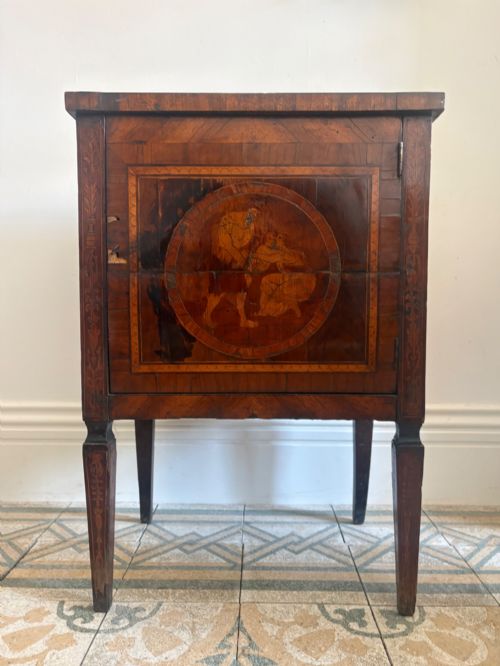
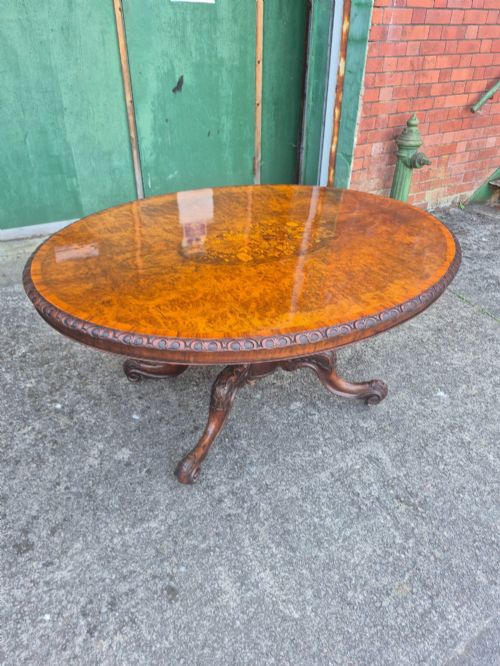

Marquetry Walnut Pedestal
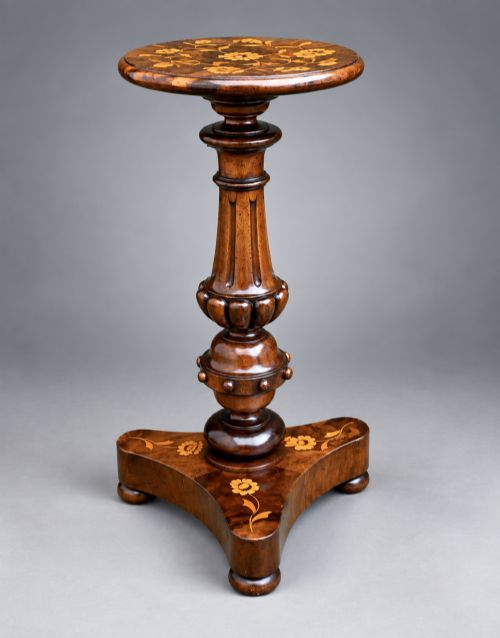
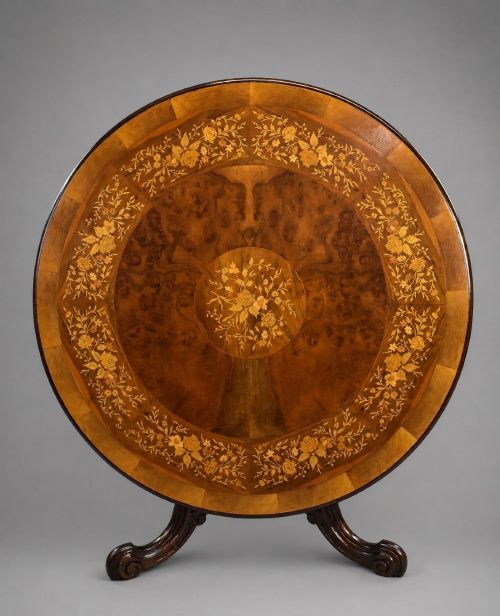
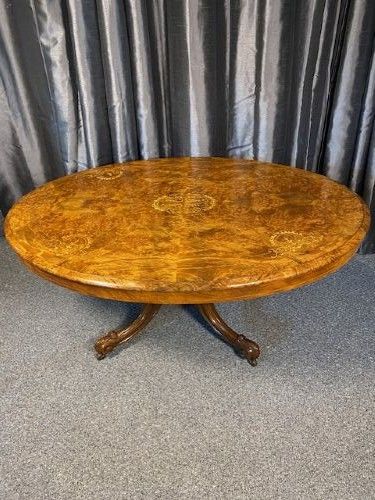
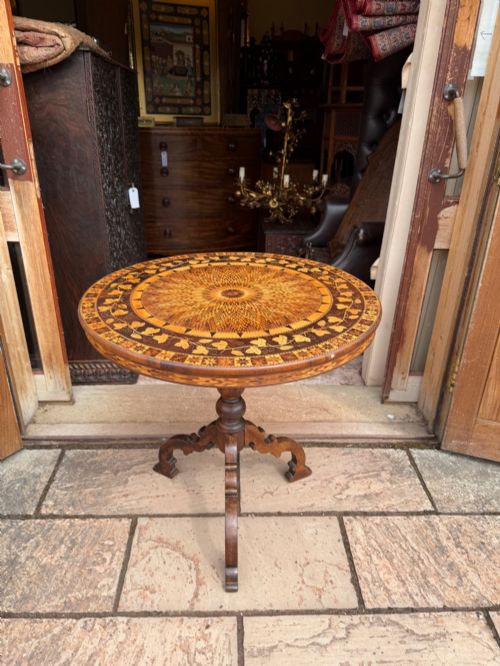
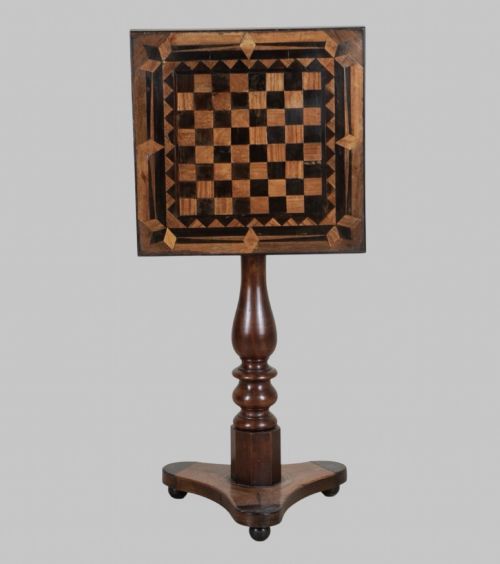
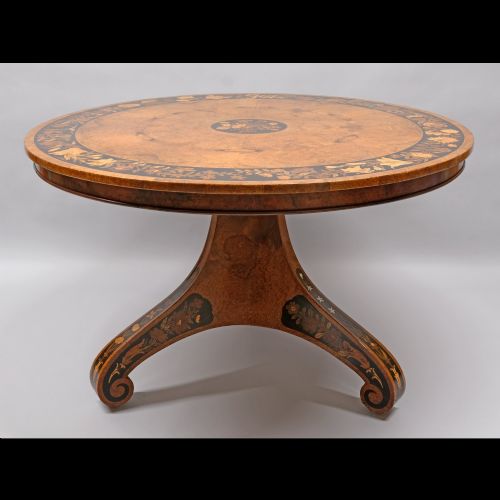
A marquetry walnut pedestal brings figured timber and intricate floral or geometric inlay together on a single pillar support.
Marquetry Walnut Pedestal
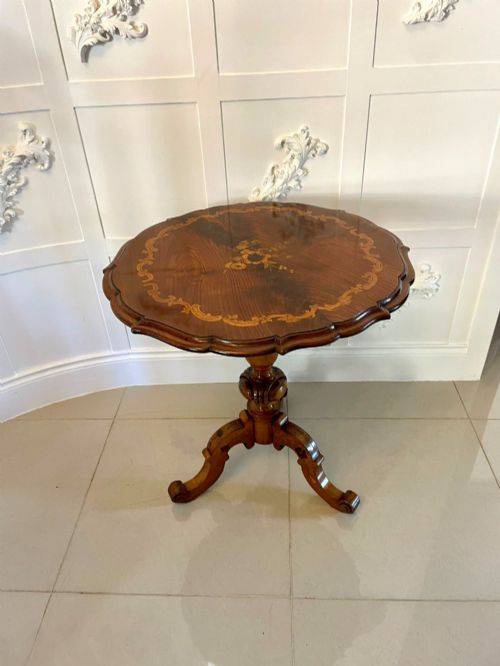
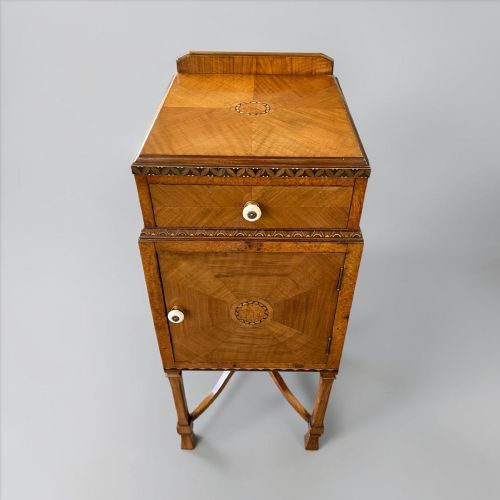
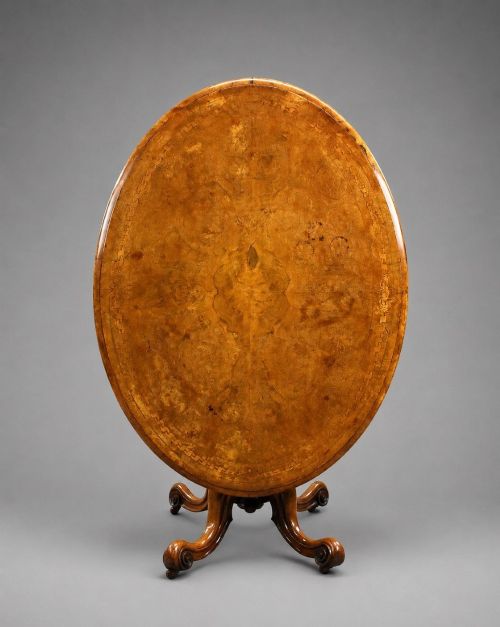
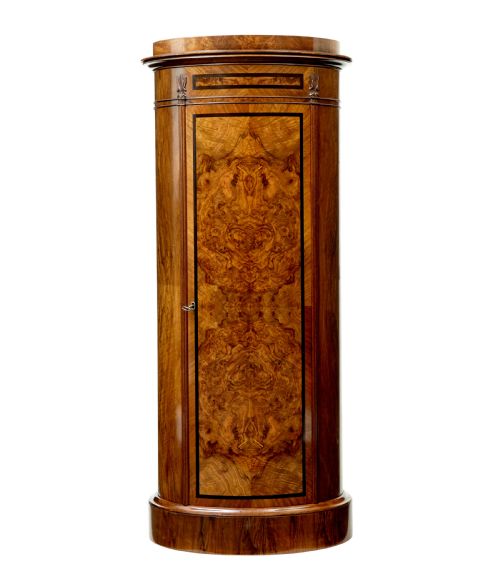
When you search for a marquetry walnut pedestal, you are looking at circular or oval tables and small cabinets supported on a central column or pillar base. These pieces rely on figured walnut and contrasting wood inlays to create decorative surfaces that draw the eye in any room. The selection here leans heavily towards Victorian and nineteenth-century examples alongside occasional tables and small bedside cabinets.
Centre tables, loo tables, and lamp tables dominate the forms, frequently featuring tilt-top mechanisms or tripod and platform feet. Makers utilised the rich grain of burr walnut as a backdrop for elaborate marquetry patterns rendered in boxwood, fruitwood, and various specimen timbers. These items served as functional display pieces for parlours and drawing rooms, combining stability with decorative ambition.
How they were made
Cabinet makers constructed these pieces using solid walnut and supportive secondary timbers, veneering the primary display surfaces with highly figured burr walnut. Artisans cut thin sections of contrasting woods such as boxwood and fruitwood to form intricate marquetry inlay patterns, assembling them meticulously into the top surface before gluing and scraping flush. Turning lathes shaped the central pedestal columns, while hand-carved tripod legs or heavy platform bases provided the necessary ballast to anchor the structure.
French polishing finished the timber, building up a transparent sheen that protected the delicate inlays while deepening the natural warmth of the walnut grain. Brass fittings occasionally secured the pivoting mechanisms on tilt-top breakfast and card tables, ensuring smooth operation during everyday use.
Listings for this phrase feature Victorian, Georgian, and Art Deco periods, executed in walnut, burr walnut, and various fruitwood inlays.
What varies in quality
The sophistication of the marquetry design and the choice of veneer dictate the tier of craftsmanship on display. Superior examples utilise richly figured burr walnut paired with finely shaded floral or geometric inlays that demonstrate immense patience from the cutter, whereas lesser pieces rely on sparse or repetitive motifs. The structural integrity of the central pillar and the crispness of the turned wood elements also mark the distinction between standard production and exceptional workshop output.
Holmes Baldock·Gill & Reigate
The Marquetry Walnut Pedestal Glossary
- Marquetry
- The art of forming decorative patterns by fitting together thin veneers of wood and other materials. This technique allows intricate pictorial or geometric designs to adorn flat table tops.
- Burr walnut
- A specialised timber cut from the abnormal growth or burl of a walnut tree, yielding highly twisted and mottled grain patterns. Cabinet makers prized this wood for its dramatic visual texture.
- Pedestal table
- Any table supported by a single central column resting on feet or a platform base. This design maximises legroom around the perimeter of the table top.
- Boxwood inlay
- The incorporation of pale boxwood threads or motifs into a darker walnut background to create sharp linear contrast. It frames the central marquetry panels with precision.
Marquetry Walnut Pedestal: Frequently Asked Questions
What is a marquetry walnut pedestal table used for?
These tables function primarily as decorative centrepieces, lamp tables, or occasional surfaces in reception rooms. Their striking inlaid tops invite close inspection while holding small objects or lighting.
Historically, specific variants such as card tables and loo tables accommodated evening parlour games and social gatherings. Their pedestal design allowed guests to sit comfortably without legs obstructing the perimeter.
How do I date a marquetry walnut pedestal?
Dating relies on examining the construction methods, timber selection, and prevailing styles associated with the piece. Victorian examples often feature heavy platform bases and elaborate burr walnut veneers, while Georgian and Regency versions display more restrained proportions.
Secondary woods beneath the table top and the style of the turning on the central pillar provide further clues. Comparing these traits to documented workshop practices narrows the period of manufacture.
How should I care for a walnut and marquetry surface?
Keep these pieces away from direct sunlight and excessive heat sources to prevent the walnut veneer and delicate wood inlays from drying out or lifting. Regular dusting with a soft, dry cloth preserves the French polished finish.
Ablutions with excessive water or chemical cleaning products will damage the fine inlay work and the surrounding polish. Professional maintenance ensures the timber remains nourished over decades.
What is the difference between a centre table and a loo table?
Centre tables are designed to stand free in the middle of a room, featuring decorative marquetry work visible from all angles. They remain stationary and serve as permanent display surfaces.
Loo tables typically incorporate a tilting mechanism that allows the top to fold vertical when not in use. This clever engineering saved valuable floor space in nineteenth-century homes.