
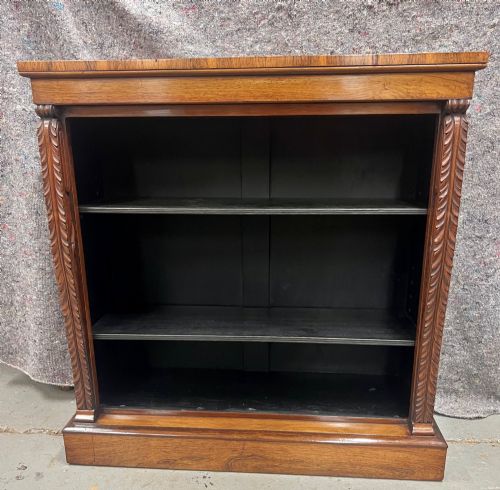

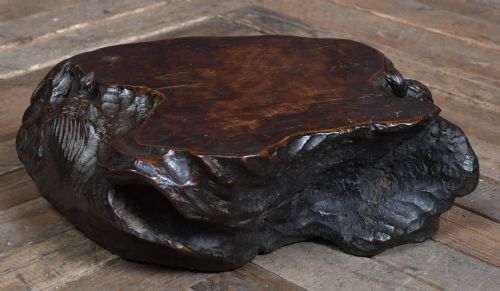


Antique Wooden Plinth Stand
An antique wooden plinth stand elevates sculpture, urns and lamps, bringing architectural presence and period character into a room.
Antique Wooden Plinth Stand
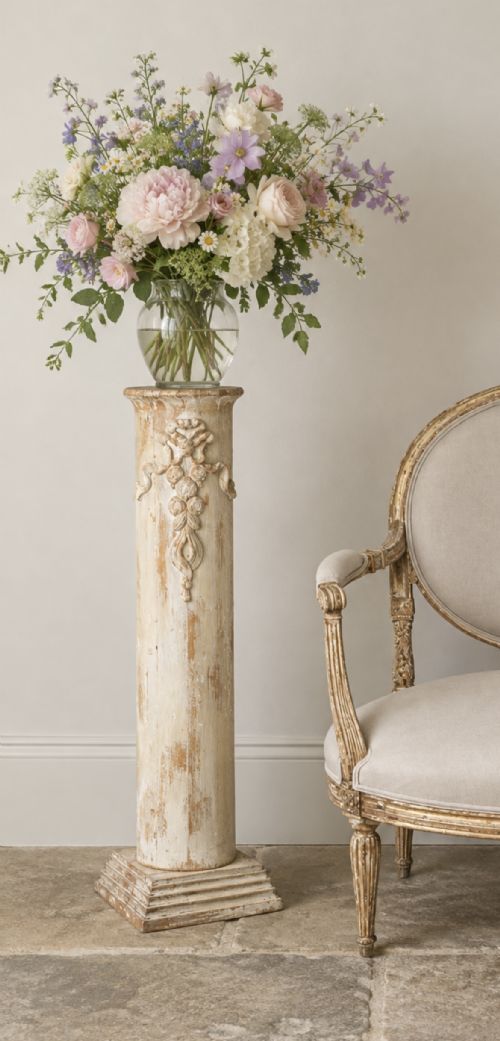
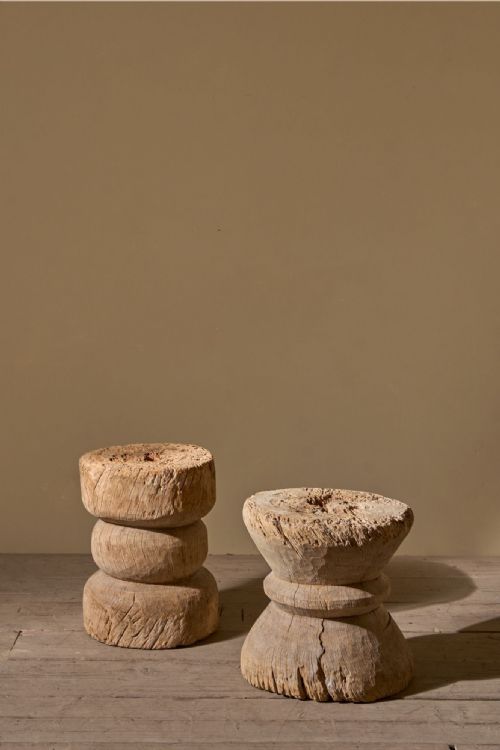
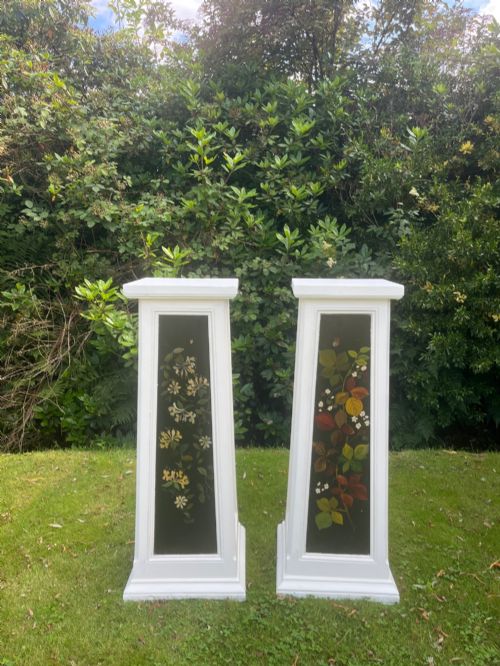
When searching for an antique wooden plinth stand, a buyer encounters architectural supports designed to elevate display items such as busts, lamps and sculptures. The selection spans structural columns, triform bases, and tall plant stands that lift decorative objects to eye level.
Origins vary widely across European workshops, incorporating English mahogany designs, French painted columns, and Scandinavian birch supports. Makers utilised both solid timber and constructed frames to create sturdy platforms capable of supporting heavy bronze, marble or ceramic pieces.
Materials and Construction
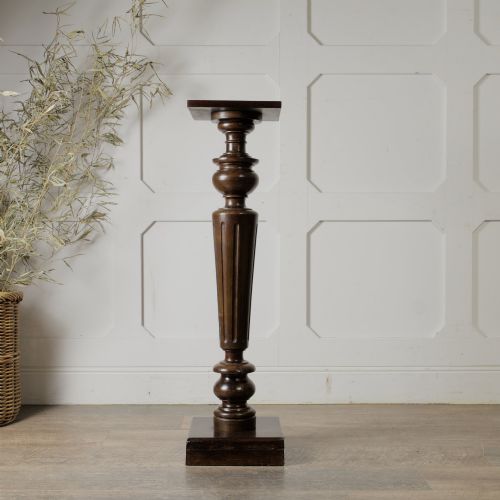
Carpenters built these columns and stands predominantly from dense hardwoods such as mahogany, oak, walnut and satinwood, occasionally employing pine for internal framing or secondary surfaces. Craftsmen turned solid timbers on lathes to produce smooth cylindrical shafts or carved intricate details by hand.
Surface treatments transformed the underlying wood through ebonising, grain painting, gilding and applied gesso, mimicking more expensive marbles or exotic stones. Workshops also mounted cast ormolu details onto timber carcasses to achieve neoclassical and revivalist decorative schemes.
Periods represented span from the 18th century through the Regency, Victorian, and Edwardian eras into the early 20th century.
Craftsmanship and Proportion
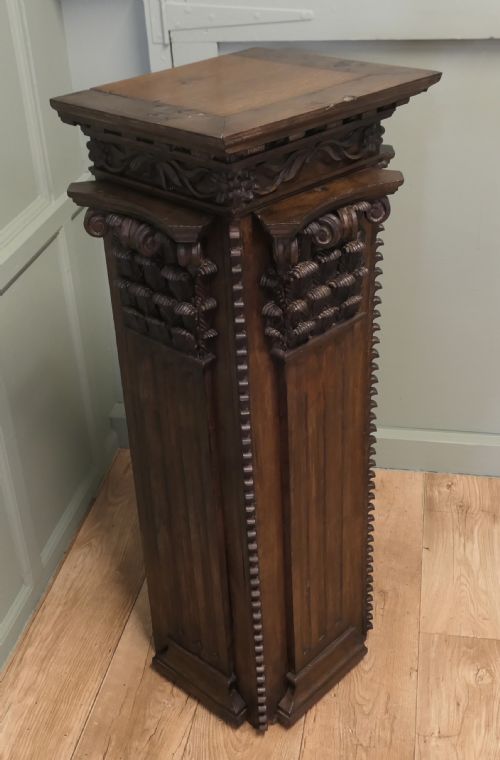
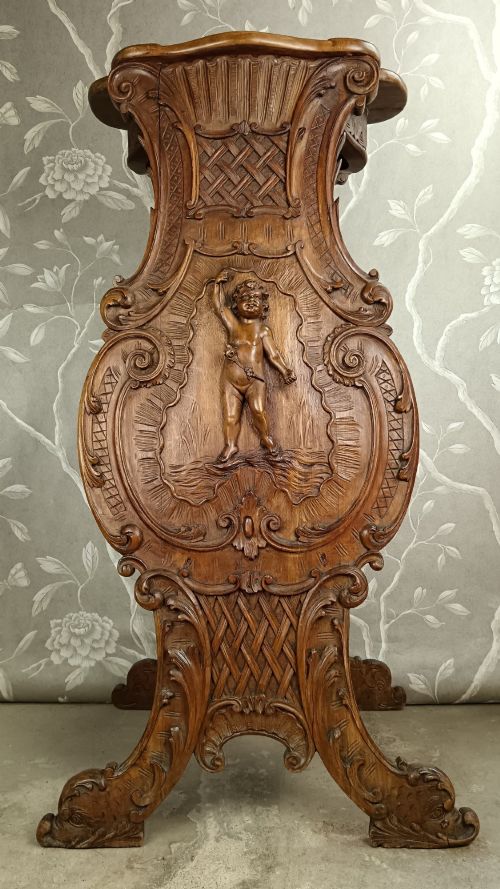
The distinction between standard utility stands and exhibition pieces lies in the precision of the carving, the choice of timber veneer, and the structural balance of the column. Superior examples display crisp hand-carved acanthus leaves, figural elements, or symmetrical grain patterns across amboyna and mahogany surfaces.
Proportion governs the visual weight of each piece, where finer stands maintain absolute vertical alignment and stable weight distribution across their triform or square bases. The execution of surface finishes, from layered paint effects to polished ebonised wood, determines the longevity and aesthetic depth of the stand.
Gillow & Co.·Marguerite
The Antique Wooden Plinth Stand Glossary
- Plinth
- A heavy rectangular or square base supporting a column or statue. It provides stability and grounds the architectural form.
- Torchere
- A tall stand or pedestal originally intended to hold a candle or torch. These slender supports now function as elevated plant or sculpture stands.
- Solomonic
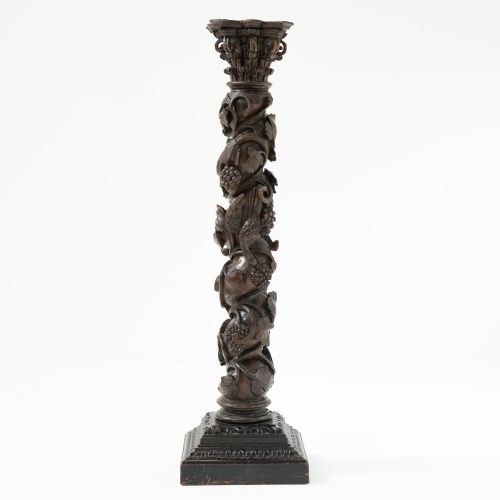
- A column characterised by a helical twist or spiral shaft. This form originated in classical architecture and reappeared during revival periods.
- Ebonised
- Wood treated with a dark stain or finish to imitate ebony. This technique gained popularity during the nineteenth century for accentuating classical silhouettes.
- Triform
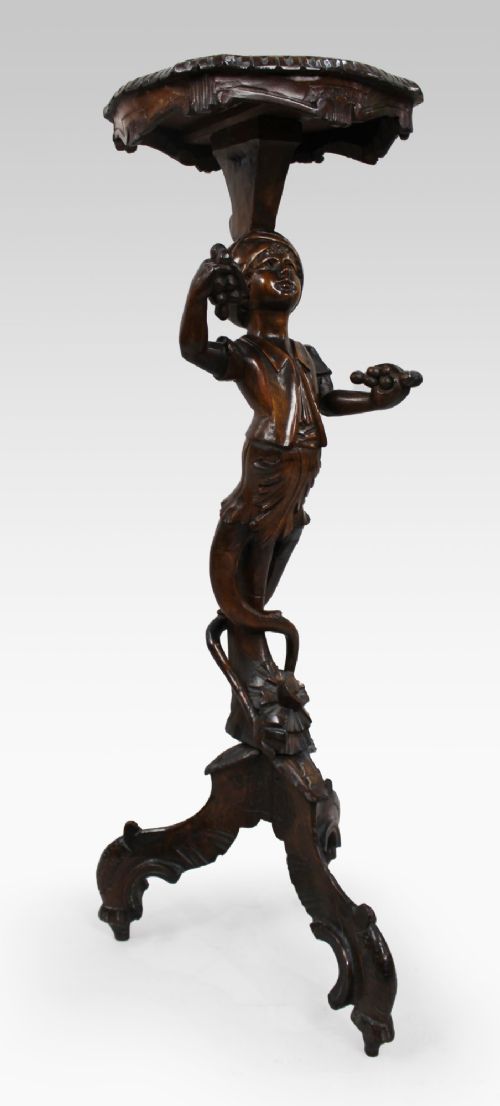
- A three-sided base or pedestal design. It ensures stable placement on uneven floors through three distinct contact points.
Antique Wooden Plinth Stand: Frequently Asked Questions
What were antique plinth stands used for?
These pieces served primarily to elevate decorative items, sculptures, urns and lighting within grand interiors. By lifting objects off the floor, they drew attention to fine art and improved the visual balance of a room.
In domestic settings, they functioned as display surfaces for portrait busts or as sculptural elements in their own right. Their sturdy construction allowed them to bear the considerable weight of marble or bronze pieces.
How do I distinguish between Regency and Victorian columns?
Regency stands often exhibit restrained classical proportions influenced by archaeological discoveries, favouring clean mahogany lines and simple brass mounts. They lean toward architectural austerity and geometric clarity.
Victorian pieces introduce greater ornamentation, including heavy carving, painted faux finishes, ebonised surfaces, and revivalist styles such as Gothic or Renaissance. They frequently employ exotic veneers like amboyna and satinwood to create dramatic visual contrast.
Can these stands support heavy table lamps?
Solid wood and heavy timber columns possess the structural mass required to support substantial table lamps and sculptural lighting. Their wide bases prevent tipping when fitted with trailing cords or heavy shades.
Buyers should examine the top platform and internal construction to ensure the timber remains stable and capable of bearing concentrated weight. Most antique examples were built to carry heavy bronze or marble pieces safely.
Where should I place a pedestal in a room?
Peding stands perform best in corners, empty wall spaces, or flanking doorways where they create vertical focal points. Positioning them away from high-traffic pathways protects the upper surface and any displayed object from accidental knocks.
Lighting plays a key role, as placing a column near a natural light source or beneath a directional spotlight highlights the carved wood grain and surface finish.