

Burr Walnut Pedestal Cupboard
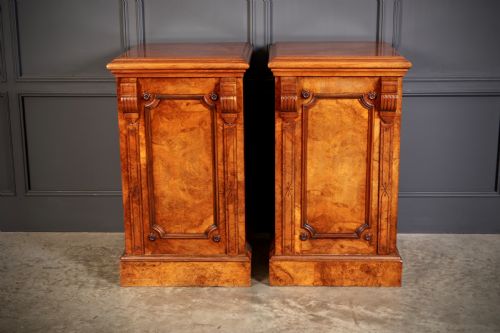
A burr walnut pedestal cupboard brings rich, swirling grain and compact storage to a room, drawing the eye with its complex patterns.
Burr Walnut Pedestal Cupboard
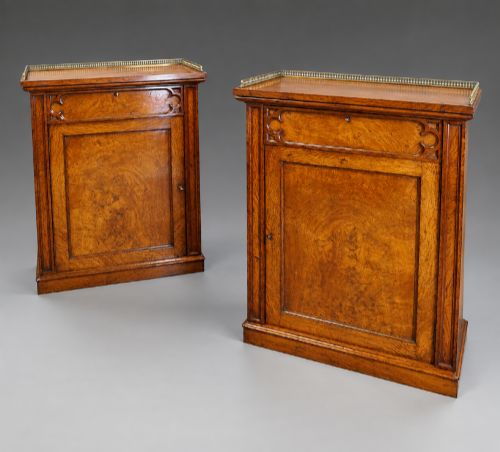
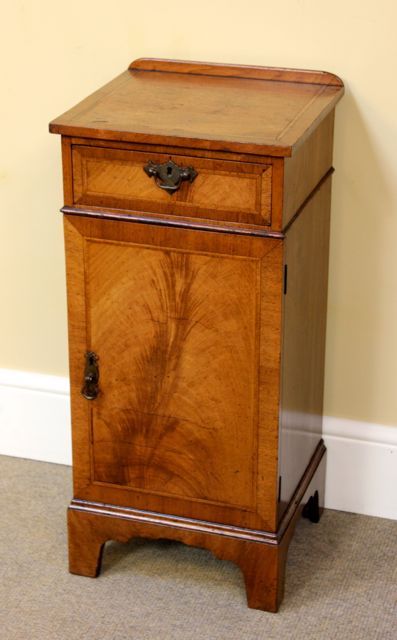
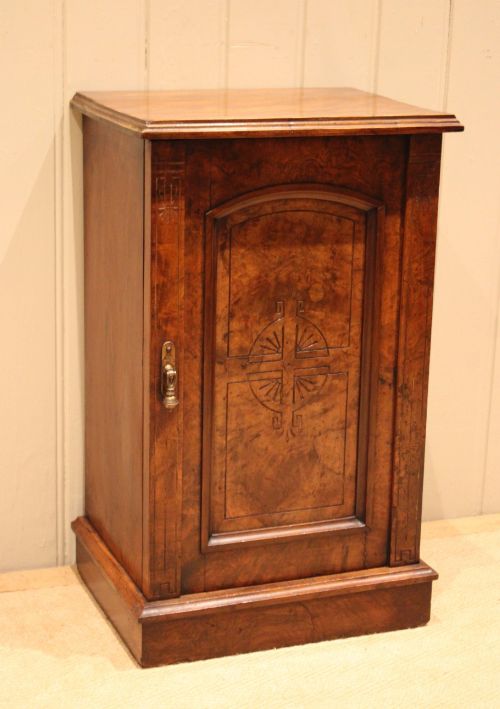
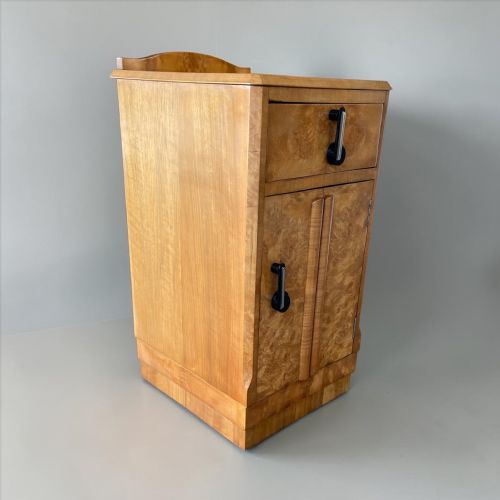
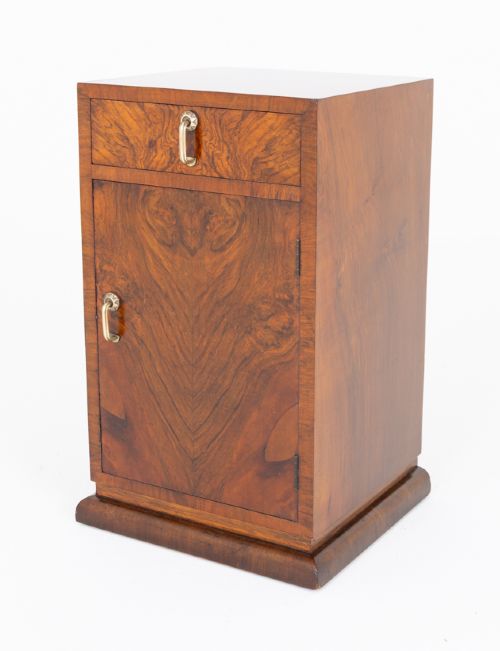
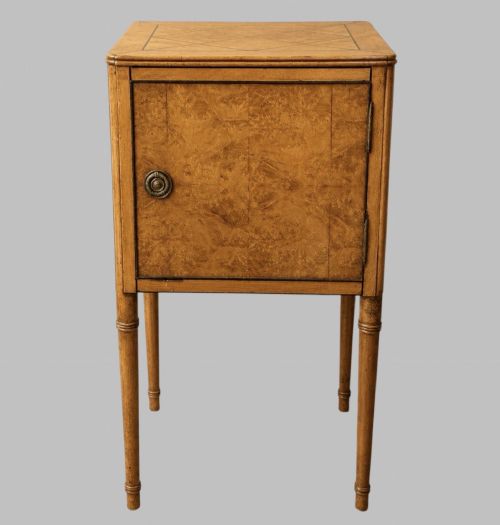
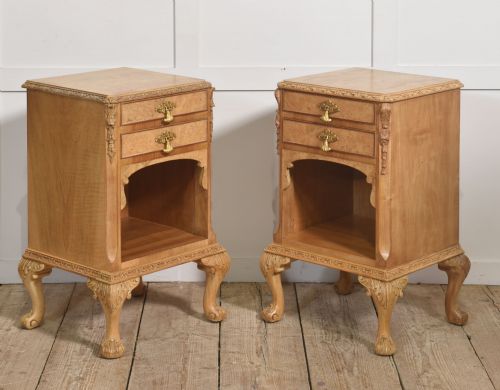
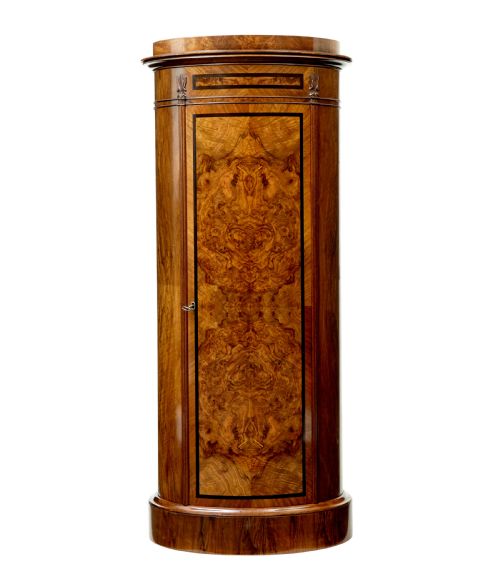
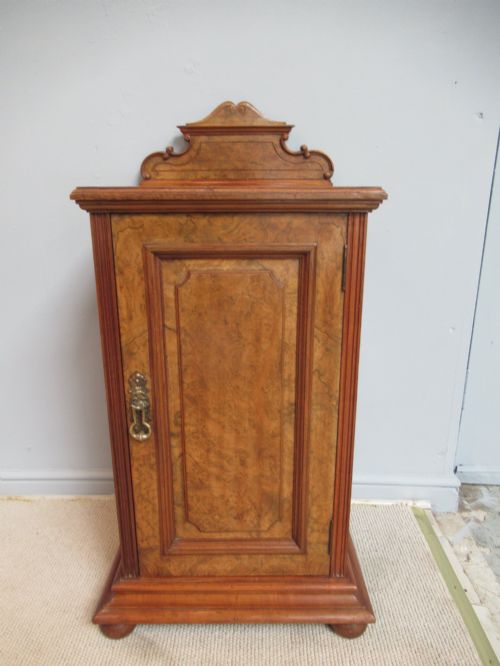
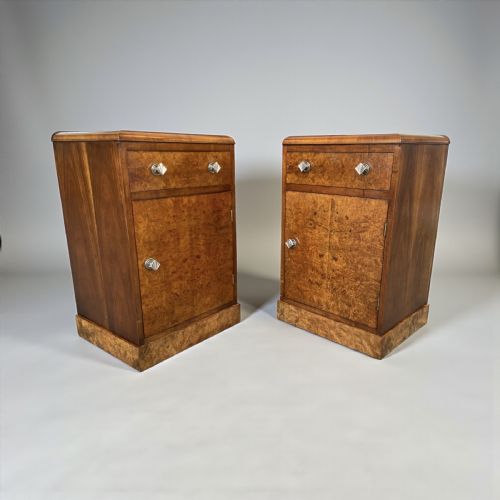
A burr walnut pedestal cupboard provides enclosed storage in a single upright carcase, frequently taking the form of a bedside cabinet, pot cupboard or small side cabinet. You will encounter these pieces across multiple periods, with Victorian and Art Deco examples appearing regularly alongside earlier Georgian designs.
The form relies on a vertical footprint, making it useful beside a bed or in a snug corner where floor space is limited. The door conceals a shelved interior, while the top surface serves as a stand for a lamp or small objects.
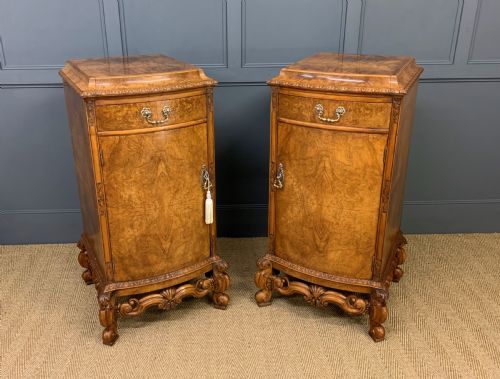
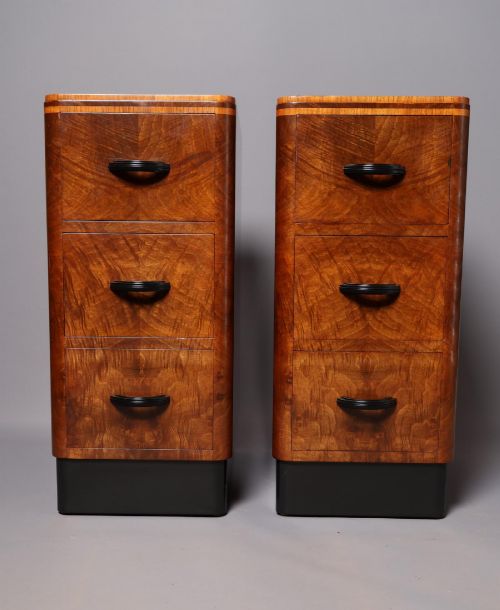
Makers and manufacturers adapted the pedestal cupboard to changing tastes, shifting from the formal proportions of the nineteenth century to the streamlined curves of the nineteen-thirties. This selection reflects that evolution, offering both single items and matched pairs.
How they were made
Cabinet makers utilised burr walnut veneer applied to a stable secondary wood, such as oak or pine, to create the characteristic mottled and swirling patterns on the exterior surfaces. This technique allowed craftsmen to display the intricate growths of the tree across flat panels and curved doors.
Secondary timbers like oak provided structural integrity to the interior framing and drawer linings, ensuring the carcase remained rigid over decades of use. Brass or metal handles, hinges and occasionally bakelite or chrome details completed the construction, depending on the period.
Some Victorian pot cupboards retain their original ventilated interiors, built back when bedside storage served a very different daily purpose.
What varies in quality
The visual impact of a burr walnut pedestal cupboard depends primarily on the selection and matching of the veneer across the front panels. Cabinets where the grain pattern mirrors symmetrically or flows seamlessly across the door display a higher degree of planning by the maker.
Construction methods also separate standard production from finer cabinet work, visible in the precision of the door fit, the stability of the carcase, and the crispness of any applied mouldings or carved details. The depth of the timber's finish and the preservation of the original surface patina contribute substantially to the overall character.
Walter Carter Harrods·Maurice Adams·Harry and Lou Epstein
The Burr Walnut Pedestal Cupboard Glossary
- Burr walnut
- A veneer taken from the wart-like growths on a walnut tree, yielding dense, swirling patterns filled with tiny knots and eyes. This figured wood was prized for high-end cabinet work.
- Pedestal cupboard
- An upright, freestanding cabinet with a single door enclosing storage space, often standing on a plinth or short feet. It is designed to occupy minimal floor area.
- Pot cupboard
- A traditional term for a small bedside cabinet originally constructed to house a chamber pot. These pieces frequently feature a marble top or a ventilated interior.
- Veneer
- A thin slice of decorative wood adhered to a structural base timber. This method allowed craftsmen to display expensive grain patterns without building entirely from solid exotic woods.
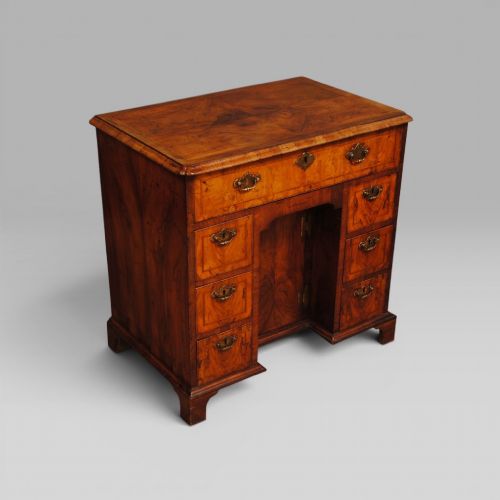
- Kneehole desk
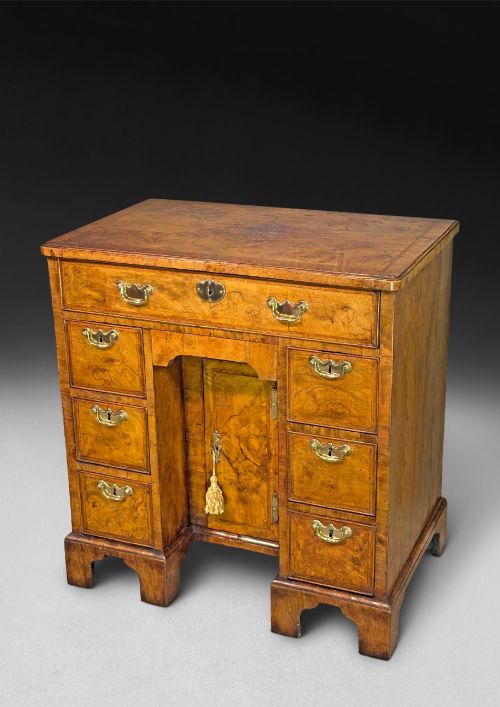
- A compact writing table featuring a central recess for the legs, flanked by pedestals of small drawers. Examples in walnut often share the same decorative vocabulary as pedestal cupboards.
Burr Walnut Pedestal Cupboard: Frequently Asked Questions
What is a burr walnut pedestal cupboard?
A burr walnut pedestal cupboard is a compact, upright storage cabinet featuring decorative wood veneer with swirling grain patterns. These pieces function primarily as bedside tables or small side cabinets.
They offer enclosed shelf space behind a single door while occupying a minimal footprint on the floor.
How do I date a walnut cupboard?
Dating relies on examining the construction methods, handle types, and stylistic cues present in the design. Victorian and Edwardian pieces show different proportions and edge mouldings compared to Art Deco examples from the nineteen-thirties.
Secondary timbers inside the carcase also provide clues to the period of manufacture.
Are these cupboards sold as pairs?
Many listings feature matched pairs of cabinets intended to sit on either side of a bed or fireplace. Single cupboards also appear regularly.
Pairs are particularly common among Victorian and Art Deco examples.
Where should I place a pedestal cupboard?
These cabinets suit bedrooms as bedside tables, or living rooms and studies as small side stands for lamps. Their vertical proportions allow them to fit into narrow spaces between furniture.
The finished top surface provides a convenient station for daily items.