



Antique Cylinder Pedestal Cabinet
An antique cylinder pedestal cabinet offers clever circular storage, combining rich timbers and marble tops for practical elegance.
Antique Cylinder Pedestal Cabinet
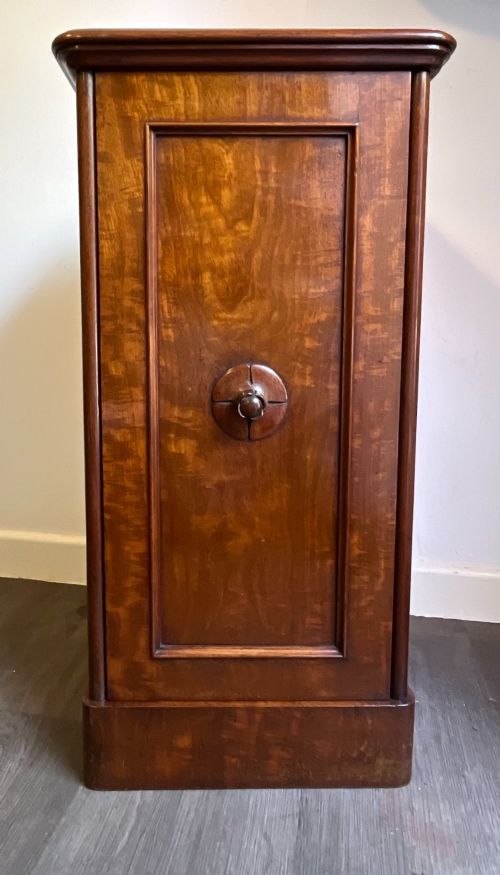
An antique cylinder pedestal cabinet takes the form of a cylindrical or circular carcass, often functioning as a bedside cupboard, lamp stand, or small desk. These pieces originate across the nineteenth and early twentieth centuries, spanning Victorian, Regency, and Edwardian periods.
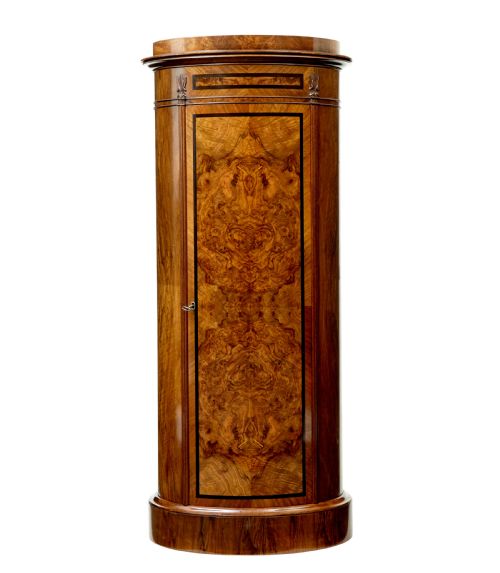
The buyer most commonly meets Victorian mahogany examples, frequently topped with marble and fitted with a single door curving around the body. Other variations include flame mahogany veneer, burr walnut, and occasional Japanese or Empire interpretations.
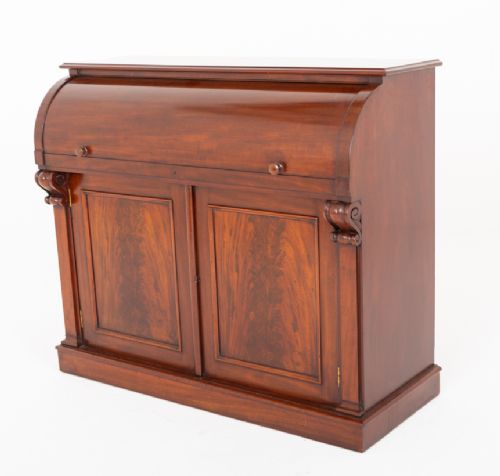
Forms range from simple bedside cupboards and pot cupboards to tall cylinder desks and display stands. Each piece provides enclosed vertical storage designed to fit neatly into corners or beside larger furniture.
How they were made
Cabinet makers utilised dense hardwoods such as mahogany and oak, frequently applying flame mahogany veneer or burr walnut to curved surfaces. Bending timber into tight cylindrical shapes required precise joinery and specialised steam or veneer techniques.
Many cabinets incorporate fitted marble tops in white or faux finishes, adding weight and a durable surface to the wooden carcass. Brass mounts, handles, and hinges provide structural accents and functional operation for doors and drawers.
Antique Cylinder Pedestal Cabinet Retail Price Guide 2026
Typical asking prices for cylinder pedestal cabinet among the pieces listed under this phrase on Sellingantiques today, from the lower quarter to the upper quarter. They describe what is for sale here now, not the wider market.
What varies in quality
The standard of timber selection and veneer matching defines the visual appeal of each cabinet. Finer examples display continuous grain patterns wrapped seamlessly around the curved cylinder door.
The integration of heavy components, such as solid marble tops fitted precisely to the circular wooden rim, separates standard production items from exhibition-quality pieces. Superior construction ensures the curving doors slide or swing smoothly without binding against the frame.
The Antique Cylinder Pedestal Cabinet Glossary
- Burr walnut
- A wood obtained from walnut tree growths, yielding intricate swirling patterns across the surface. It adds rich texture to cylindrical cabinet doors.
- Pedestal cupboard
- A freestanding vertical storage unit with a single internal compartment. These pieces often feature a circular or octagonal footprint.
- Empire style
- A neoclassical design movement originating in France, characterised by architectural restraint and classical motifs. Pieces from this tradition often incorporate dark woods and contrasting mounts.
- Regency
- A British design period spanning the early nineteenth century, known for clean lines and classical archaeological influences. Cabinets from this era emphasise refined wood figures.
Antique Cylinder Pedestal Cabinet: Frequently Asked Questions
What is a cylinder pedestal cabinet?
A cylinder pedestal cabinet is a vertical, circular storage piece used historically for bedside items, lamps, or writing. They enclose space behind a curved wooden door.
Most surviving examples date from the Victorian and Regency eras, often finished with marble tops and rich mahogany or walnut veneers.
Where were these cabinets placed?
These cabinets served primarily as bedside cupboards or pot cupboards in nineteenth-century bedrooms. Their compact circular footprint allowed them to fit easily into corners or tight spaces.
Taller versions functioned as lamp stands, figure pedestals, or small writing desks within drawing rooms and studies.
How do I identify the period?
Dating relies on observing timber choices, construction methods, and stylistic details like marble inserts or brass hardware. Regency and early Victorian pieces often showcase heavy flame mahogany and simple classical proportions.
Later Victorian and Edwardian examples introduce burr walnut, oak, and more varied joinery techniques, aligning with broader nineteenth-century design shifts.
Are the marble tops original?
Marble tops on these cabinets were typically fitted during initial production, particularly on Victorian bedside and lamp stands. They provided a water-resistant surface suitable for washing basins or lighting.
Checking the fit against the wooden rim helps confirm whether the stone matches the original construction of the carcass.