

Walnut Bedside Pedestals
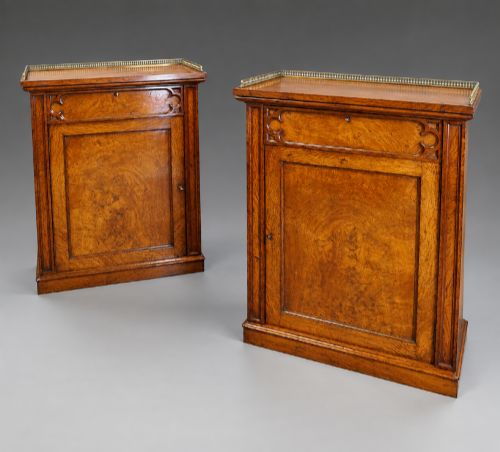
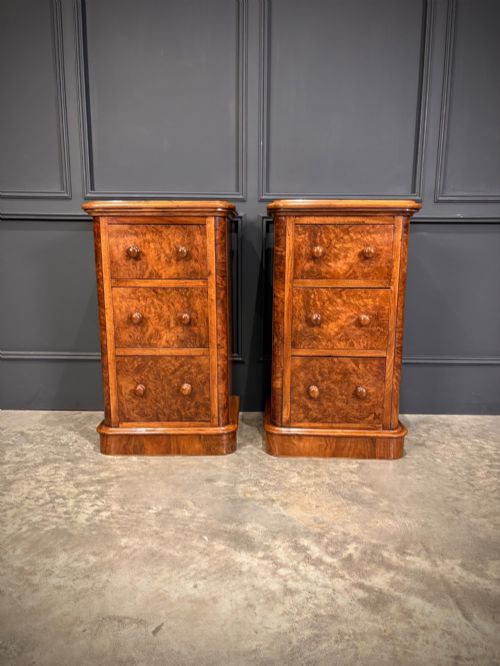
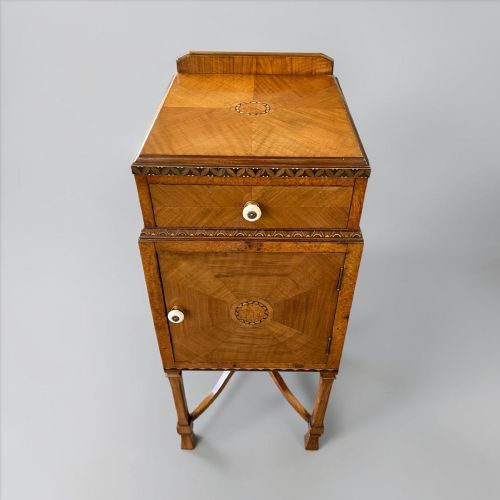
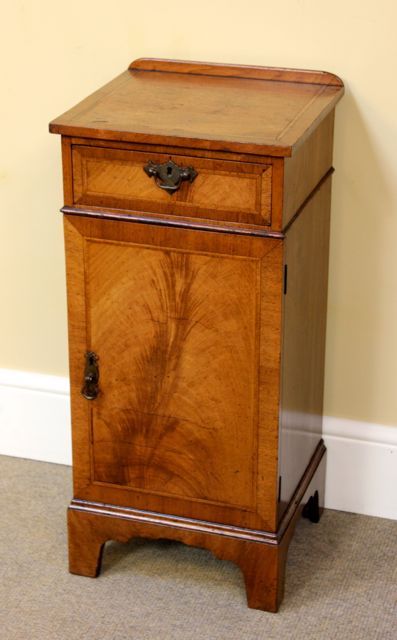
Walnut bedside pedestals bring rich timber grain and compact utility to the bedroom, spanning Victorian and Art Deco designs.
Walnut Bedside Pedestals
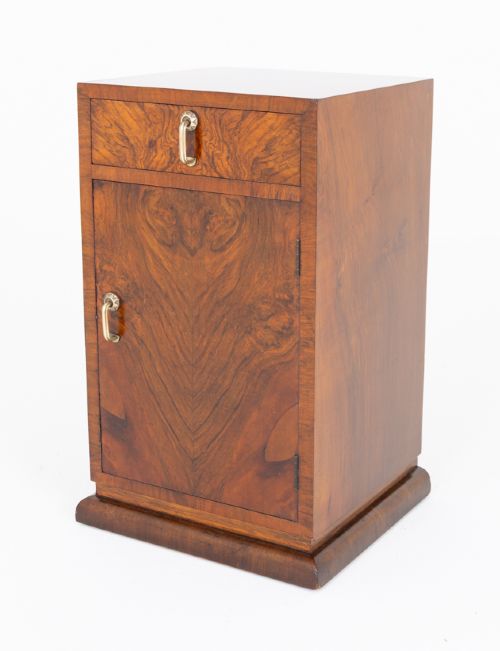
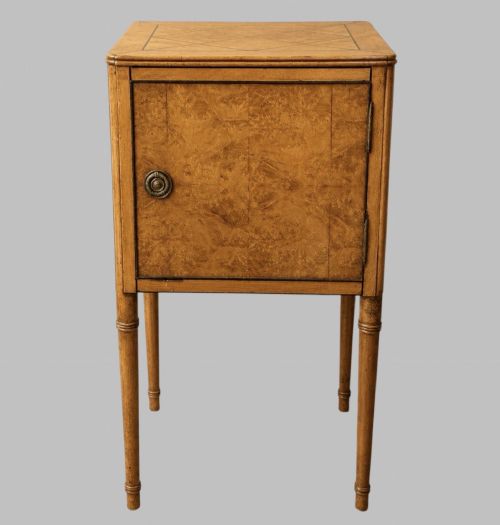
Walnut bedside pedestals combine compact storage with distinctive wood grain, appearing in forms such as bedside cabinets, cupboards, and side tables. Buyers seeking these pieces encounter items ranging from simple Victorian cupboards to streamlined Art Deco tables.
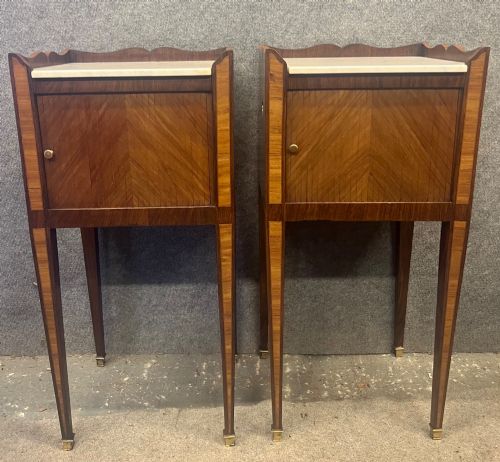
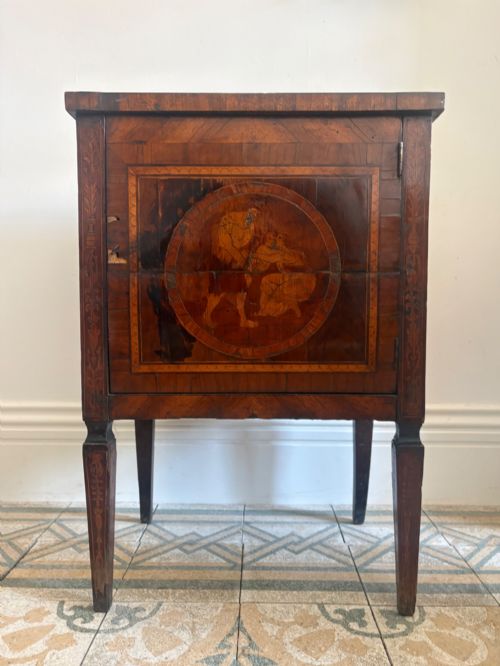
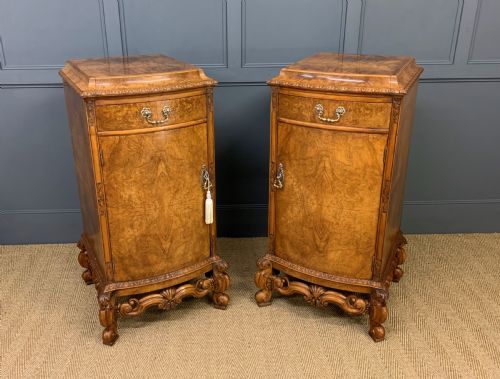
The selection includes matched pairs alongside single cabinets, originating from English workshops, French makers, and Italian cabinetmakers. The dominant eras represented span the nineteenth century through the interwar period of the nineteen-thirties.
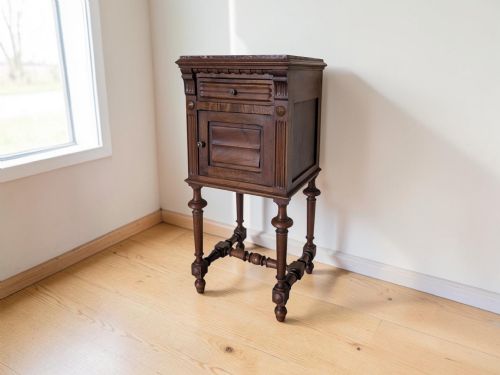
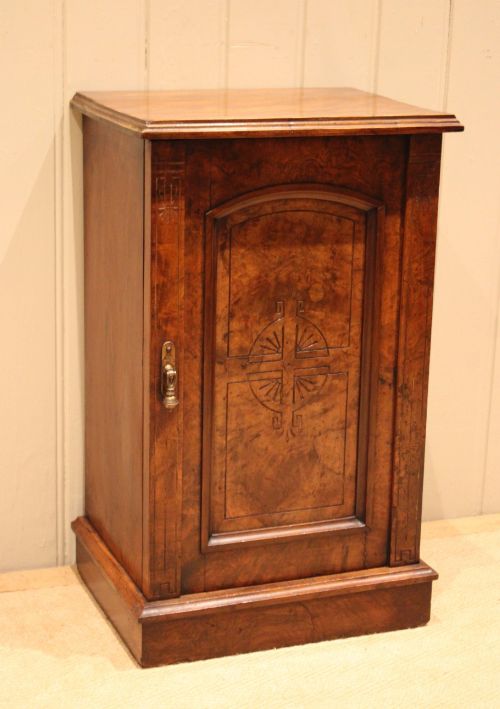
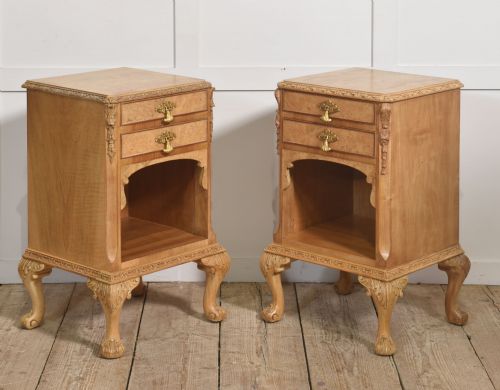
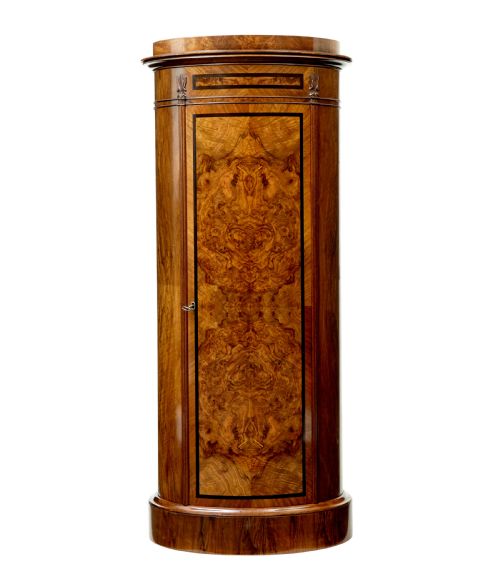
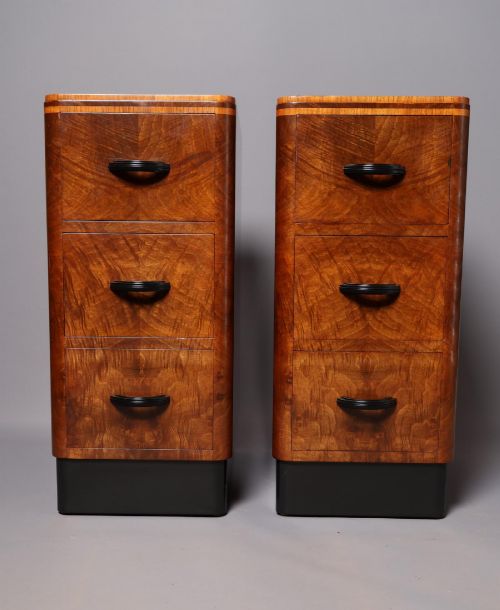
Victorian examples frequently feature cylindrical bodies or panelled doors with marble tops, whilst later twentieth-century iterations favour geometric veneers and clean lines. These variations ensure the furniture suits both traditional interiors and modern schemes.
How they were made
Cabinetmakers utilised solid walnut and decorative burr walnut veneers applied to secondary carcasing timbers like fruitwood, creating rich patterns across drawer fronts and cupboard doors. Inlaid marquetry and contrasting satinwood or birds eye maple border details appear on select pieces from the nineteenth and twentieth centuries.
Structural elements incorporate brass hardware, chrome fittings, and occasionally marble tops set onto cylindrical or square wooden bases. French and English workshops employed traditional joinery, dovetailing drawer boxes and turning wooden supports such as barley twist columns.
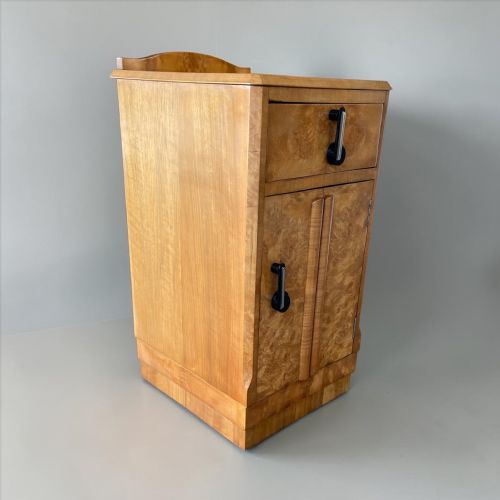
Listings demonstrate a strong presence of nineteenth-century Victorian designs alongside nineteen-thirties Art Deco pieces executed in burr walnut.
What varies in quality
The standard of walnut bedside pedestals depends upon the choice and matching of veneer figures, where symmetrical burr grain commands greater attention than plain timber. Superior pieces exhibit precise marquetry inlay and well-balanced proportions that maintain architectural integrity at a small scale.
Construction details distinguish workshop standards, visible in the tight fit of panelled doors, the hand-dovetailing of interior drawers, and the original selection of complementary hardware such as brass handles and marble inserts. Originality of finish and surface patina also govern the standing of each cabinet.
Walter Carter Harrods·Maurice Adams·Harry and Lou Epstein
The Walnut Bedside Pedestals Glossary
- Burr walnut
- A figured wood grain taken from the wart-like growths on walnut trees, prized for its swirling, organic patterns. Cabinetmakers sliced this timber into thin veneers to cover flat surfaces.
- Commodino
- An Italian bedside cabinet or small chest of drawers, often standing on slender legs. These pieces frequently incorporate detailed marquetry and fine wood inlays.
- Pedestal cupboard
- A freestanding vertical cabinet enclosing a single internal storage space behind a hinged door. They were designed to stand beside a bed to hold personal items.
- Marquetry
- The art of applying pieces of veneer to a structure to form decorative patterns or pictures. Craftsmen used various contrasting woods to achieve pictorial depth.
- Barley twist
- A carved wooden column or leg shaped like a helix, resembling a twisted rope. This turning technique appears on nineteenth-century supports and table legs.
Walnut Bedside Pedestals: Frequently Asked Questions
What is the difference between a bedside cabinet and a pedestal cupboard?
Bedside cabinets generally refer to smaller enclosed units with a door or drawer designed specifically to sit alongside a bed. Pedestal cupboards often describe taller vertical storage pieces derived from larger pedestal furniture.
Both forms offer concealed storage within a compact footprint, though pedestal cupboards tend to provide slightly more vertical capacity inside.
Are walnut bedside pedestals usually found in pairs?
Many examples survive as matched pairs, particularly those dating from the Victorian and Art Deco periods. Pairs were produced for twin beds or symmetrical bedroom layouts.
Single cabinets also appear frequently, representing pieces that were originally made individually or separated from their matching counterpart over time.
How do I distinguish Victorian from Art Deco walnut pedestals?
Victorian pieces typically display heavier moulded cornices, turned wooden feet, panelled doors, and sometimes inset marble tops. The timber finish often carries a darker, polished warmth.
Art Deco examples emphasise geometric symmetry, waterfall edges, streamlined silhouettes, and striking burr walnut or exotic veneer patterns without ornate carving.
Did these cabinets always have marble tops?
Marble tops were an option primarily utilised on nineteenth-century Victorian bedside cabinets to provide a durable, wipe-clean surface for water jugs and glassware. Many cabinets featured plain wooden tops finished to match the surrounding veneer.
The choice of top depended on the maker's design and the specific regional origin of the piece.