





Antique Bed Pedestals
These antique bed pedestals are practical bedside companions crafted in mahogany, walnut, and oak to hold your nightly necessities within arm's reach.
Antique Bed Pedestals
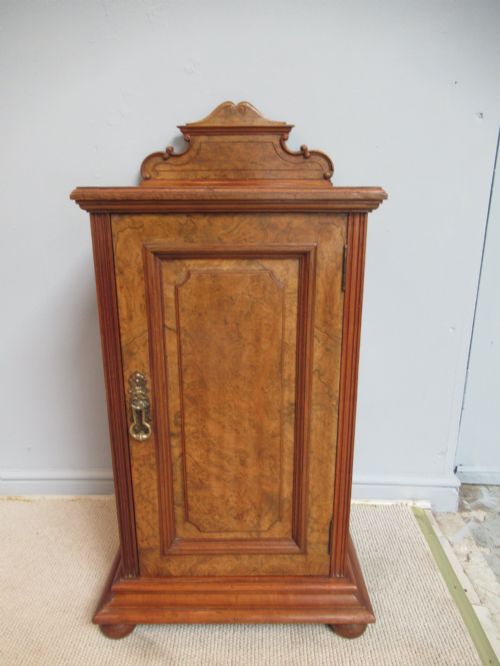
Antique bed pedestals encompass bedside cabinets, pot cupboards, and compact tables designed to stand beside a bed for convenience. The versions you meet most frequently on this page date from the Georgian, Regency, Victorian, and Edwardian periods.
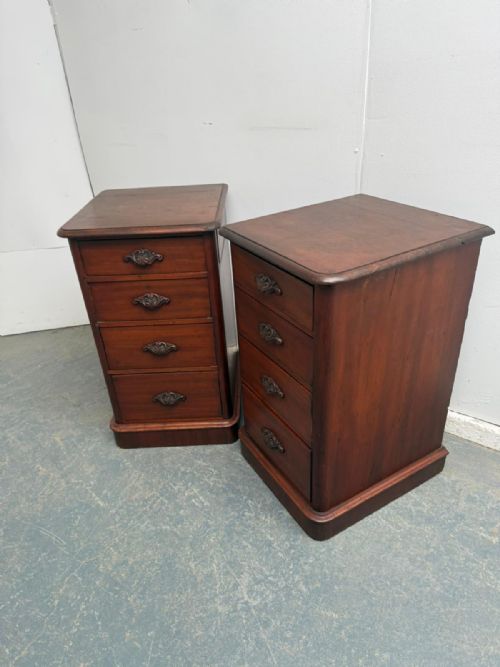
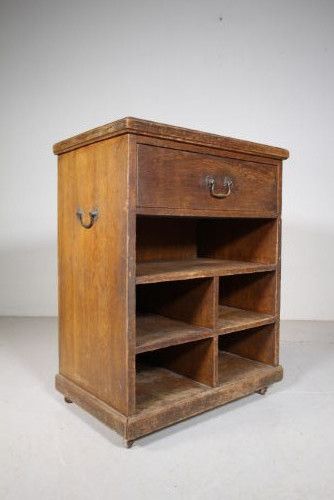
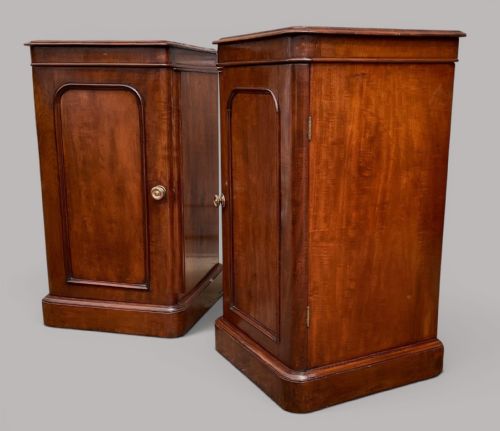
Forms vary from cylindrical cupboards and bedside chests to open tables and cabinets featuring internal shelves or pull-out steps. Many examples appear in pairs, matched across Victorian and Edwardian iterations.
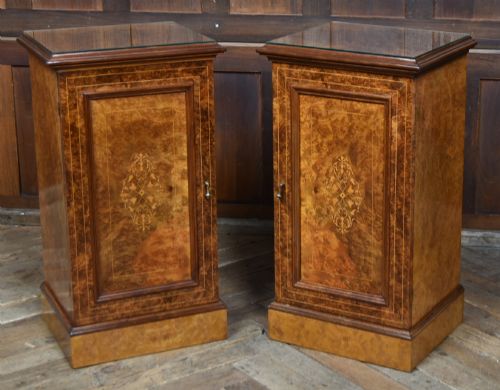
Makers and workshops utilised rich timbers such as mahogany, burr walnut, and oak, often shaped in neoclassical, Victorian, or Art Deco styles. Alongside standard cabinets, the selection includes reading tables and column stands serving similar bedside functions.
Factors that distinguish quality
Timber selection marks the primary division between standard examples and the finest work, with figured veneers, matched pairs, and substantial mahogany setting the upper tier apart. The depth of carving, architectural detailing, and the inclusion of functional additions such as pull-out steps indicate superior craftsmanship.
The integrity of the construction, the retention of original brass fittings, and clean interior surfaces demonstrate how well a piece survived its domestic context. Maker attribution, such as work linked to workshops like Holland & Sons, further elevates a piece within the range.
Antique Bed Pedestals Retail Price Guide 2026
Typical asking prices for bed pedestals among the pieces listed under this phrase on Sellingantiques today, from the lower quarter to the upper quarter. They describe what is for sale here now, not the wider market.
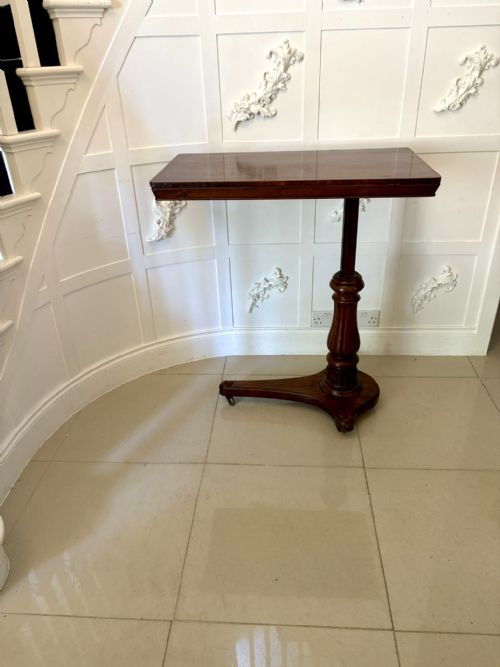
A daring calligrapher can practice penmanship in bed using a cantilevered extending table from the Regency period.
Holland & Sons
The Antique Bed Pedestals Glossary
- Pot cupboard
- A small bedside cabinet originally designed to enclose a chamber pot. These practical units often feature a single door above a concealed interior space.
- Flame-mahogany
- A veneer cut from the branch junction of a mahogany tree, producing a distinctive flickering flame pattern. Regency cabinet-makers favoured this timber for its decorative impact.
- Burr walnut
- Wood taken from a growth on a walnut tree, yielding a dense, swirling grain pattern. Victorian makers prized this material for high-status cabinet doors and tops.
- Pedestal cabinet
- A freestanding vertical storage piece standing on a plinth or feet. In a bedroom context, it provides enclosed shelving beside the sleeping surface.
- Adjustable reading table
- A specialised table featuring a mechanical mechanism to alter the height or angle of the surface. These items served readers resting in bed or seated in chairs.
Antique Bed Pedestals: Frequently Asked Questions
What is an antique bed pedestal?
An antique bed pedestal is a small piece of furniture designed to sit beside a bed for storage and support. Common forms include bedside cabinets, pot cupboards, and small chests.
These items date from periods such as the Georgian, Regency, Victorian, and Edwardian eras. They were built to hold chamber pots, night lamps, and personal items within easy reach of the mattress.
How were bedside cupboards used historically?
Bedside cupboards provided discreet storage for nighttime necessities in period bedrooms. They kept chamber pots enclosed behind doors and offered surface space for lighting.
Over time, their internal configuration shifted from housing sanitary items to storing books and personal effects. Some specialised variations also incorporated pull-out steps to help occupants climb into high four-poster beds.
Are antique bed pedestals usually found in pairs?
Many bedside cabinets and tables survive as matched pairs, particularly from the Victorian and Edwardian periods. Single pieces also appear frequently.
Matching pairs were designed to flank a bed symmetrically, though single pedestals served smaller rooms or individual bed placements. Collectors often seek matched pairs for balanced bedroom layouts.
What woods were used for these cabinets?
Cabinet-makers utilised a range of hardwoods depending on the prevailing style of the period. Mahogany remains the most common timber, appearing alongside oak, walnut, and satinwood.
More decorative examples feature burr walnut or flame-mahogany veneers. Secondary materials like marble, brass, and glass occasionally appear on top surfaces or hardware.