
Marquetry Pier Cabinet
A marquetry pier cabinet is a narrow display piece designed to sit against a wall pier, bringing floral wood inlay into the Victorian home.
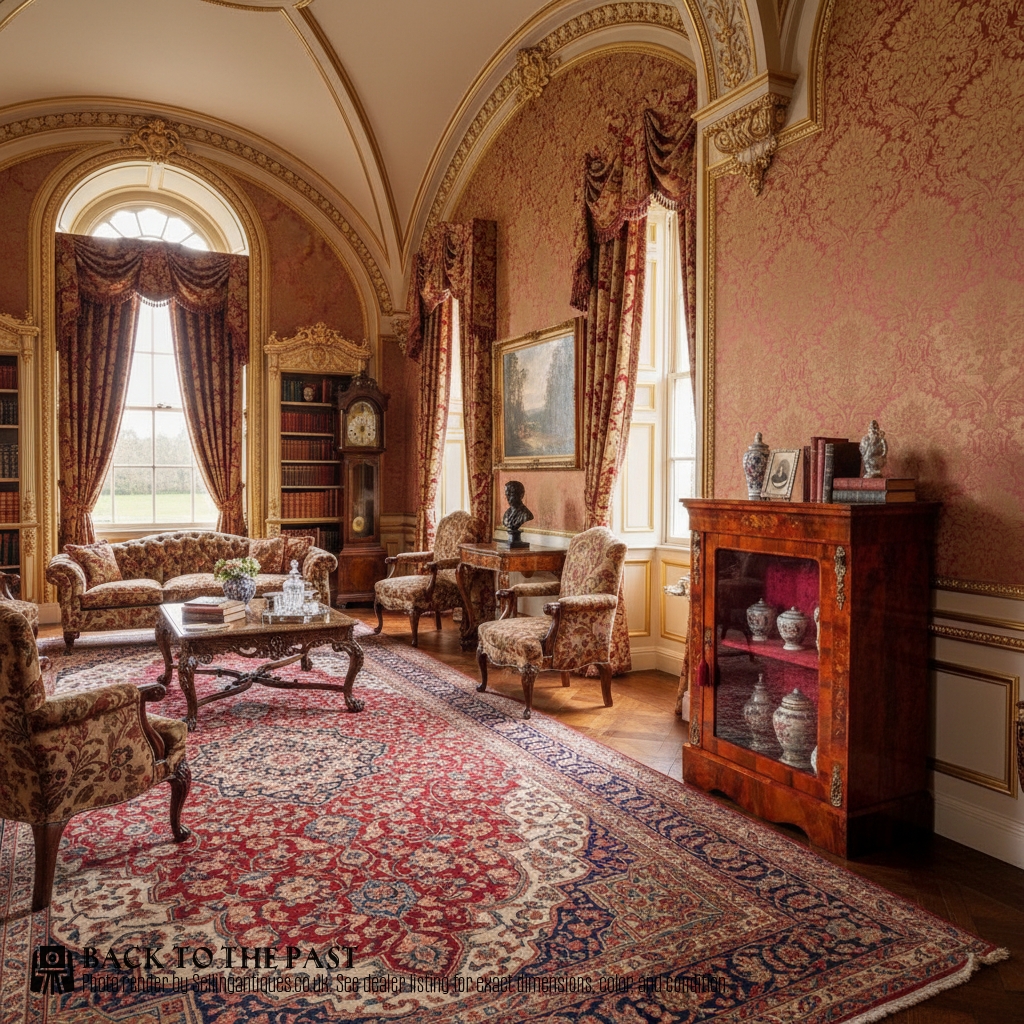
What a marquetry pier cabinet is
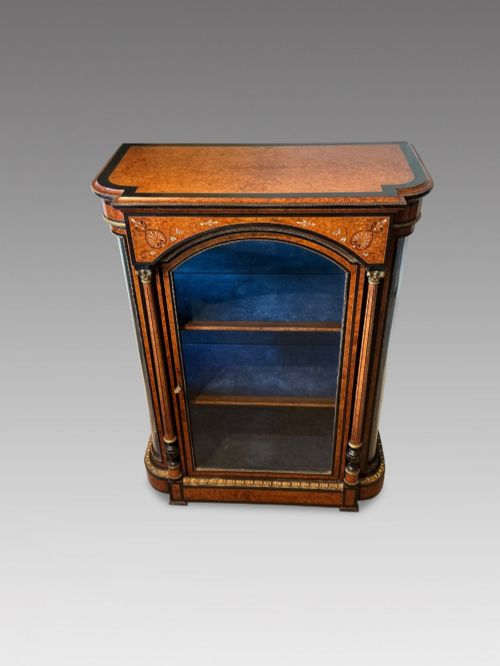
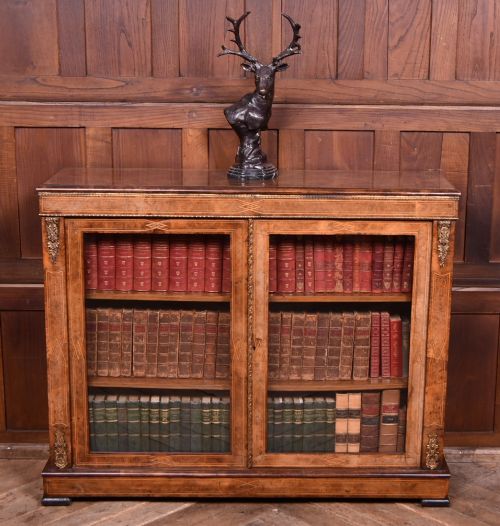
When you search for a marquetry pier cabinet, you encounter display furniture built during the Victorian, Edwardian, and nineteenth-century periods. These narrow display cabinets were constructed to fit the wall spaces between windows or doors in formal reception rooms.
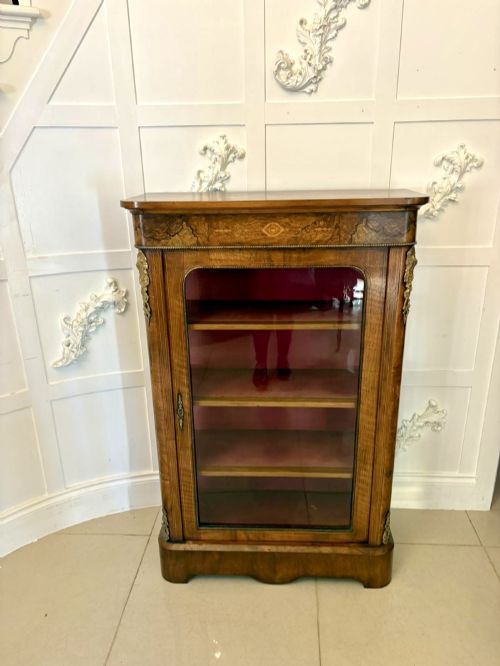
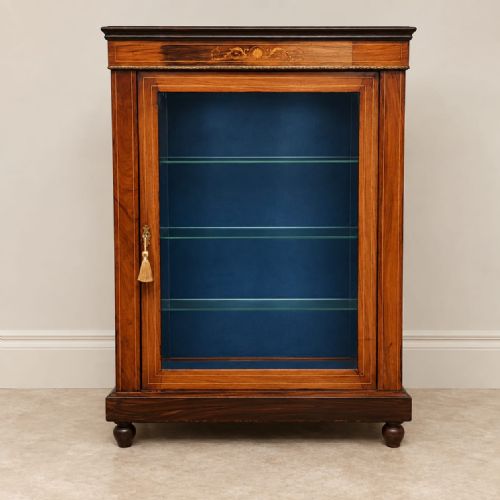
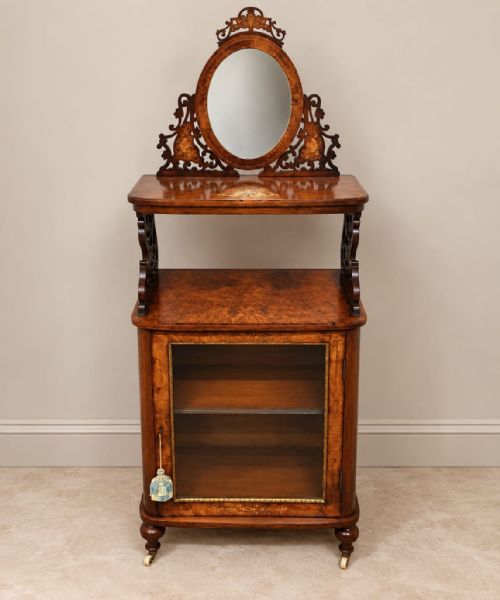
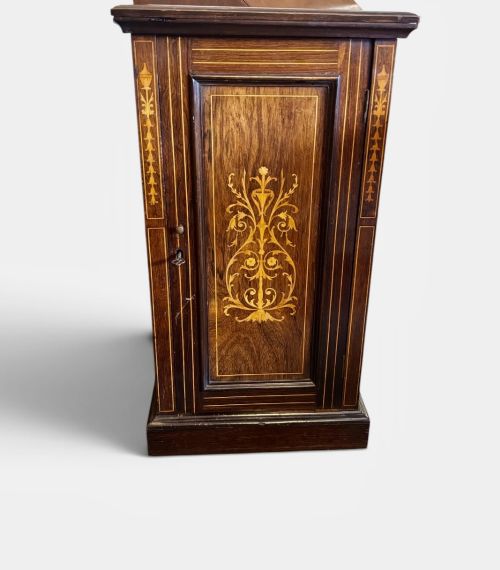
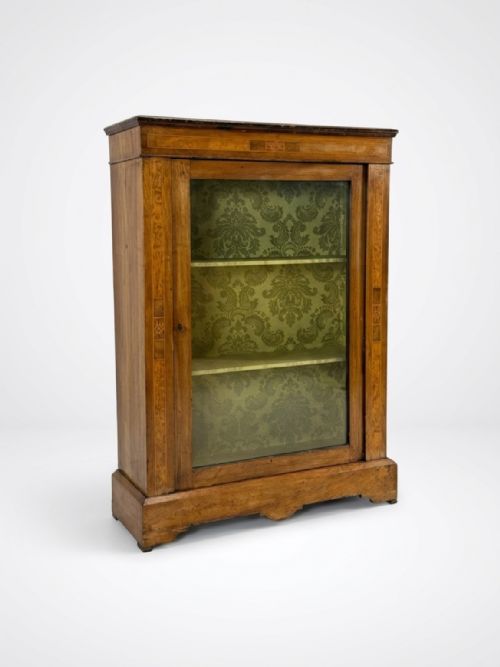
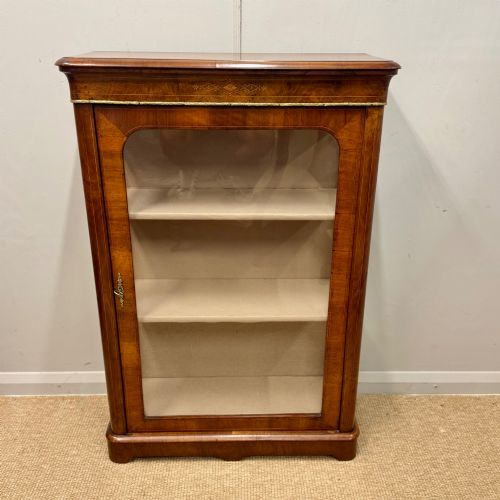
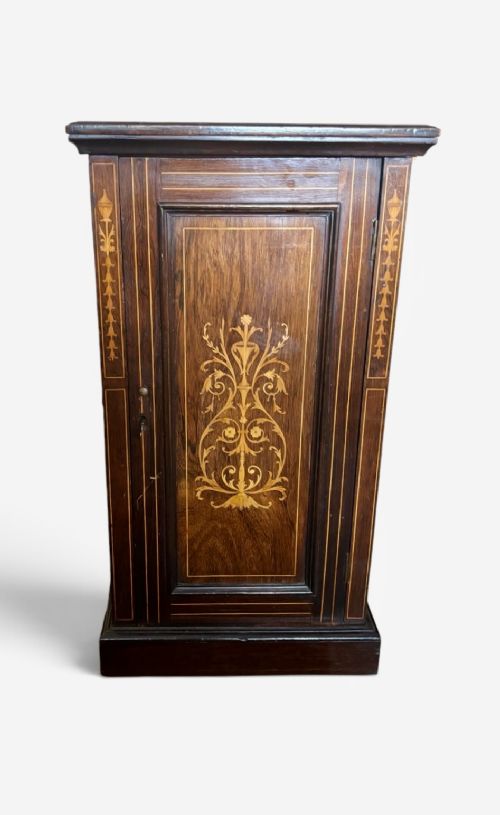
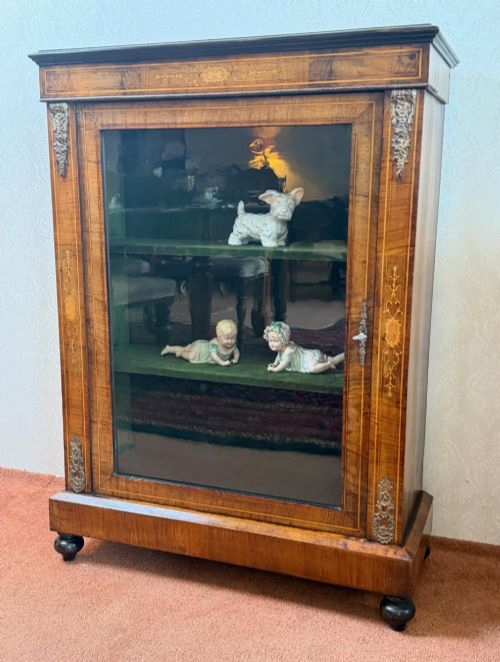
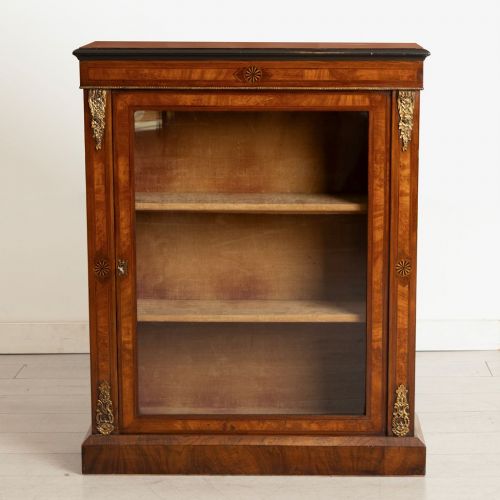
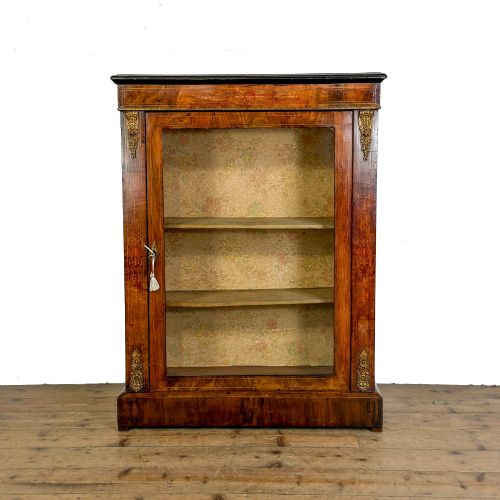
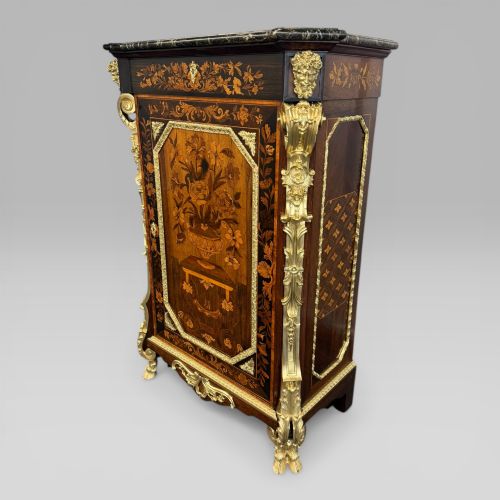
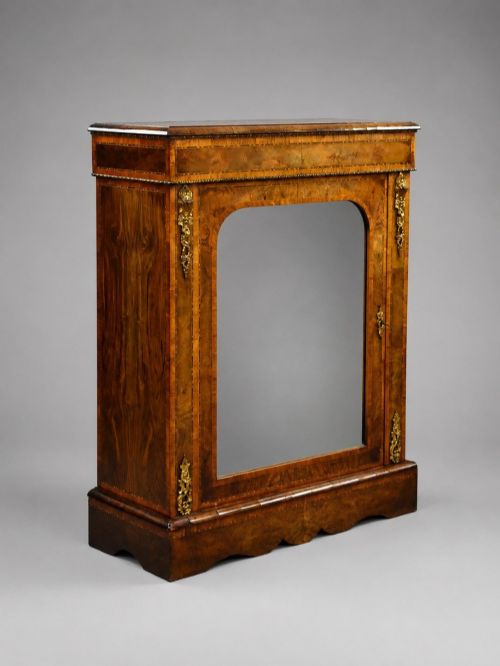
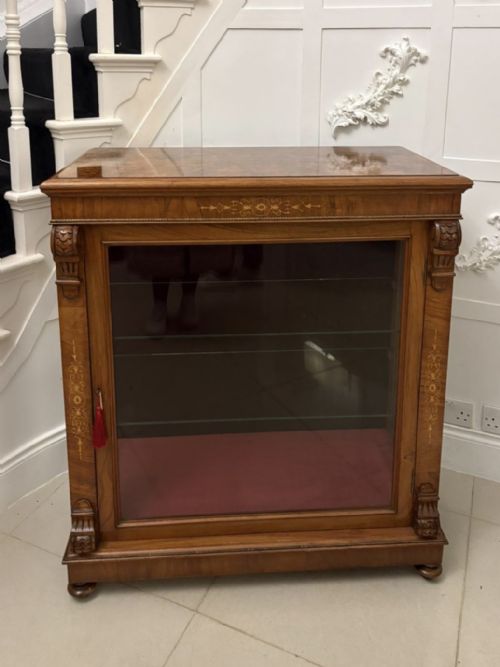
The version you are most likely to meet on this page is a single-door walnut cabinet, often featuring burr walnut veneers and detailed floral marquetry. Pieces from this selection appear in both ebonised wood and figured walnut, sometimes accompanied by matching pairs.
Makers designed these items as vitrines or console side display units intended to hold collectors' curios and books. Their narrow proportions allow them to occupy tight wall spaces while offering glassed-in presentation for precious objects.
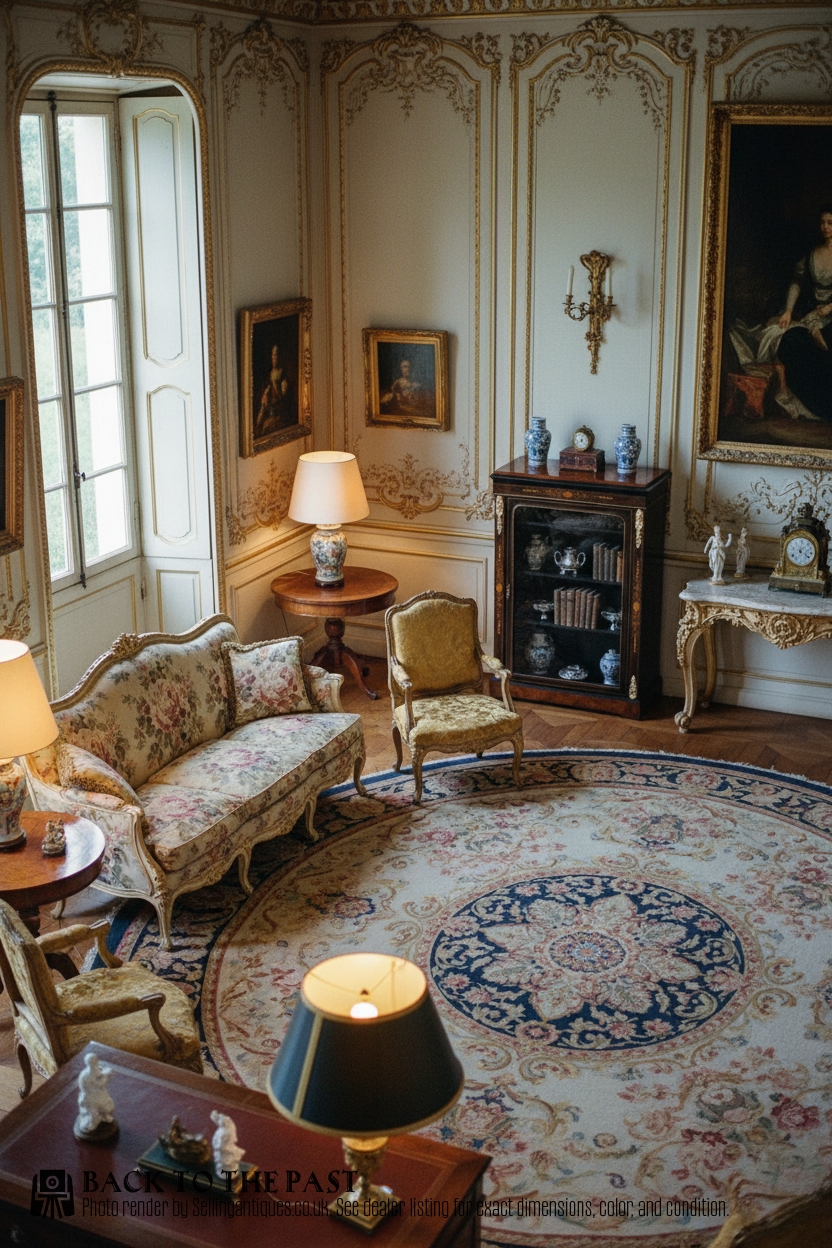
Materials and construction
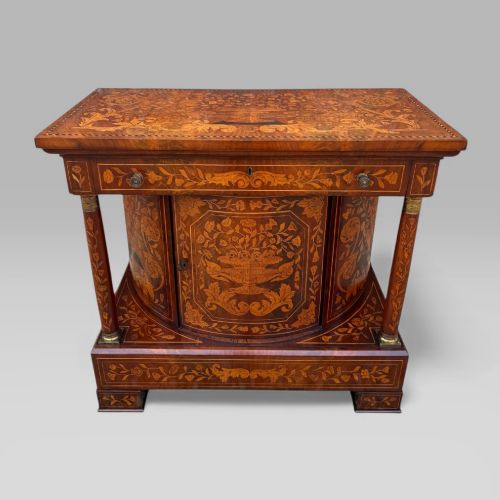
Cabinet makers utilised walnut, burr walnut, amboyna, and ebonised wood as primary timbers, applying fine veneers over carcases. Artisans cut contrasting woods into floral marquetry motifs, setting delicate botanical patterns into the darker wood backgrounds of the front panels.
Constructors mounted glazed doors with brass hinges and locks, framing the glass to protect the interior shelves. Gilding and ormolu mounts accentuate the corners, borders, and feet of the better examples.
Interiors frequently received linings of velvet or fabric to cushion displayed items. Cabinet makers joined glass panels securely within wooden rebates, completing the structure with polished timber plinths.
Retail Price Guide 2026
Typical UK retail prices for marquetry pier cabinet, calculated from the Sellingantiques database of over a million retail prices indexed since 2003. This retail price guide relies exclusively on Sellingantiques data; no external sources or auction records are used, so the figures do not describe the wider market.
Listings feature walnut, burr walnut, amboyna, and ebonised wood across Victorian and Edwardian periods.
Differences in quality
Quality rests upon the selection of decorative veneers and the precision of the marquetry work. Cabinets featuring highly figured burr walnut and intricate floral inlay display greater craftsmanship than plain timber examples.
The weight and finish of the metal mounts distinguish superior models from standard production. Gilt metal, ormolu, and heavy brass fixtures indicate a higher tier of manufacture, whereas simpler pieces rely solely on wood and glass.
The crispness of the joinery and the depth of the French polished finish reveal the maker's hand. Well-preserved velvet linings and intact original glass further elevate the status of a surviving piece.
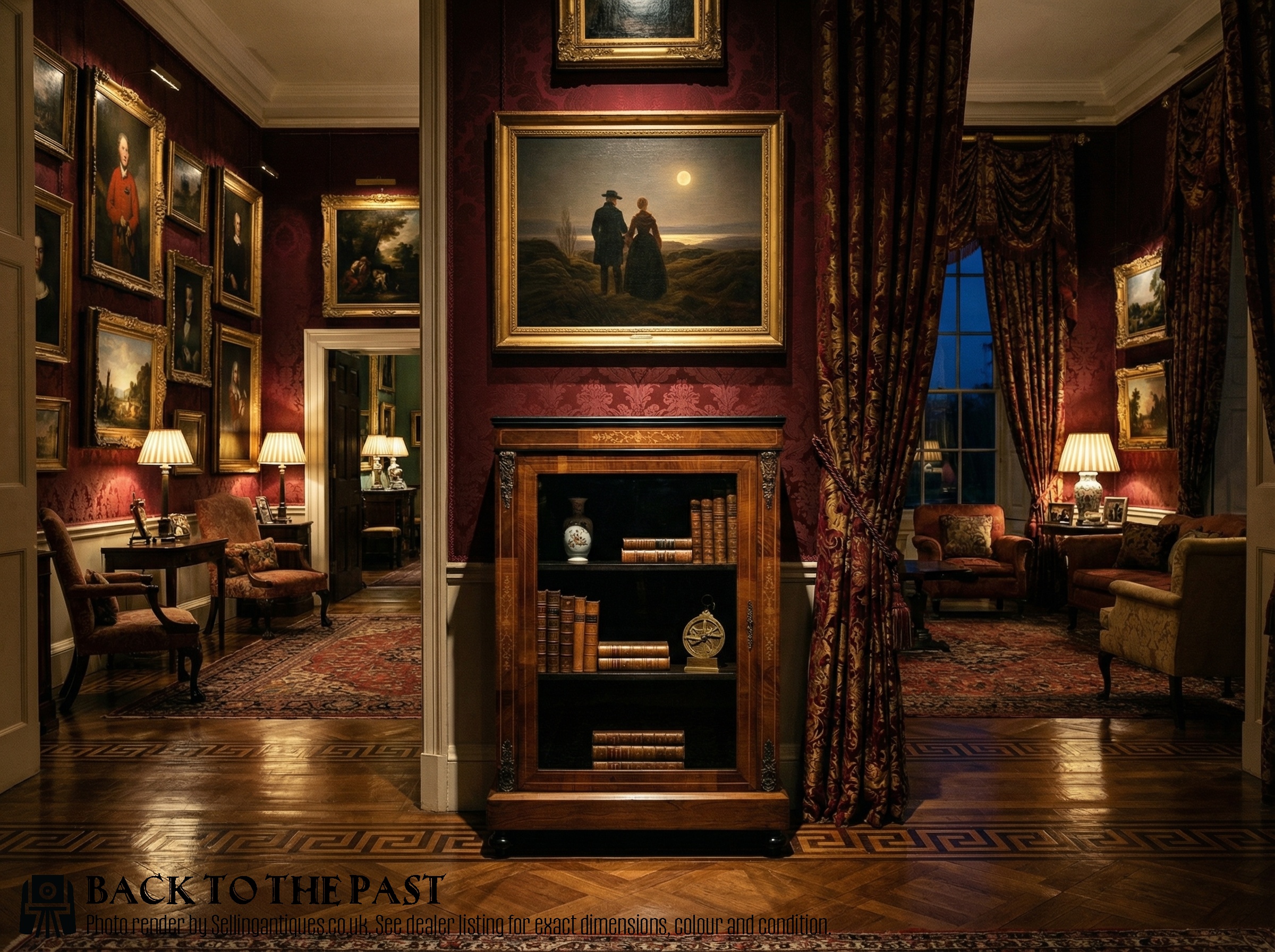
The Marquetry Pier Cabinet Glossary
- Marquetry
- Decorative veneer work forming pictures or patterns by inserting contrasting pieces of wood into a ground timber. This technique defines the visual character of the door panels.
- Pier cabinet
- A narrow piece of furniture built to stand against the wall space between windows. These items provide display storage without dominating small wall sections.
- Ormolu
- Gilded bronze mounts applied to furniture for decorative effect. They accent the corners and borders of fine nineteenth-century pieces.
- Burr walnut
- Wood taken from walnut tree growths, producing swirling and mottled grain patterns. Cabinet makers prized this material for its rich decorative appearance.
- Vitrine
- A glass-fronted display cabinet used for showing porcelain and curiosities. Many pier cabinets function primarily as vitrines.
Frequently Asked Questions
How were pier cabinets used?
Victorian households utilised pier cabinets to display precious ornaments, books, and collections behind glass. Their narrow footprint suited the wall spaces between tall windows.
They also functioned as console side display units in formal reception rooms.
How do I live with one?
Place a pier cabinet against a flat wall where its narrow depth will not obstruct room traffic. Keep it away from direct sunlight to protect the walnut veneers and interior fabrics.
Interior shelves accommodate small collections of porcelain, glass, or metalwork for everyday viewing.
How do I tell periods apart?
Nineteenth-century and Victorian pieces often show rich burr walnut, ormolu mounts, and elaborate floral marquetry. Edwardian examples tend to feature lighter framing and simpler inlay techniques.
Ebonised finishes and Aesthetic Movement details point towards the later decades of the nineteenth century.